CrossingPsychology
Attribution theory + sociological imagination
Psychologists measured the lean towards explaining conduct by character, which is the obstacle Mills said the sociological imagination must overcome.
- IdeaAttribution theoryPeople explain behaviour by sorting its causes into the person or the situation, and the sorting follows rules and leans in predictable directions.Psychology
- TermSociological imaginationThe habit of seeing how a personal life is shaped by its society and its moment in history.Sociology
What each entry sees
Attribution theory
Attribution theory studies how people explain behaviour. Its first finding is a sorting: a cause is placed inside the person, in character or effort, or outside, in the situation. The sorting leans. Observers reach for character too quickly when explaining what others do, a lean named the fundamental attribution error. The finding is well supported, with limits. Joan Miller, and later Michael Morris and Kaiping Peng, found the lean weaker in India and China than in the United States, and several named biases have proved narrower than first claimed.
Attribution theory
People explain behaviour by sorting its causes into the person or the situation, and the sorting follows rules and leans in predictable directions.
Sociological imagination
The sociological imagination is the habit of seeing how a personal life is shaped by its society and its moment in history. C. Wright Mills coined the phrase in 1959. Its working distinction is between personal troubles, which arise in a person's character and close surroundings, and public issues, which arise from how a society is organised. A couple who can't afford a flat have a trouble. Millions of couples in the same position point to an issue. Mills hoped any citizen could learn the habit. The term does not deny individual responsibility.
Sociological imagination
The habit of seeing how a personal life is shaped by its society and its moment in history.
C. Wright Mills
An American sociologist who argued that private troubles have public causes and that a small elite ran post-war America.
Diagram
Attribution theory + sociological imagination
Read as text
Overlap of Attribution theory (Idea, Psychology) and Sociological imagination (Term, Sociology). Only Attribution theory: Clinical psychology and Cognitive bias. Only Sociological imagination: C. Wright Mills and Liberation psychology. Shared: The question it opens.
What the crossing shows
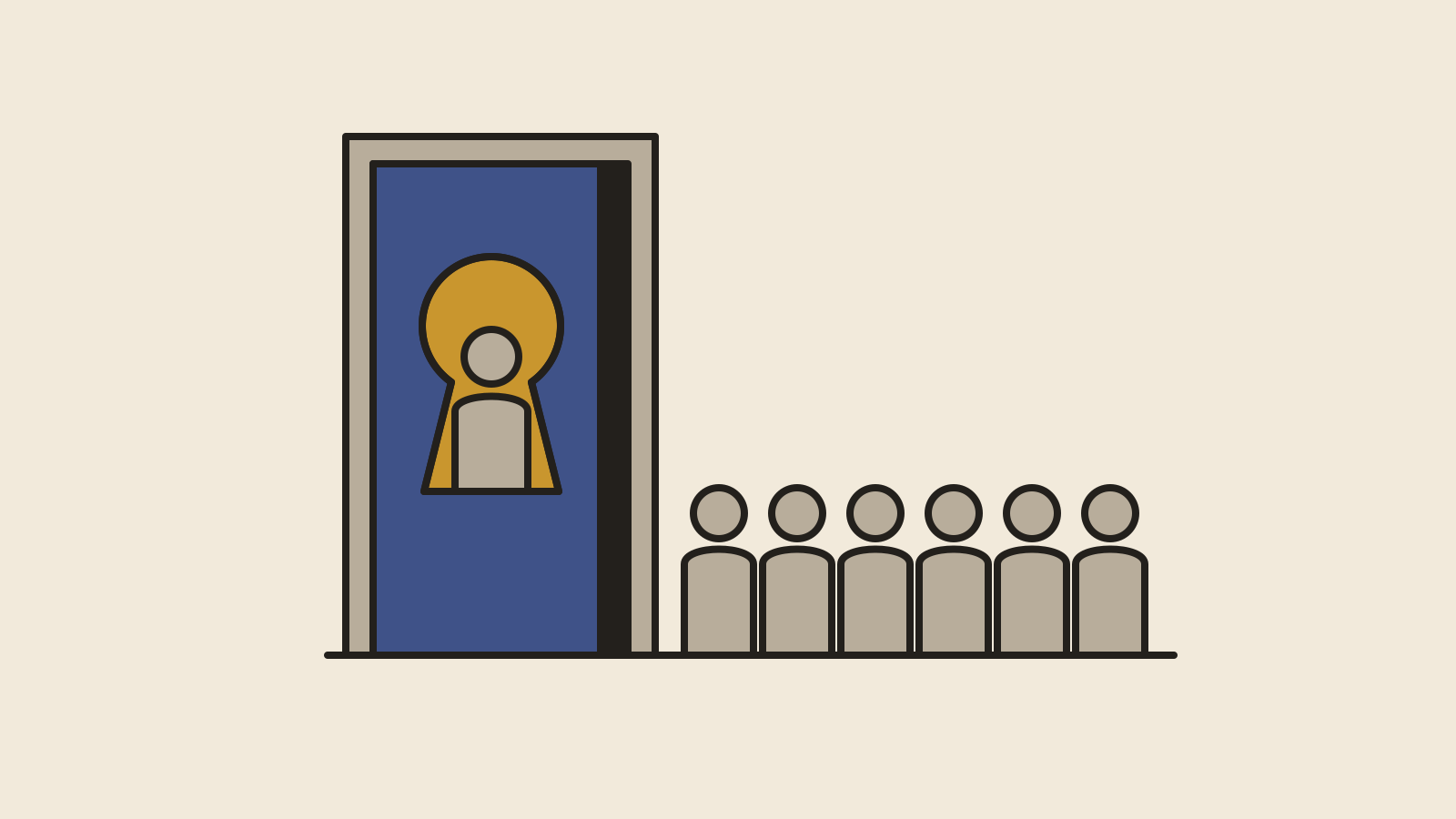
Mills wrote as if seeing public issues took effort, and the psychologists' findings suggest why. The ready explanation of someone's unemployment or debt is the kind of person they are. The situation is harder to see, and a situation shared by millions is harder still, because no single observer watches it happen. On this reading the sociological imagination corrects a measured lean, at the scale of a society.
Each field adds something to the other. Attribution research gives Mills's obstacle a name and experiments. Mills gives the psychologists a larger situation than the laboratory offers: wages, lending rules and housing supply in place of an assigned essay topic. The cross-cultural results complicate both. If the lean towards character is weaker in some societies, it is partly learned, and something teaches it.
The question it opens
Is the failure to see public issues behind private troubles a habit of mind or a product of the society that benefits from it? The cultural variation shows the habit can be weaker or stronger. It doesn't show who, if anyone, gains from its strength, and neither entry settles that.
Further reading
- Heider, F. (1958). The psychology of interpersonal relations. John Wiley & Sons. https://doi.org/10.1037/10628-000
- Malle, B. F. (2006). The actor-observer asymmetry in attribution: A (surprising) meta-analysis. Psychological Bulletin, 132(6), 895–919. https://doi.org/10.1037/0033-2909.132.6.895
- Mills, C. W. (1959). The sociological imagination. Oxford University Press.
- Ross, L., & Nisbett, R. E. (1991). The person and the situation: Perspectives of social psychology. McGraw-Hill.
Cite this entry
Scholia. (2026). Attribution theory + sociological imagination. In Scholia: Notes in the margin of the human sciences. Retrieved November 28, 2026, from https://scholia.zennia.sg/crossings/attribution-theory-plus-sociological-imagination