IdeaAnthropologyAlso in Philosophy, Sociology
Cultural relativism
The principle that a people's beliefs and practices should be understood by the standards of their own culture before being judged by an outsider's.
The idea
Cultural relativism says that what people believe and do makes sense only against the background of their own culture. To understand a custom you must first learn the standards of those who practise it. Your own standards are also the product of a culture, and they give you no neutral place to stand.
Culture (the anthropological concept)
Culture, in anthropology, is everything people learn and share as members of a group, from language and beliefs to skills, manners and tastes.
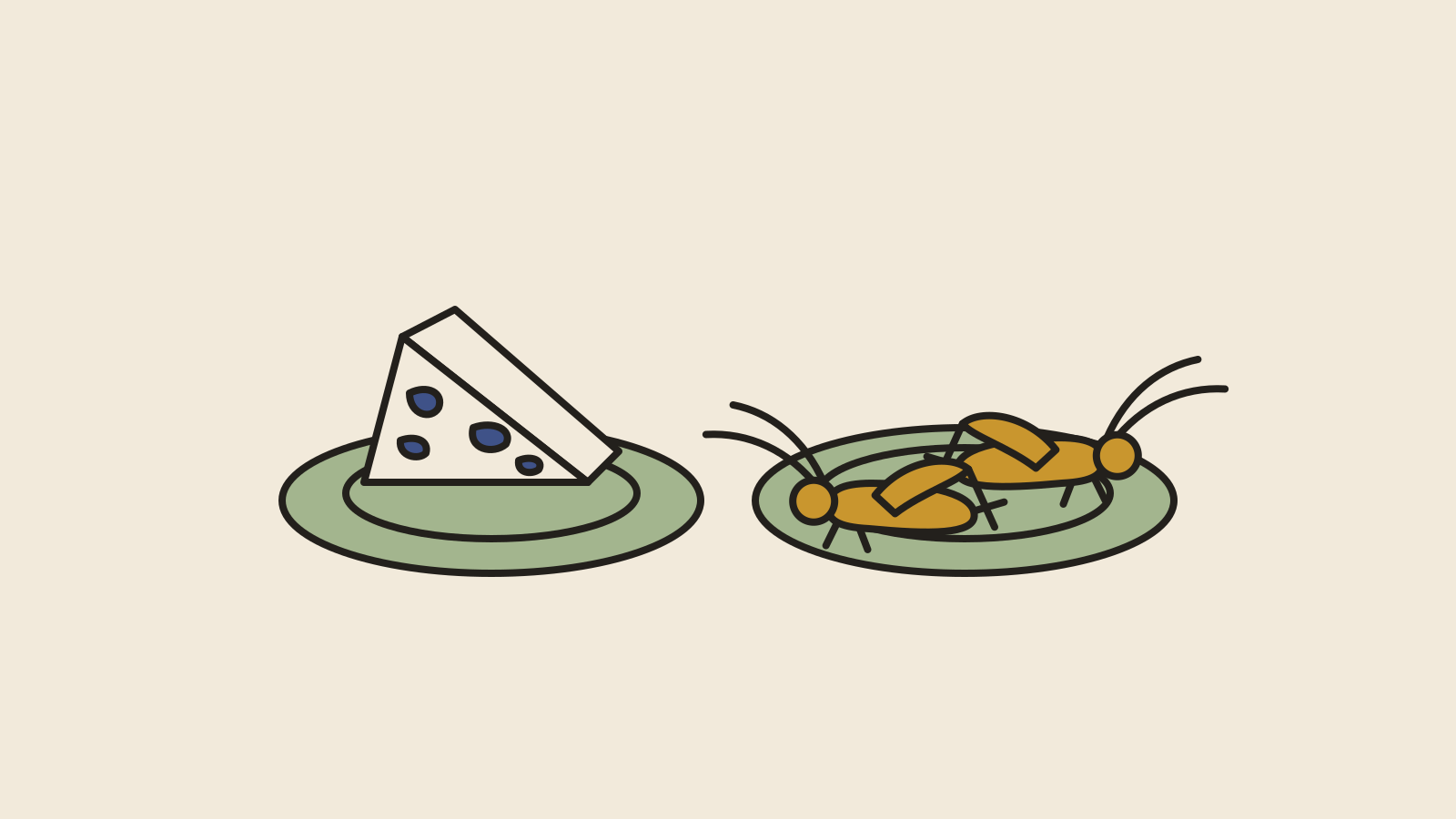
Food shows it quickly. Many Europeans are disgusted at the thought of eating insects, and many people elsewhere are disgusted by cheese, which is milk left to rot under supervision. Neither reaction is a discovery about the food. Each is a taste learned in childhood.
Anthropologists use the principle mainly as a working rule: suspend judgement, find out what the practice means to the people involved, and only then compare. Some go further and conclude that no culture's morals can be ranked above another's. That second step is a separate and far more disputed claim.
Diagram
Relativism as a method does not commit anyone to relativism as a moral verdict
Read as text
Two senses of cultural relativism set side by side, distinguished by what the principle governs. On the left, relativism as a rule of method: understand a practice by its own culture's standards before judging it. This is anthropology's working practice and is widely accepted. On the right, relativism as a moral claim: no culture's way of life ranks higher than another's. This is a thesis in ethics and is widely disputed.
Key features
- Its opposite is ethnocentrism, the habit of treating one's own culture as the measure of all others.
- As a method it asks the observer to suspend judgement while trying to understand, without promising approval at the end.
- It rests on the observation that perception, taste and moral feeling are formed by upbringing, a process Melville Herskovits called enculturation.
- It applies to the observer too, whose own categories are local and must be examined.
- In its strong form it denies that there are standards by which whole ways of life can be ranked.
Not to be confused with
| Look-alike | The difference | Differs on |
|---|---|---|
| Moral relativism | Cultural relativism in the anthropologist's sense is a rule of method: learn the local standards first. Moral relativism is a philosopher's thesis that moral claims are true only relative to a culture or framework. One can follow the first and reject the second. | Differs onMethod |
| Ethnocentrism | Ethnocentrism judges every practice by the standards of the observer's own group. Relativism asks first for the standards of the people being observed. | Differs onStandard of judgement |
| Linguistic relativity | Linguistic relativity is a hypothesis that the language a person speaks influences how they think. It concerns language and cognition, and it can be tested in experiments. | Differs onClaim |
| Historical particularism | Particularism is the whole research programme of the Boas school. Relativism is one principle within it. | Differs onScope |
- Differs onMethod
Cultural relativism in the anthropologist's sense is a rule of method: learn the local standards first. Moral relativism is a philosopher's thesis that moral claims are true only relative to a culture or framework. One can follow the first and reject the second.
- Differs onStandard of judgement
Ethnocentrism
Ethnocentrism judges every practice by the standards of the observer's own group. Relativism asks first for the standards of the people being observed.
- Differs onClaim
Linguistic relativity is a hypothesis that the language a person speaks influences how they think. It concerns language and cognition, and it can be tested in experiments.
- Differs onScope
Particularism is the whole research programme of the Boas school. Relativism is one principle within it.
Origins and development
The thought is ancient: Herodotus told of Greeks and Indians each horrified by the other's funeral customs. Its modern form comes from Franz Boas, who argued in 1887 that "civilization is not something absolute" and that our ideas hold only as far as our civilisation goes. Boas never used the phrase "cultural relativism". The philosopher Alain Locke is the first person recorded using it, in 1924. Ruth Benedict and Melville Herskovits made it a public doctrine. In 1947 the American Anthropological Association invoked it to warn the United Nations against a declaration of rights built on Western values alone.
Franz Boas
The German-born founder of American anthropology, who argued that differences between peoples are learned and replaced racial rankings with the study of cultures.
Ruth Benedict
The American anthropologist who argued that each culture selects and arranges human traits into a pattern of its own.
Why it matters
The idea sits under every argument about whether outsiders may criticise a practice, from arranged marriage and corporal punishment to dress codes and the treatment of minorities. Governments invoke it against foreign criticism, and campaigners for universal rights argue against it. It is also a daily discipline for diplomats, doctors, teachers and anyone else who deals with people raised differently, where understanding has to come before a useful response.
Critiques and limits
James Rachels, a philosopher, argued that the strong form defeats itself. If no culture can be judged, reformers inside one are always wrong, and tolerance is only another local value. Elizabeth Zechenter and other human-rights scholars note that appeals to culture often protect the powerful within a group. Clifford Geertz replied in 1984 that critics attack a position few anthropologists hold, and that provincialism is the greater danger. The principle is a rule of method and, in its strong form, a moral stance, so evidence cannot settle it.
Clifford Geertz
The American anthropologist who argued that cultures are webs of meaning to be interpreted, and who made thick description the ethnographer's task.
Connections
Belongs to
It is the Boas school's rule for reading a custom, by the meanings it has for those who practise it.
Originated by
Boas argued from 1887 that civilisation is relative and that ideas hold only within the culture that formed them.
Critiques
It denies the evolutionists' single scale, on which other peoples' customs were marked as earlier and lower.
Contrasts with
Differs on scope. Relativism is one principle about understanding and judging, where particularism is the school's whole programme of research.
Differs on claim. Relativism posits many views of one world, where the turn holds that the worlds themselves differ.
Differs on claim. Relativism posits one world seen in many ways, perspectivism one way of seeing spread across many worlds.
Moral relativismPhilosophy
Differs on method. Cultural relativism is a working rule for understanding practices, where moral relativism is a thesis about moral truth itself.
Linguistic relativityCognitive science & linguistics
Differs on claim. Cultural relativism is a rule for understanding other people's practices, while linguistic relativity is a causal hypothesis about language and thought.
OrientalismPolitical theory & science
Differs on claim. Relativism asks that cultures be understood by their own standards, while Said charged one scholarly tradition with bias.
The WEIRD problemPsychology
Differs on claim. Relativism is a principle for understanding other cultures, while the WEIRD problem is an empirical point about whom researchers sample.
Differs on descriptive or normative. An emic account describes a practice in local terms, while relativism is a rule about how to judge it.
Applied in
Cultural psychologyPsychology
Cultural psychologists use it to question whether findings and categories from Western samples describe minds everywhere.
Critiqued by
Argues that relativism assumes one nature beneath many cultures, the very scheme Amazonian thought turns round.
Cross with
Two distant entries to read beside this one, each with the question the pairing opens.
Veil of ignorancePolitical theory & science
Can people behind the veil of ignorance agree on rules without bringing one culture's idea of fairness in with them? Set them side by side
Paradigm shiftPhilosophy
Is understanding another culture by its own standards the same task as understanding a superseded scientific paradigm by its own? Set them side by side
Further reading
- American Anthropological Association, Executive Board. (1947). Statement on human rights. American Anthropologist, 49(4), 539–543. https://doi.org/10.1525/aa.1947.49.4.02a00020
- Boas, F. (1887). Museums of ethnology and their classification. Science, 9(228), 587–589. https://doi.org/10.1126/science.ns-9.228.587.b
- Geertz, C. (1984). Distinguished lecture: Anti anti-relativism. American Anthropologist, 86(2), 263–278. https://doi.org/10.1525/aa.1984.86.2.02a00030
- Herskovits, M. J. (1972). Cultural relativism: Perspectives in cultural pluralism. Random House.
Cite this entry
Scholia. (2026). Cultural relativism. In Scholia: Notes in the margin of the human sciences. Retrieved November 28, 2026, from https://scholia.zennia.sg/ideas/cultural-relativism
This topic is contested. The entry sets out the main positions rather than settling them.