IdeaPhilosophyAlso in Sociology
Lifeworld
Husserl's claim that the everyday world we live in and take for granted is the ground on which science and every theory rest.
The idea
The lifeworld is the world as we live in it before any theory: the familiar surroundings of things, people, habits and shared meanings that we take for granted. Edmund Husserl argued that it is the ground everything else stands on, science included. Physics describes a universe of particles and equations. Physicists reach those equations by reading dials, handling instruments and trusting colleagues, all of which belong to the everyday world the equations leave out.
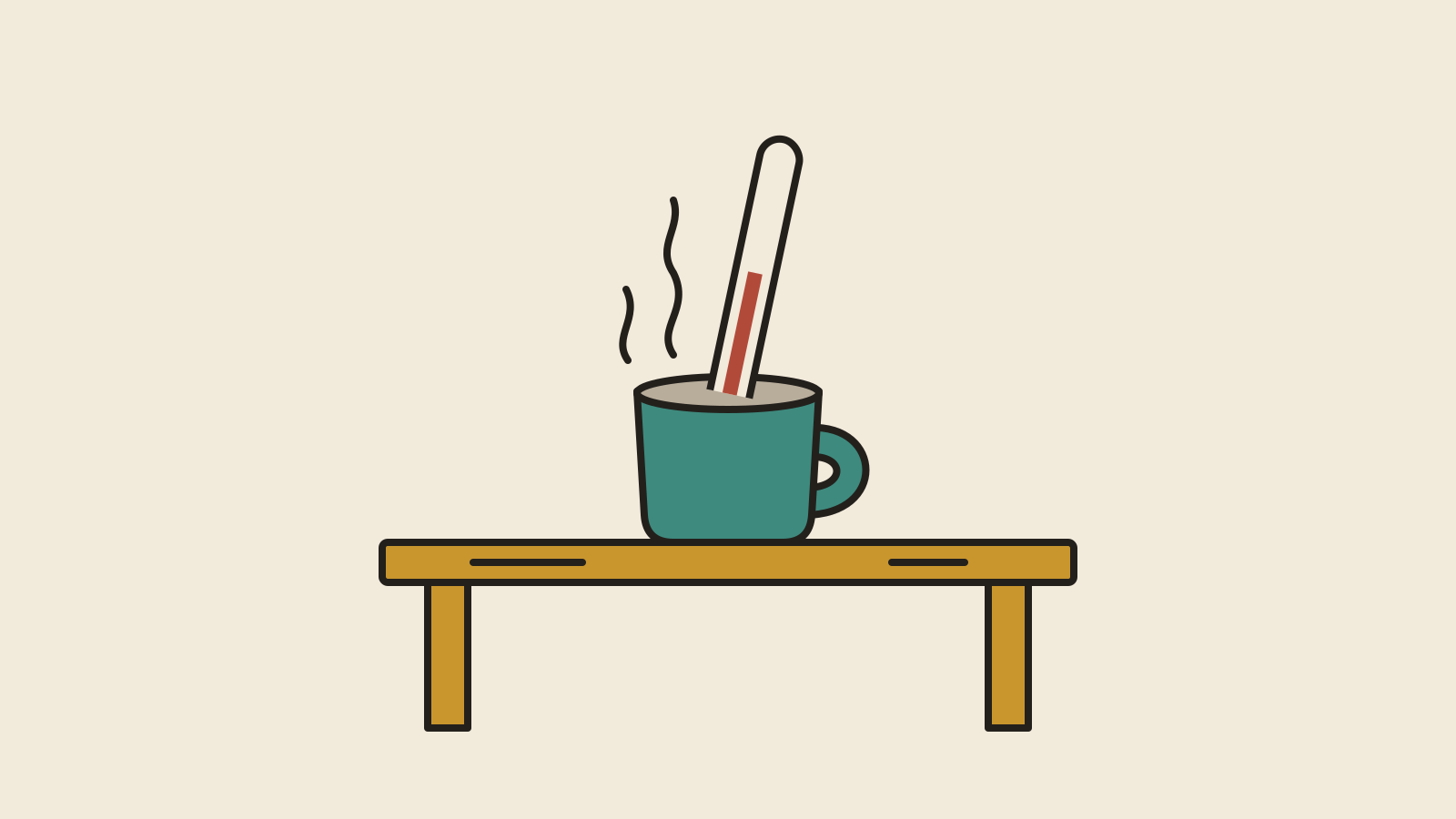
Take temperature. A weather app says 31 degrees. You know what that means only because you have felt hot afternoons, and the first thermometers were checked against such feelings. The number refines the experience. It can't replace it or show it to be an illusion.
Husserl's claim was that modern culture had forgotten this order of dependence. It had come to treat the mathematical model as the real world and lived experience as a mere surface.
Diagram
Science is an achievement inside the lifeworld and never leaves it
Read as text
Three boxes, one inside another. The innermost is mathematical models. It sits inside measuring and experiment, the practices that produce and test the models. Both sit inside the outermost box, the lifeworld: the everyday world of perception, tools and shared meanings in which all measuring is done.
Key features
- It is pre-given: nobody builds or chooses it, and we find ourselves in it before we ask any question.
- It is shared, a world of common objects, language and customs and no private inner show.
- It mostly goes unnoticed, working as the background against which particular things stand out.
- Science grows out of it by measuring and idealising, and must return to it to be tested and understood.
- Lifeworlds differ between cultures and periods, though Husserl held that all share a basic structure of space, time and bodily perception.
Not to be confused with
| Look-alike | The difference | Differs on |
|---|---|---|
| Social constructionism | Constructionism says that institutions and categories were made by people and could have been otherwise. The lifeworld idea says that everyone starts from a world already taken for granted. Berger and Luckmann built the first on the second. | Differs onClaim |
| Habitus | Bourdieu's habitus is a set of dispositions carried in one person's body, formed by class and upbringing. The lifeworld is the shared background world that people of different habitus still inhabit together. | Differs onUnit of analysis |
| Worldview | A worldview is a set of beliefs someone could state and defend, such as a religion or a political creed. The lifeworld lies beneath beliefs. It is what both sides of an argument already rely on to understand each other. | Differs onLevel |
- Differs onClaim
Constructionism says that institutions and categories were made by people and could have been otherwise. The lifeworld idea says that everyone starts from a world already taken for granted. Berger and Luckmann built the first on the second.
- Differs onUnit of analysis
Bourdieu's habitus is a set of dispositions carried in one person's body, formed by class and upbringing. The lifeworld is the shared background world that people of different habitus still inhabit together.
- Differs onLevel
Worldview
A worldview is a set of beliefs someone could state and defend, such as a religion or a political creed. The lifeworld lies beneath beliefs. It is what both sides of an argument already rely on to understand each other.
Origins and development
The German word Lebenswelt was in use before Husserl, and he wrote of it in manuscripts from the 1910s. He made it central in The Crisis of European Sciences, which began as lectures in Vienna and Prague in 1935 and was partly published in 1936. There he traced the forgetting of the lifeworld to Galileo's mathematical physics. Alfred Schutz, who visited and corresponded with him, carried the idea into sociology as the everyday world of common-sense knowledge. Jürgen Habermas gave it a new use in 1981, opposing the lifeworld of shared understanding to the systems of market and state.
Jürgen Habermas
The German philosopher and sociologist who argued that democracy rests on citizens reasoning together in public, free from coercion.
Why it matters
Habermas's phrase, the colonisation of the lifeworld, is used whenever market or bureaucratic logic moves into family life, schooling or friendship: care billed by the minute, pupils reduced to scores. Doctors meet the idea in the gap between a test result and what an illness is like to live with. Designers study users' lifeworlds before building for them. And the idea frames a standing question about how far science can correct common sense.
Critiques and limits
Wilfrid Sellars argued in 1962 that the everyday picture, which he called the manifest image, has no final authority. Where it conflicts with science about what exists, science decides. Habermas judged Husserl's and Schutz's versions too centred on individual consciousness and rebuilt the idea on language. Nancy Fraser replied in 1985 that Habermas's own lifeworld, set against system, hides the power and unpaid labour inside the family. The idea is interpretive. It rests on description and argument, and its reach is still disputed.
Connections
Belongs to
It is the late form of phenomenology's subject matter, the world as experienced before any theory.
Originated by
Husserl made the lifeworld central in his last work, the Crisis, as the forgotten ground of the sciences.
Contrasts with
Social constructionismSociology
Differs on claim. Constructionism says institutions were made by people and could differ, where the lifeworld idea says everyone starts from a world already given.
HabitusSociology
Differs on unit of analysis. Habitus is one person's embodied dispositions, where the lifeworld is the shared background that people of different habitus inhabit.
Parallels
Wittgenstein's forms of life likewise put shared practice beneath explicit belief, as the ground where justification ends.
Applied in
EthnomethodologySociology
Garfinkel made the taken-for-granted world a research topic, studying the methods by which people keep it in place.
Critical theorySociology
Habermas set the lifeworld of shared understanding against the systems of money and power that he said colonise it.
Influenced
Social constructionismSociology
Berger and Luckmann built on Schutz's account of the lifeworld, the everyday world its members take for granted.
Further reading
- Berger, P. L., & Luckmann, T. (1966). The social construction of reality: A treatise in the sociology of knowledge. Doubleday.
- Habermas, J. (1987). The theory of communicative action: Vol. 2. Lifeworld and system: A critique of functionalist reason. Beacon Press. (Original work published 1981)
- Husserl, E. (1970). The crisis of European sciences and transcendental phenomenology: An introduction to phenomenological philosophy. Northwestern University Press. (Original work published 1936)
- Zahavi, D. (2003). Husserl's phenomenology. Stanford University Press.
Cite this entry
Scholia. (2026). Lifeworld. In Scholia: Notes in the margin of the human sciences. Retrieved November 28, 2026, from https://scholia.zennia.sg/ideas/lifeworld