IdeaSociology
Liquid modernity
Bauman's claim that modern life has moved from lasting structures to arrangements that keep changing shape, leaving individuals to cope alone.
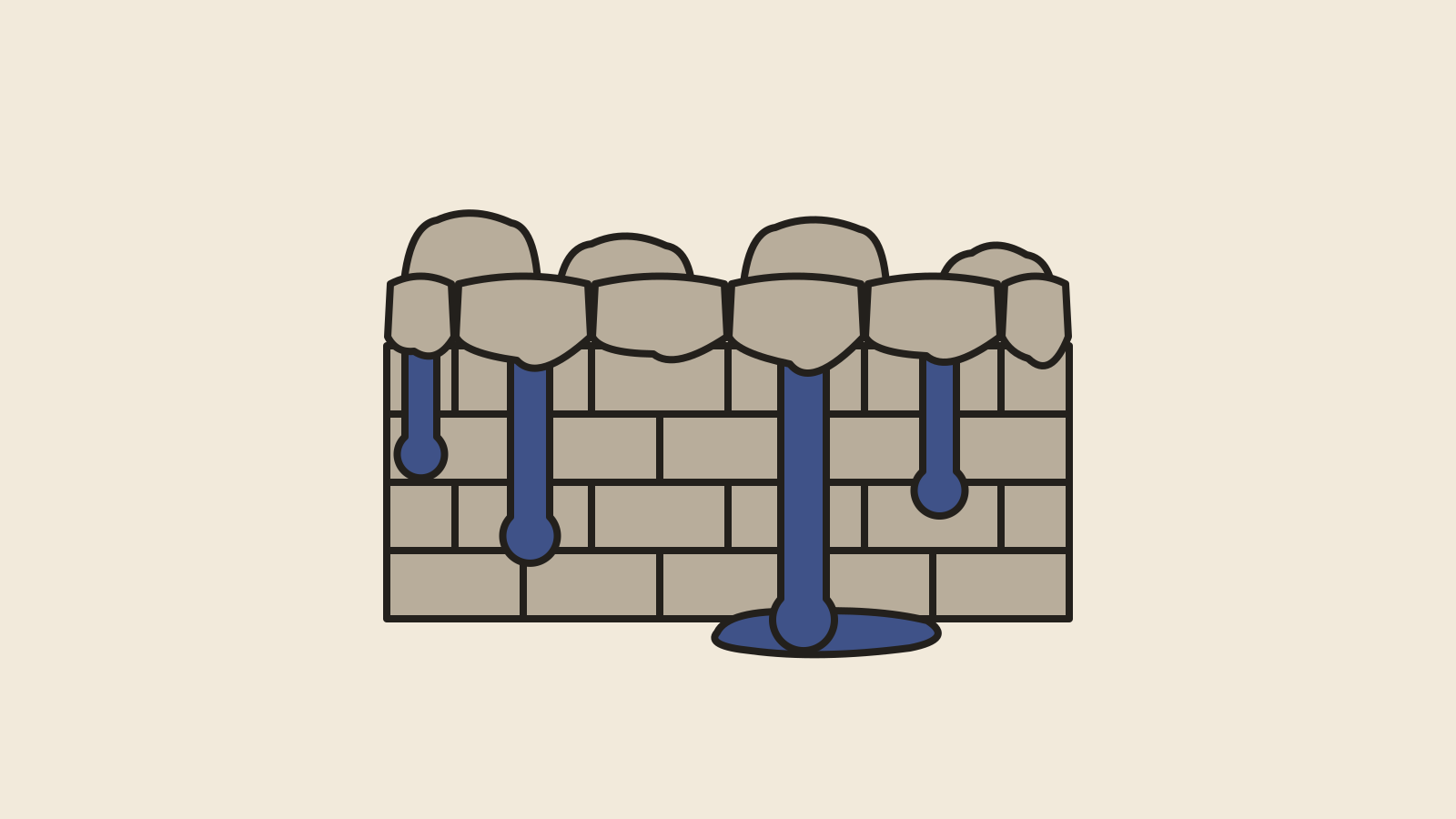
The idea
Liquid modernity is Zygmunt Bauman's name for the present stage of modern society, in which jobs, relationships and institutions no longer keep their shape for long. A liquid can't hold a form: it takes the shape of whatever contains it and spills when the container moves. Bauman argued that social life had become like that.
Zygmunt Bauman
Polish-born sociologist who argued that the Holocaust grew out of modern bureaucracy and that modern life has since turned liquid.
Compare two working lives. A man who joined a car plant in 1960 could expect to retire from it, in a town built around it, with a union and a pension scheme behind him. His granddaughter moves through short contracts and gig work. She retrains twice before she is forty and keeps her options open, because nothing around her promises to last. Bauman called the first world solid modernity and the second liquid. The new freedoms are real, he said, and so is the anxiety, because each individual must now solve alone problems that society produces.
Diagram
Bauman contrasts a modernity of lasting forms with one where nothing holds shape
Read as text
Two phases of modern society set side by side, distinguished by how long social arrangements last. On the left, solid modernity: a job for life, a fixed class and place, and risks shared through unions and welfare. On the right, liquid modernity: short contracts, an identity each person assembles alone, and risks borne by the individual. Bauman held that the second phase has been replacing the first since the late twentieth century.
Key features
- Conditions change faster than people can settle into habits and routines for dealing with them.
- Capital travels light and can leave at short notice, while most workers stay tied to a place.
- People are treated as consumers first, and identity becomes something to assemble, display and replace.
- Long-term bonds give way to connections that can be dropped, in love as in work.
- Troubles with social causes, such as insecure work, are handed to individuals to fix from their own resources.
Not to be confused with
| Look-alike | The difference | Differs on |
|---|---|---|
| Risk society | Beck's risk society concerns the hazards that industry and science produce, and who answers for them. Liquid modernity concerns social bonds and identities turning fluid. | Differs onClaim |
| Reflexive modernisation | Beck and Giddens say modern institutions are forced to examine and rebuild themselves, and they expect new politics to follow. Bauman says institutions stop holding any shape, and he sees little to replace them. | Differs onClaim |
| Gemeinschaft and Gesellschaft | Tönnies described the nineteenth-century passage from close community to impersonal society. Bauman describes a later change inside modern society, when its own solid institutions began to dissolve. | Differs onEra |
| Postmodernity | Bauman used this word in the 1990s and then dropped it. It suggested that modernity was over, and he had come to think modernity had only changed its state. | Differs onClaim |
- Differs onClaim
Beck's risk society concerns the hazards that industry and science produce, and who answers for them. Liquid modernity concerns social bonds and identities turning fluid.
- Differs onClaim
Beck and Giddens say modern institutions are forced to examine and rebuild themselves, and they expect new politics to follow. Bauman says institutions stop holding any shape, and he sees little to replace them.
- Differs onEra
Tönnies described the nineteenth-century passage from close community to impersonal society. Bauman describes a later change inside modern society, when its own solid institutions began to dissolve.
- Differs onClaim
Postmodernity
Bauman used this word in the 1990s and then dropped it. It suggested that modernity was over, and he had come to think modernity had only changed its state.
Origins and development
Bauman set out the idea in Liquid Modernity (2000), written after he retired from the University of Leeds. He took the image from Marx and Engels, who wrote in 1848 that under capitalism all that is solid melts into air. The first modernity melted the old solids of rank and custom, he argued, only to cast new ones: the factory, the bureaucracy, the nation-state. Now those were melting too. A run of short books followed, among them Liquid Love (2003), Liquid Life (2005) and Liquid Fear (2006).
Why it matters
The phrase turns up in commentary on gig work, dating apps, short-term renting and the end of jobs for life. It names a common feeling: that nothing can be planned far ahead, and that falling behind is treated as a personal fault. Debates about insecure work and about loneliness draw on the same picture.
Critiques and limits
Will Atkinson argued in 2008 that Bauman overstates the change. Survey and interview evidence shows class still shaping schooling, work and life chances, so much that was solid has stayed solid. Ali Rattansi faulted the account for generalising from the wealthy West and for saying little about gender and race. Rattansi also noted that Bauman offered a metaphor with illustrations and no systematic data. The thesis is interpretive: a diagnosis of an era that persuades by its fit with experience, and that no single study could confirm or refute.
Connections
Belongs to
It is one of the main diagnoses of what modern society became after the decline of stable industrial employment.
Originated by
Bauman introduced the term in his book of 2000 and applied it to love, fear, work and consumption in later volumes.
Influenced by
The image comes from the Communist Manifesto, where Marx and Engels wrote that capitalism melts everything solid.
Critiques
NeoliberalismPolitical theory & science
Bauman held that deregulation and privatisation shift problems with social causes onto individuals to solve alone.
Contrasts with
Differs on claim. Risk society concerns manufactured hazards and who answers for them, while liquid modernity concerns bonds and identities turning fluid.
Differs on claim. Beck and Giddens expect institutions to rebuild themselves, where Bauman sees them losing any lasting shape.
Differs on era. Tönnies described the nineteenth-century passage from community to society, while Bauman describes a later change inside modern society.
Applied in
Students of work use it to describe firms that favour short contracts and shed long-term commitments to staff.
Further reading
- Atkinson, W. (2008). Not all that was solid has melted into air (or liquid): A critique of Bauman on individualization and class in liquid modernity. The Sociological Review, 56(1), 1–17. https://doi.org/10.1111/j.1467-954X.2008.00774.x
- Bauman, Z. (2000). Liquid modernity. Polity Press.
- Rattansi, A. (2017). Bauman and contemporary sociology: A critical analysis. Manchester University Press.
Cite this entry
Scholia. (2026). Liquid modernity. In Scholia: Notes in the margin of the human sciences. Retrieved November 28, 2026, from https://scholia.zennia.sg/ideas/liquid-modernity