IdeaEconomicsAlso in Psychology, Political theory & science
Nudge
Changing how a choice is presented can steer people towards better outcomes without forbidding any option or changing what it costs.
The idea
A nudge is a change in how a choice is presented that steers people one way without forbidding anything or changing what the options cost. The claim behind it has two parts. Small features of a setting, such as which option comes first or what happens if you do nothing, shape decisions far more than they would for a careful calculator. And planners can use this for people's own good.
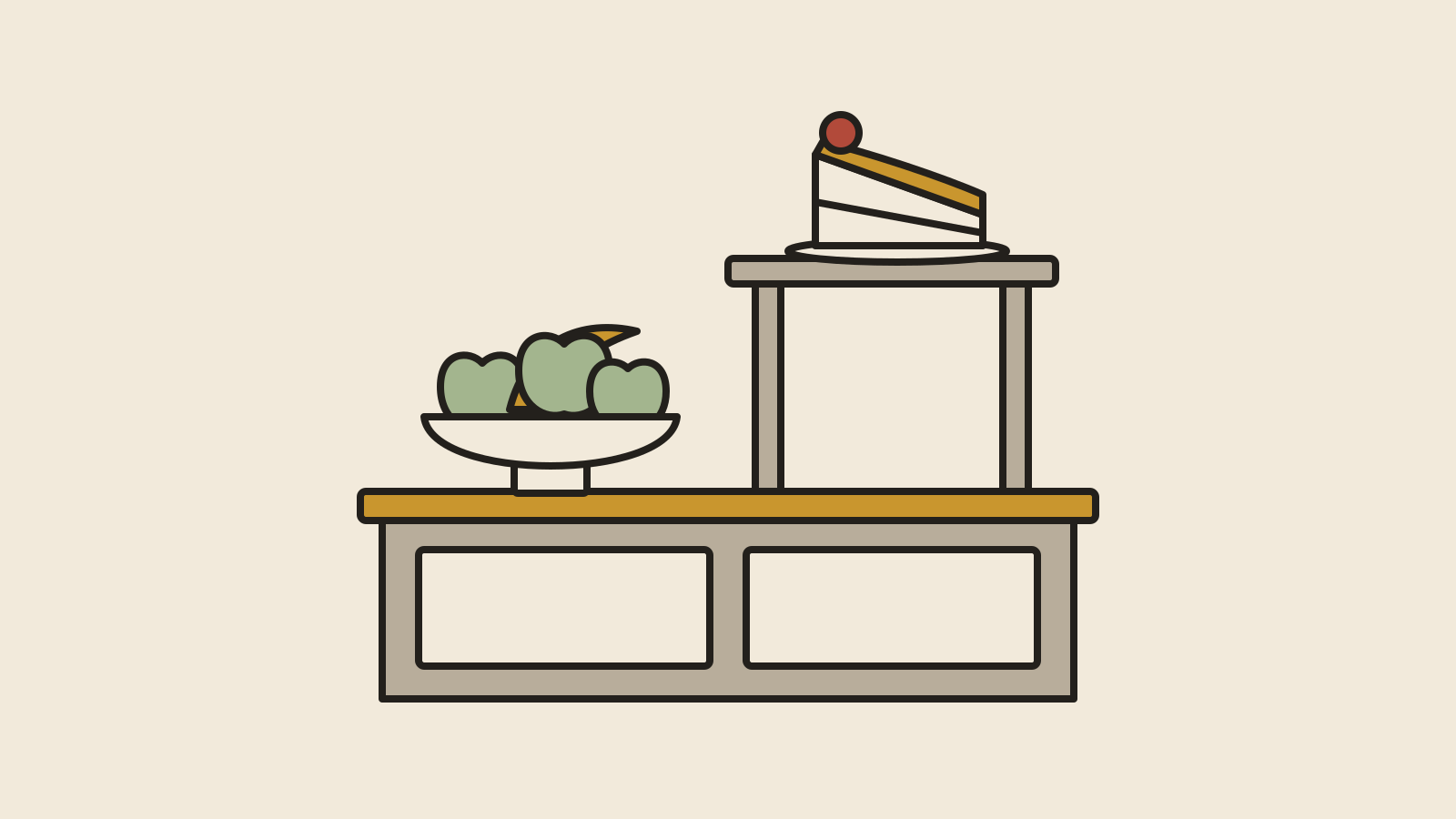
The standard example is the workplace pension. Ask workers to sign up and many never get round to it. Enrol them automatically and let them opt out, and most stay in. The options and the money are identical. Only the default has moved. A canteen that puts fruit within easy reach and cake a little further along is doing the same thing on a smaller scale.
Diagram
A nudge steers a choice without pricing or removing any option
Read as text
A line running from choice left alone on the left to choice removed on the right. Four policy tools sit along it. Giving information is nearest the left. A nudge, such as setting the default, comes next and is emphasised. A tax or subsidy sits further right because it changes what options cost. A mandate or ban is nearest the right because it removes options.
Key features
- Every option stays open, and opting out should be easy and cheap.
- Prices, taxes and penalties are left alone, which separates a nudge from an incentive.
- It works through predictable habits of mind such as inertia, attention to what others do and dislike of losses.
- It assumes there is no neutral layout: someone must decide what the default is, so choices are always being shaped.
- The aim, in the original statement, is to leave people better off as judged by themselves.
Not to be confused with
| Look-alike | The difference | Differs on |
|---|---|---|
| Pigouvian tax | A Pigouvian tax changes behaviour by raising the price of something that harms others. A nudge leaves prices alone and changes the presentation. | Differs onMechanism |
| Harm principle | Mill's principle says the state may coerce adults only to prevent harm to others. Nudging aims at people's own good and claims to respect the principle by coercing nobody. Critics doubt that claim. | Differs onClaim |
| Libertarian paternalism | Libertarian paternalism is the political philosophy: institutions may steer people towards their own good if exit stays free. A nudge is the tool that applies it. | Differs onLevel |
| Information campaign | A campaign tries to change what people believe or want. A nudge can work while beliefs stay the same, by changing the setting in which people act. | Differs onMechanism |
- Differs onMechanism
A Pigouvian tax changes behaviour by raising the price of something that harms others. A nudge leaves prices alone and changes the presentation.
- Differs onClaim
Mill's principle says the state may coerce adults only to prevent harm to others. Nudging aims at people's own good and claims to respect the principle by coercing nobody. Critics doubt that claim.
- Differs onLevel
Libertarian paternalism
Libertarian paternalism is the political philosophy: institutions may steer people towards their own good if exit stays free. A nudge is the tool that applies it.
- Differs onMechanism
Information campaign
A campaign tries to change what people believe or want. A nudge can work while beliefs stay the same, by changing the setting in which people act.
Origins and development
Richard Thaler and Cass Sunstein named the idea in their 2008 book Nudge, drawing on three decades of research into judgement and choice. They had defended its philosophy five years earlier under the label libertarian paternalism. Britain legislated for automatic pension enrolment in 2008, in force from 2012, and set up a Behavioural Insights Team in 2010. The United States, Singapore and many other countries formed similar units, and the World Bank and the OECD took up the approach.
Richard Thaler
The American economist who catalogued the regular ways real choices depart from economic theory and turned the findings into nudge policy.
Why it matters
Readers meet nudges in organ donation forms, tax reminders that mention how many neighbours have paid, energy bills that compare households and calorie labels on menus. Websites use the same methods commercially, through pre-ticked boxes and countdown timers. Knowing the technique helps in spotting when a layout is choosing for you.
Critiques and limits
Supporters say nudges are cheap, keep freedom intact and replace layouts that steered people anyway. Critics come from several sides. Gerd Gigerenzer argues that people should be taught to judge risks for themselves. Daniel Hausman and Brynn Welch hold that steering through weaknesses of reasoning bypasses a person's own deliberation. George Loewenstein and Nick Chater fear that nudges distract from stronger measures such as regulation. The evidence is contested too: Stefano DellaVigna and Elizabeth Linos found effects of about 1.4 percentage points in government trials, against 8.7 in published studies.
In education and policy
Schools and universities have tried text-message reminders to parents, simplified financial aid forms and default enrolment in courses. Results follow the wider pattern: cheap to run, sometimes helpful, usually modest. Defaults tend to do more than reminders. For a policy team the working question is whether a nudge is being asked to do a job that needs funding, staffing or rules. A nudge can remove a small obstacle. It rarely changes what people want.
Connections
Belongs to
Nudging is the main policy application of behavioural economics, built on its findings about defaults and inertia.
Originated by
Thaler named and defined the idea with the legal scholar Cass Sunstein in their 2008 book.
Influenced by
Heuristics and biasesPsychology
The programme's catalogue of predictable errors supplied the habits of mind that nudges are designed around.
Limited attention and time explain why defaults and simple layouts have so much effect on choices.
Contrasts with
Differs on descriptive or normative. Behavioural economics describes how people choose, and nudge is a policy proposal built on those descriptions.
Harm principlePolitical theory & science
Differs on claim. The principle forbids compulsion for a person's own good, while a nudge steers towards that good and leaves the choice open.
Differs on mechanism. A Pigouvian tax changes behaviour by changing prices, while a nudge leaves prices alone and changes the presentation.
Applied in
Public choice and policyPolitical theory & science
Governments have set up behavioural units that test defaults, reminders and simplified forms as tools of policy.
Critiqued by
Gerd GigerenzerPsychology
Holds that steering choices assumes people can't learn, and prefers teaching them to understand risks.
Cross with
Two distant entries to read beside this one, each with the question the pairing opens.
ConfucianismPhilosophy
Confucians shaped conduct through ritual more than punishment, so is ritual a choice architecture, and does it leave people as free as a nudge? Set them side by side
Linguistic relativityCognitive science & linguistics
If the framing of a choice steers what people pick, does the language the choice is written in steer it too? Set them side by side
Further reading
- DellaVigna, S., & Linos, E. (2022). RCTs to scale: Comprehensive evidence from two nudge units. Econometrica, 90(1), 81–116. https://doi.org/10.3982/ECTA18709
- Hausman, D. M., & Welch, B. (2010). Debate: To nudge or not to nudge. Journal of Political Philosophy, 18(1), 123–136. https://doi.org/10.1111/j.1467-9760.2009.00351.x
- Thaler, R. H., & Sunstein, C. R. (2008). Nudge: Improving decisions about health, wealth, and happiness. Yale University Press.
- Thaler, R. H., & Sunstein, C. R. (2003). Libertarian paternalism. American Economic Review, 93(2), 175–179. https://doi.org/10.1257/000282803321947001
Cite this entry
Scholia. (2026). Nudge. In Scholia: Notes in the margin of the human sciences. Retrieved November 28, 2026, from https://scholia.zennia.sg/ideas/nudge
This topic is contested. The entry sets out the main positions rather than settling them.