IdeaSociology
Structuration theory
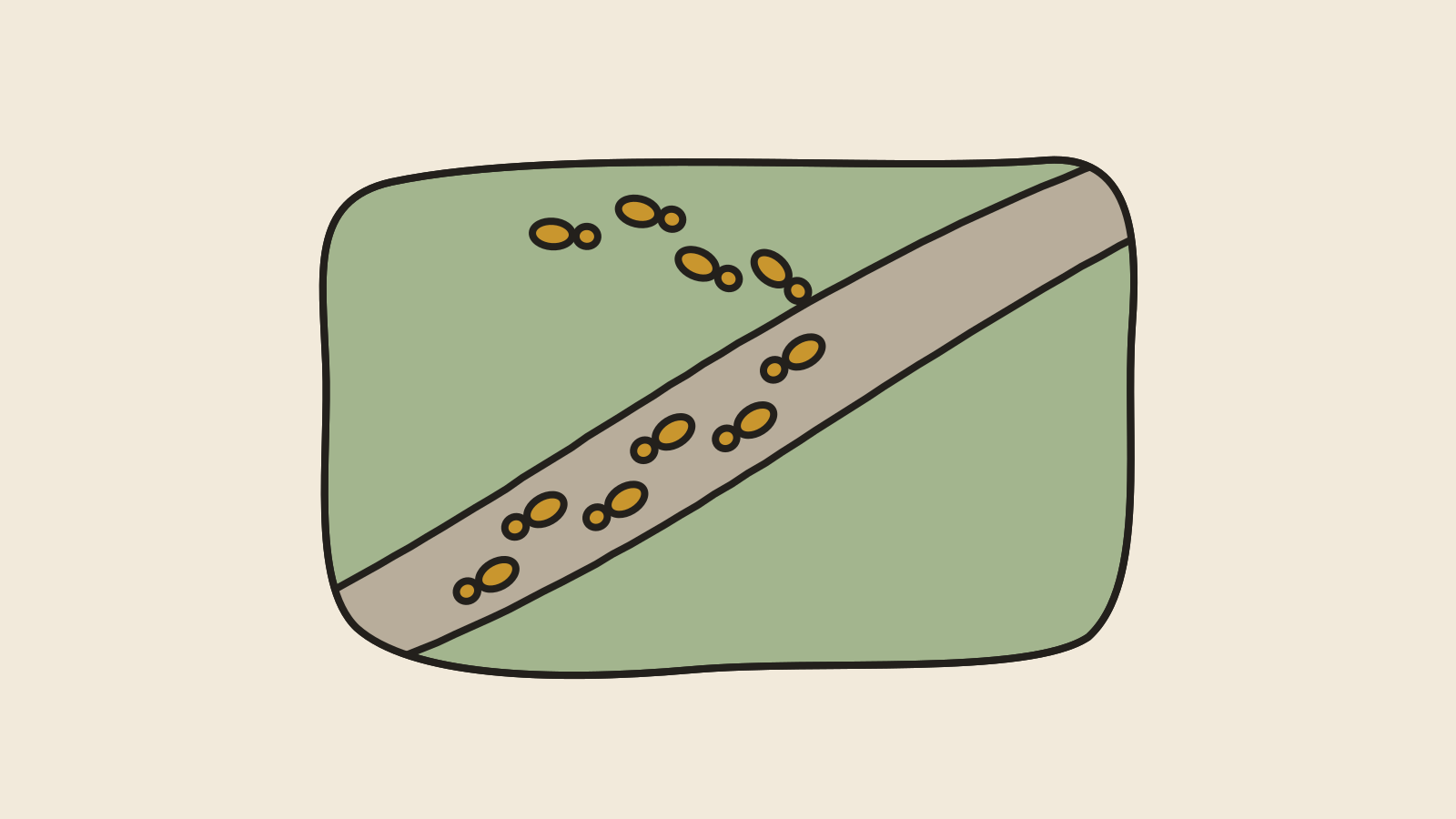
Social structures exist only because people keep acting on them, and people can act only by drawing on those structures.
The idea
Structuration theory says that social structure and individual action are two sides of a single process. Structures such as languages, laws and customs do not stand over people like the walls of a building. They exist only because people keep acting on them, and people can act only by drawing on them. Anthony Giddens called this the duality of structure.
Language is his clearest case. When you ask for a coffee you follow rules of English grammar that you did not invent and could not easily state. The rules make your sentence possible. But the request also does something you never intended: it helps keep English going. If millions of speakers start saying "can I get" where their parents said "may I have", the rule itself shifts. Giddens held that every institution, from marriage to the state, is reproduced and changed in the same way.
Diagram
Structure makes action possible and action keeps structure in being
Read as text
A cycle of four stages round the phrase duality of structure. People draw on rules and resources. This makes knowledgeable action possible. The action has intended and unintended results. Through those results the structure is reproduced or altered, and it becomes the rules and resources that later action draws on.
Key features
- Structure consists of rules and resources that people draw on, and it both enables and constrains what they do.
- Actors are knowledgeable: they understand a great deal about how their society works, though much of it is practical know-how they could not put into words.
- Most social life is routine, and routine is what carries institutions across time and distance.
- Actions have unintended consequences, which become the unnoticed conditions of later action.
- An agent could always have acted otherwise, so even the weak keep some hold over the strong.
Not to be confused with
| Look-alike | The difference | Differs on |
|---|---|---|
| Structure and agency | Structure and agency names a problem: how far do social arrangements shape people, and how far the reverse? Structuration theory is one proposed answer to it. | Differs onScope |
| Habitus | Both explain how structure enters action. Giddens's skilled actors draw on rules and resources, watch what they do and could always act otherwise. Bourdieu's habitus is a set of dispositions fixed early by class conditions, which tends to reproduce them. | Differs onMechanism |
| Methodological individualism | Individualists hold that social facts must be explained by the beliefs and choices of individuals. Giddens denies that individuals come first. Nobody acts without rules and resources already in place. | Differs onClaim |
- Differs onScope
Structure and agency names a problem: how far do social arrangements shape people, and how far the reverse? Structuration theory is one proposed answer to it.
- Differs onMechanism
Both explain how structure enters action. Giddens's skilled actors draw on rules and resources, watch what they do and could always act otherwise. Bourdieu's habitus is a set of dispositions fixed early by class conditions, which tends to reproduce them.
- Differs onClaim
Methodological individualism
Individualists hold that social facts must be explained by the beliefs and choices of individuals. Giddens denies that individuals come first. Nobody acts without rules and resources already in place.
Origins and development
Giddens worked the theory out in three books: New Rules of Sociological Method (1976), Central Problems in Social Theory (1979) and the full statement, The Constitution of Society (1984). He was answering a split in the sociology of his day. Functionalists and structuralists explained conduct by the system. Interpretive schools stayed close to what actors meant. He borrowed from both camps, and from Wittgenstein on rules. Rob Stones later reworked it, under the name strong structuration, for use in empirical research.
Why it matters
It offers a way to think about change without choosing between "the system made me" and "anyone can do anything". Researchers have used it to study how new technology reshapes offices while office habits reshape the technology, and how states and the international order produce each other. It also explains why a custom can vanish within a generation once enough people stop observing it.
Critiques and limits
Margaret Archer argued that fusing structure and action into one process makes it impossible to ask which shaped which at a given time. She proposed keeping them distinct and tracing their effects in sequence. John B. Thompson held that rules and resources make too thin a notion of structure, since they miss how class or gender limits the options open to people. Nicky Gregson judged the theory too abstract to guide research. It is a conceptual scheme, to be judged by its usefulness, and no experiment could confirm it.
Connections
Belongs to
It is one of the main late twentieth-century attempts to join theories of action with theories of social systems.
Originated by
Giddens developed the theory across three books and gave its full statement in The Constitution of Society in 1984.
Influenced by
Goffman's close studies of encounters supplied the everyday routines in which Giddens saw institutions being reproduced.
Ludwig WittgensteinPhilosophy
Wittgenstein's view that to know a rule is to know how to go on underlies the account of structure as rules in use.
Garfinkel's school supplied the picture of ordinary people as skilled, knowing producers of social order.
Critiques
It denies that institutions can be explained by society's needs, and insists they persist only through what people do.
Structuralism (anthropology)Anthropology
Giddens kept structuralism's point that rules outlast any one user, and charged it with erasing the knowledgeable people who apply them.
Contrasts with
Differs on scope. Structure and agency names the problem, and structuration theory is Giddens's answer that each produces the other.
Differs on mechanism. Giddens has skilled actors drawing on rules and able to act otherwise, where habitus steers through dispositions set early by class.
Applied in
Wanda Orlikowski used it to show that workplace technology shapes routines and is reshaped by how staff use it.
Constructivism (international relations)Political theory & science
Alexander Wendt drew on it to argue that states and the international system make each other.
Cross with
Two distant entries to read beside this one, each with the question the pairing opens.
Langue and paroleCognitive science & linguistics
Each act of speech both draws on the language and keeps it alive: is Giddens's structure just langue, and action just parole? Set them side by side
Nash equilibriumEconomics
What does a structure that people keep reproducing have that a Nash equilibrium, which nobody gains by leaving alone, lacks? Set them side by side
Further reading
- Archer, M. S. (1982). Morphogenesis versus structuration: On combining structure and action. The British Journal of Sociology, 33(4), 455–483. https://doi.org/10.2307/589357
- Giddens, A. (1984). The constitution of society: Outline of the theory of structuration. Polity Press.
- Stones, R. (2005). Structuration theory. Palgrave Macmillan.
Cite this entry
Scholia. (2026). Structuration theory. In Scholia: Notes in the margin of the human sciences. Retrieved November 28, 2026, from https://scholia.zennia.sg/ideas/structuration-theory