IdeaPhilosophyAlso in Psychology
Will to power
Nietzsche's claim that living things strive above all to grow, master and overcome resistance, with survival and pleasure as side effects.
The idea
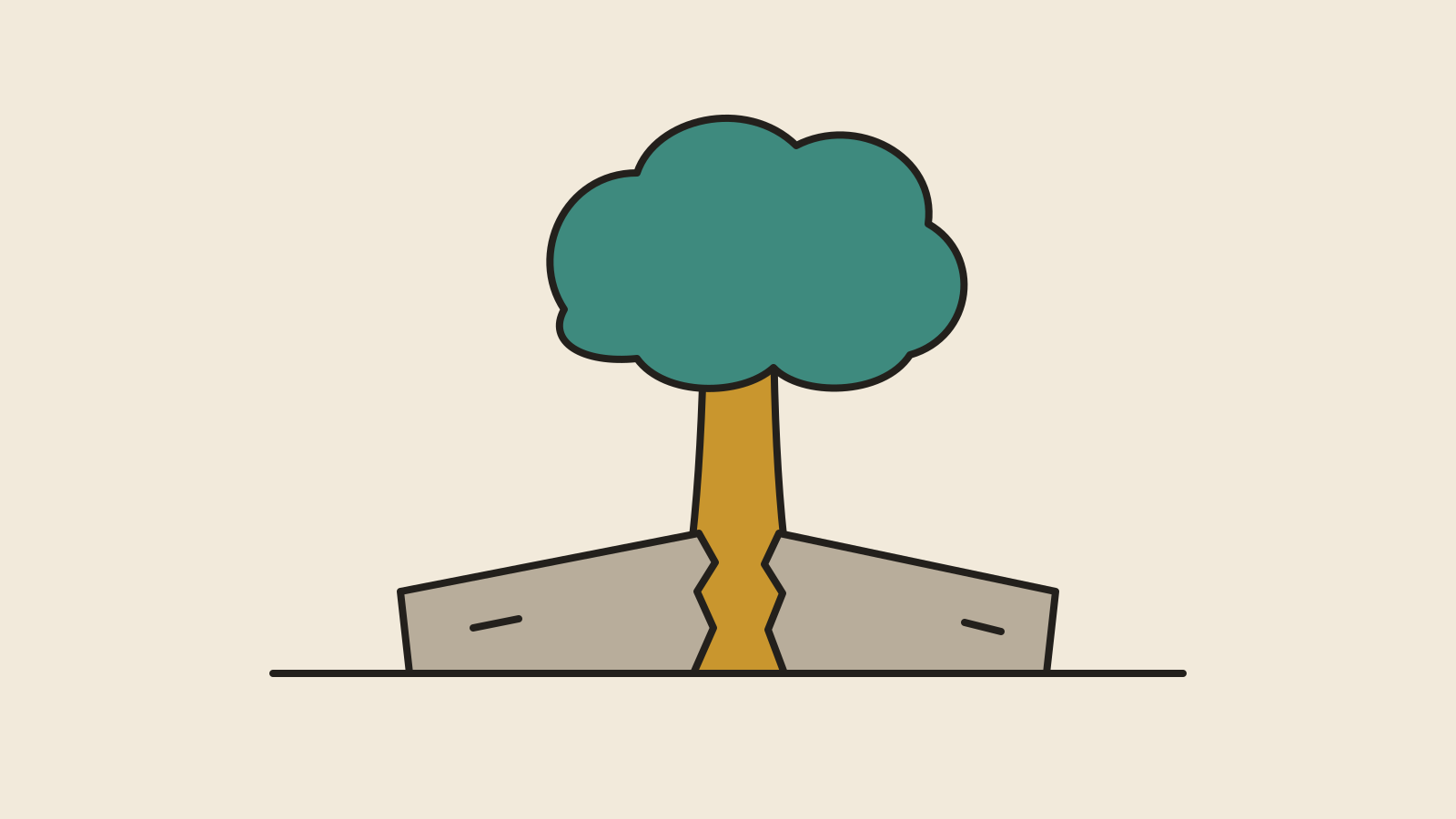
The will to power is Nietzsche's answer to the question of what living things most deeply want. The usual answers in his day were survival and pleasure. He thought both were wrong. What a living thing wants is to grow, to extend itself and to overcome what resists it. Staying alive is a frequent result. Pleasure is the feeling that comes when the effort succeeds.
Friedrich Nietzsche
A German philosopher who declared the death of God, traced the hidden history of moral values and asked what could replace them.
Watch someone with a crossword. Hand over the finished answers and you have ruined it, though the squares are now full. The solver wanted the resistance of the clues and the overcoming of it. People choose the harder climbing route for the same reason. On Nietzsche's account this pattern is general. Power here means capacity and mastery, and it includes mastery of oneself. Ruling over other people is one crude form of it. The artist who imposes form on stubborn material and the ascetic who commands his own appetites are, for Nietzsche, stronger cases.
Diagram
Readers dispute how far Nietzsche meant the will to power to reach
Read as text
Three circles, one inside the next. The innermost is human motives, the reading on which the will to power is a psychological claim. The middle circle is all living things, the claim made in Zarathustra and Beyond Good and Evil. The outermost is all of reality, a claim found mainly in the unpublished notebooks and rejected by many interpreters.
Key features
- The aim is growth and the overcoming of resistance, so a life with every wish granted at once would frustrate it.
- A person is a collection of competing drives, each seeking to direct the others, with no single will in charge.
- It works in the weak as well as the strong, since moral condemnation of the powerful is a way of gaining power over them.
- Nietzsche prized its turning inward as self-overcoming, the discipline by which someone gives form to their own character.
- Whether it describes human psychology, all life or all of reality is disputed, because his boldest statements stayed in his notebooks.
Not to be confused with
| Look-alike | The difference | Differs on |
|---|---|---|
| The will (Schopenhauer) | Schopenhauer's will is one blind force that strives only to go on existing, and he advised denying it. Nietzsche's is a striving in many separate drives to grow and to master, and he wanted it affirmed. | Differs onClaim |
| Conatus | Spinoza held that each thing strives to stay in being. Nietzsche named Spinoza when he objected that self-preservation is only an indirect result. A living thing seeks first to discharge its strength. | Differs onClaim |
| Inferiority complex | Alfred Adler borrowed the phrase for a striving for superiority that makes up for felt weakness. For Nietzsche the striving comes first and needs no wound to explain it. | Differs onClaim |
| A lust for domination | Power over others is one expression and often a poor one. The idea covers the athlete, the scholar and the saint as much as the tyrant. | Differs onScope |
- Differs onClaim
Schopenhauer's will is one blind force that strives only to go on existing, and he advised denying it. Nietzsche's is a striving in many separate drives to grow and to master, and he wanted it affirmed.
- Differs onClaim
Spinoza held that each thing strives to stay in being. Nietzsche named Spinoza when he objected that self-preservation is only an indirect result. A living thing seeks first to discharge its strength.
- Differs onClaim
Alfred Adler borrowed the phrase for a striving for superiority that makes up for felt weakness. For Nietzsche the striving comes first and needs no wound to explain it.
- Differs onScope
A lust for domination
Power over others is one expression and often a poor one. The idea covers the athlete, the scholar and the saint as much as the tyrant.
Origins and development
The phrase first appears in print in Thus Spoke Zarathustra (1883), where Zarathustra says that wherever he found life he found will to power. Beyond Good and Evil (1886) turned it against the biologists' instinct of self-preservation. Nietzsche planned a major work under the title and dropped the plan in 1888. The book called The Will to Power was compiled from his notebooks by his sister and Peter Gast and first published in 1901, a year after his death. Martin Heidegger later read the idea as Nietzsche's metaphysics, and Walter Kaufmann in 1950 as a psychology of self-mastery.
Why it matters
The idea offers a rival to the picture of people as seekers of comfort, the picture built into utility in economics. It predicts that people will choose difficulty and that moral talk can be a bid for control. Psychologists have since studied the pull of mastery and challenge under other names, among them flow and intrinsic motivation. The phrase is also widely misused as a slogan for ruthlessness, which makes the original worth knowing.
Utility
Economists' measure of how much a person gains from something, now usually just a number that ranks options by preference.
Flow
People are most absorbed, and often most satisfied, when a clear task stretches their skill to its limit without exceeding it.
Critiques and limits
Maudemarie Clark argues that the cosmic version, on which everything is will to power, is the kind of projection onto nature that Nietzsche himself mocked, and that his books put forward only as a supposition. Brian Leiter adds that the psychological version can't be universal, since Nietzsche also speaks of people in whom the will to power is lacking. A common objection is that a drive said to explain both conquest and self-denial explains too much to be tested. The idea rests on interpretation of cases and is no established finding of psychology.
Connections
Originated by
He named it in Thus Spoke Zarathustra in 1883 and afterwards used it to explain morality, knowledge and life itself.
Influenced by
Nietzsche took from his early master the view that striving is more basic than reason, then rejected the will's unity and its denial.
Critiques
It denies that people seek pleasure as their goal, treating pleasure as the feeling that comes when power grows.
Contrasts with
Differs on claim. Conatus is a striving to persist, where Nietzsche's will to power seeks growth and treats self-preservation as a side effect.
Inferiority complexPsychology
Differs on claim. Adler's striving for superiority makes up for a felt weakness, where Nietzsche's will to power is primary and needs no wound.
Differs on claim. Schopenhauer's will strives only to go on existing and should be denied, where Nietzsche's strives to grow and should be affirmed.
Further reading
- Nietzsche, F. (2006). Thus spoke Zarathustra: A book for all and none. Cambridge University Press. https://doi.org/10.1017/CBO9780511812095 (Original work published 1883)
- Nietzsche, F. (2002). Beyond good and evil: Prelude to a philosophy of the future. Cambridge University Press. https://doi.org/10.1017/CBO9780511812033 (Original work published 1886)
- Reginster, B. (2006). The affirmation of life: Nietzsche on overcoming nihilism. Harvard University Press. https://doi.org/10.4159/9780674042643
- Richardson, J. (1996). Nietzsche's system. Oxford University Press.
Cite this entry
Scholia. (2026). Will to power. In Scholia: Notes in the margin of the human sciences. Retrieved November 28, 2026, from https://scholia.zennia.sg/ideas/will-to-power