School or branchPhilosophy
Logical positivism
A movement of the 1920s and 1930s holding that a statement is meaningful only if it is true by definition or testable by experience.
Overview
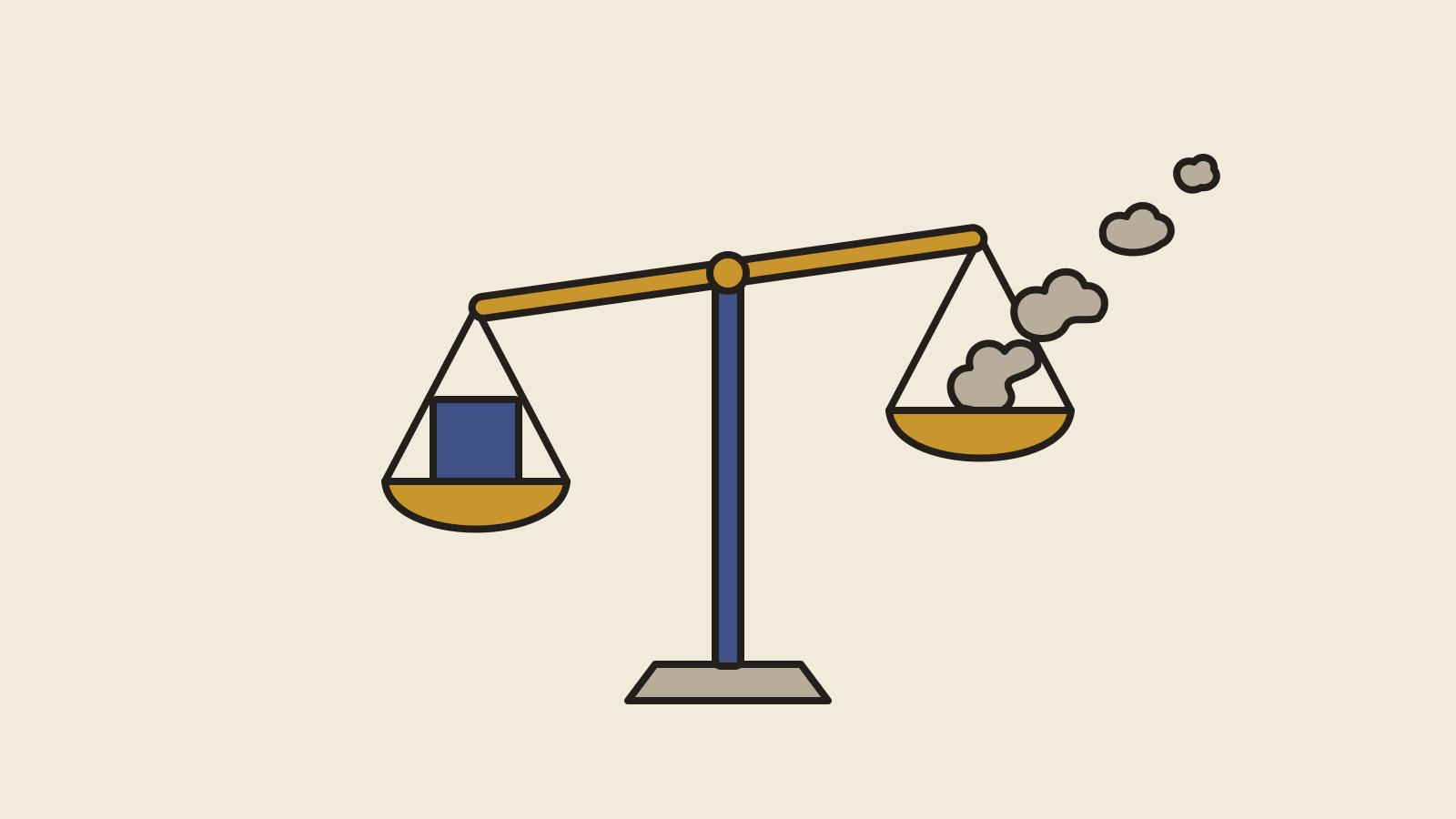
Logical positivism was a movement of philosophers and scientists, centred on Vienna in the 1920s and 1930s. Its members held that a statement says something about the world only if experience could count for or against it. Statements of logic and mathematics were allowed as true by definition. Everything else, including most of traditional metaphysics, was judged to lack cognitive meaning: it was neither true nor false, however deep it sounded.
Metaphysics
The branch of philosophy that asks what exists and what the most general features of reality are.
A simple test shows the method. "The milk in the fridge has gone off" can be checked by opening the carton. "Two plus two is four" holds by the meaning of its terms. "The Absolute is beyond time" fits neither case, since no observation would bear on it, so the positivists set it aside as a pseudo-statement.
The members disagreed about politics and about what a basic observation is. They shared the wish to give philosophy the clarity of modern logic and the discipline of science.
Diagram
The positivists sorted every statement by whether it could be checked
Read as text
A tree whose root is any statement, with two branches. The first branch, cognitively meaningful, divides into statements true by definition, such as those of logic and mathematics, and statements testable by observation, such as those of science. The second branch, no cognitive meaning, holds metaphysics and ethics understood as the expression of attitude. On this view only the first branch can be true or false.
Core commitments
- A statement has cognitive meaning only if it is analytic (true by the meaning of its words) or testable by observation, a rule known as the verification principle.
Verification principle
A statement is meaningful only if it is true by definition or could, in principle, be checked against observation.
- Logic and mathematics say nothing about the world, because their truths follow from definitions and rules of language.
- Philosophy has no subject matter of its own, and its task is the logical analysis of the language of science.
- The sciences form a unity, with one method and one shared language of description.
- For most members, moral and religious sentences express attitudes and state no facts.
Not to be confused with
| Look-alike | The difference | Differs on |
|---|---|---|
| Positivism (sociology) | Comte's positivism of the 1830s was a programme for a science of society, tied to a law of historical progress. Logical positivism was a theory of meaning built on the new mathematical logic, and it had no such law. | Differs onClaim |
| Empiricism | Empiricism is the broad view that knowledge of the world rests on experience. Logical positivism is one twentieth-century version that adds a rule about meaning: what cannot be tested says nothing. | Differs onScope |
| Falsificationism | Karl Popper knew the Circle but rejected its test. His criterion marks science off from non-science by refutability, and it does not call untestable statements meaningless. | Differs onClaim |
| Legal positivism | A theory of law which holds that what the law is depends on social facts such as enactment, whatever its moral merit. It shares only the word. | Differs onScope |
- Differs onClaim
Comte's positivism of the 1830s was a programme for a science of society, tied to a law of historical progress. Logical positivism was a theory of meaning built on the new mathematical logic, and it had no such law.
- Differs onScope
Empiricism is the broad view that knowledge of the world rests on experience. Logical positivism is one twentieth-century version that adds a rule about meaning: what cannot be tested says nothing.
- Differs onClaim
Karl Popper knew the Circle but rejected its test. His criterion marks science off from non-science by refutability, and it does not call untestable statements meaningless.
- Differs onScope
Legal positivism
A theory of law which holds that what the law is depends on social facts such as enactment, whatever its moral merit. It shares only the word.
Origins and development
Moritz Schlick took a chair of philosophy at Vienna in 1922, and from 1924 a discussion group met around him on Thursday evenings. It read Ludwig Wittgenstein's Tractatus closely. In 1929 Hans Hahn, Otto Neurath and Rudolf Carnap issued a manifesto that gave the group its public name, the Vienna Circle. Hans Reichenbach led an allied group in Berlin. A former student shot Schlick dead in 1936, and Nazi rule scattered the rest to Britain and the United States, where the movement was known as logical empiricism.
Ludwig Wittgenstein
The Austrian philosopher who wrote two opposed accounts of language, first as a picture of facts and later as a set of shared practices.
Why it matters
Its doctrines are mostly abandoned, but its habits spread widely. The demand that a claim be stated clearly enough to be checked shaped analytic philosophy, later behaviourism and the survey-based social science of the mid twentieth century. Anyone who meets a grand claim by asking what evidence could count against it is asking the Circle's question.
Behaviourism (psychology)
The school that held psychology should be a science of observable behaviour, explained by learning, with no appeal to inner mental states.
Critiques and limits
The verification principle seemed to fail its own test, since it is neither true by definition nor checkable by observation. Carl Hempel, himself a member of the movement, showed in 1950 that each precise version either excluded scientific laws or let metaphysics back in. W. V. O. Quine attacked the line between analytic and empirical statements in 1951. Thomas Kuhn's history of science later undercut the picture of observation as neutral. A. J. Ayer, who had popularised the doctrine in English, conceded in 1978 that most of it was false.
W. V. O. Quine
An American logician and philosopher who denied that any truths hold by meaning alone and treated philosophy as continuous with science.
Thomas Kuhn
An American historian and philosopher of science who argued that science advances through revolutions that replace one framework of thought with another.
Key figures
- Moritz Schlick
- Rudolf Carnap
- Otto Neurath
- Hans Hahn
- Hans Reichenbach
- Friedrich Waismann
- Carl Hempel
- A. J. Ayer
Connections
Extends
It turns the empiricist theory of knowledge into a theory of meaning, with modern logic doing the work once given to psychology.
Influenced by
Hume's division of all reasoning into relations of ideas and matters of fact is the ancestor of the positivists' two kinds of meaningful statement.
The Vienna Circle read the Tractatus line by line and took from it the view that logical truths are empty tautologies.
Russell's mathematical logic gave the movement the tool it used to analyse the language of science.
Positivism (sociology)Sociology
The name and the hostility to metaphysics came down from Comte's positivism by way of the physicist Ernst Mach.
Analytic–synthetic distinction
The positivists classed logic and mathematics as analytic, true by convention, which left experience as the only source of factual knowledge.
Carnap attended Frege's lectures at Jena, and the positivists made Frege's logic their instrument for analysing scientific language.
Critiques
It held that metaphysical sentences are neither true nor false, since no observation could count for or against them.
Contrasts with
Differs on claim. The positivists dismissed what cannot be verified as nonsense, while Wittgenstein thought what cannot be said mattered most.
Differs on scope. Logical positivism is one movement within the analytic tradition, with a doctrine most later analytic philosophers rejected.
Differs on scope. Logical positivism adds a theory of meaning to empiricism, ruling unverifiable statements meaningless.
Positivism (sociology)Sociology
Differs on claim. Comte's positivism is a programme for a science of society with a law of progress, where logical positivism is a theory of meaning.
Differs on claim. The positivists used testability to separate sense from nonsense, where Popper used refutability only to separate science from non-science.
Contains
The principle was the movement's central tool for separating science from metaphysics.
Influenced
He learned from Carnap and the Vienna Circle in 1932 and 1933, then spent decades arguing with their programme.
Behaviouralism (political science)Political theory & science
Took from the positivists the demands that claims be testable against observation and that facts be kept apart from values.
Behaviourism (psychology)Psychology
Neobehaviourists of the 1930s borrowed its demand that every scientific term be tied to observation.
The Vienna Circle made the logical analysis of scientific theories a profession and fixed the field's agenda for decades.
Methods and measurement in psychologyPsychology
Operationism, Bridgman's 1927 rule that a concept means the procedure used to measure it, entered psychology in the 1930s alongside logical positivism.
Semantics and pragmaticsCognitive science & linguistics
The three-way split of syntax, semantics and pragmatics was drawn by Morris and adopted by Carnap within the positivists' unified-science project.
Neurath and Carnap coined the word in the early 1930s for the thesis that every statement can be put in physical language.
The positivists' unity of science programme hoped to connect every science to physics through definitions and derivations.
Critiqued by
He rejected the Vienna Circle's verification test, arguing that universal laws can be refuted but never verified.
He rejected its picture of science as a steady accumulation of facts stated in a neutral language of observation.
Popper rejected the positivists' search for a test of meaning and their view that observations confirm theories.
Realists rejected the positivist view that talk of electrons is shorthand for talk about meter readings.
Cross with
Two distant entries to read beside this one, each with the question the pairing opens.
Intelligence quotient (IQ)Psychology
If IQ is defined as a score on a standardised test, is that the positivists' ideal of a meaningful concept or a warning about it? Set them side by side
Cultural materialismAnthropology
Harris explains customs and beliefs by the practical problems of subsistence: how much of the positivist programme does that strategy carry into anthropology? Set them side by side
Further reading
- Ayer, A. J. (1936). Language, truth and logic. Victor Gollancz.
- Hahn, H., Neurath, O., & Carnap, R. (1973). The scientific conception of the world: The Vienna Circle. In M. Neurath & R. S. Cohen (Eds.), Empiricism and sociology (pp. 299–318). D. Reidel. https://doi.org/10.1007/978-94-010-2525-6_9 (Original work published 1929)
- Quine, W. V. (1951). Two dogmas of empiricism. The Philosophical Review, 60(1), 20–43. https://doi.org/10.2307/2181906
- Uebel, T. (2006). Vienna Circle. Stanford Encyclopedia of Philosophy. https://plato.stanford.edu/entries/vienna-circle/
Cite this entry
Scholia. (2026). Logical positivism. In Scholia: Notes in the margin of the human sciences. Retrieved November 28, 2026, from https://scholia.zennia.sg/schools/logical-positivism