VersusPsychology
Heuristic vs cognitive bias
A heuristic is the mental shortcut. A cognitive bias is the regular error a shortcut sometimes leaves behind.
Comparison
| HeuristicPsychology | Cognitive biasPsychology | |
|---|---|---|
| What it is | A process: a simple rule for judging or deciding on part of the information | A result: an error that leans the same way again and again |
| Everyday example | Buying the soy sauce your mother used when the shelf holds twelve brands | Expecting the kitchen renovation to finish sooner than it does, every time |
| How you spot it | Watch how someone reaches a decision | Compare many answers with a standard, such as probability theory or the facts |
| Can it be a good thing? | Yes. It often comes close for a fraction of the effort | No, though critics may dispute the standard used to call it an error |
| Source | George Pólya, How to Solve It (1945) | Daniel Kahneman and Amos Tversky, in the early 1970s |
| Link to the other | One source of biases, and many uses produce no error | Can come from a heuristic, or from how attention and memory work |
What it is
- Heuristic
- A process: a simple rule for judging or deciding on part of the information
- Cognitive bias
- A result: an error that leans the same way again and again
Everyday example
- Heuristic
- Buying the soy sauce your mother used when the shelf holds twelve brands
- Cognitive bias
- Expecting the kitchen renovation to finish sooner than it does, every time
How you spot it
- Heuristic
- Watch how someone reaches a decision
- Cognitive bias
- Compare many answers with a standard, such as probability theory or the facts
Can it be a good thing?
- Heuristic
- Yes. It often comes close for a fraction of the effort
- Cognitive bias
- No, though critics may dispute the standard used to call it an error
Source
- Heuristic
- George Pólya, How to Solve It (1945)
- Cognitive bias
- Daniel Kahneman and Amos Tversky, in the early 1970s
Link to the other
- Heuristic
- One source of biases, and many uses produce no error
- Cognitive bias
- Can come from a heuristic, or from how attention and memory work
Diagram
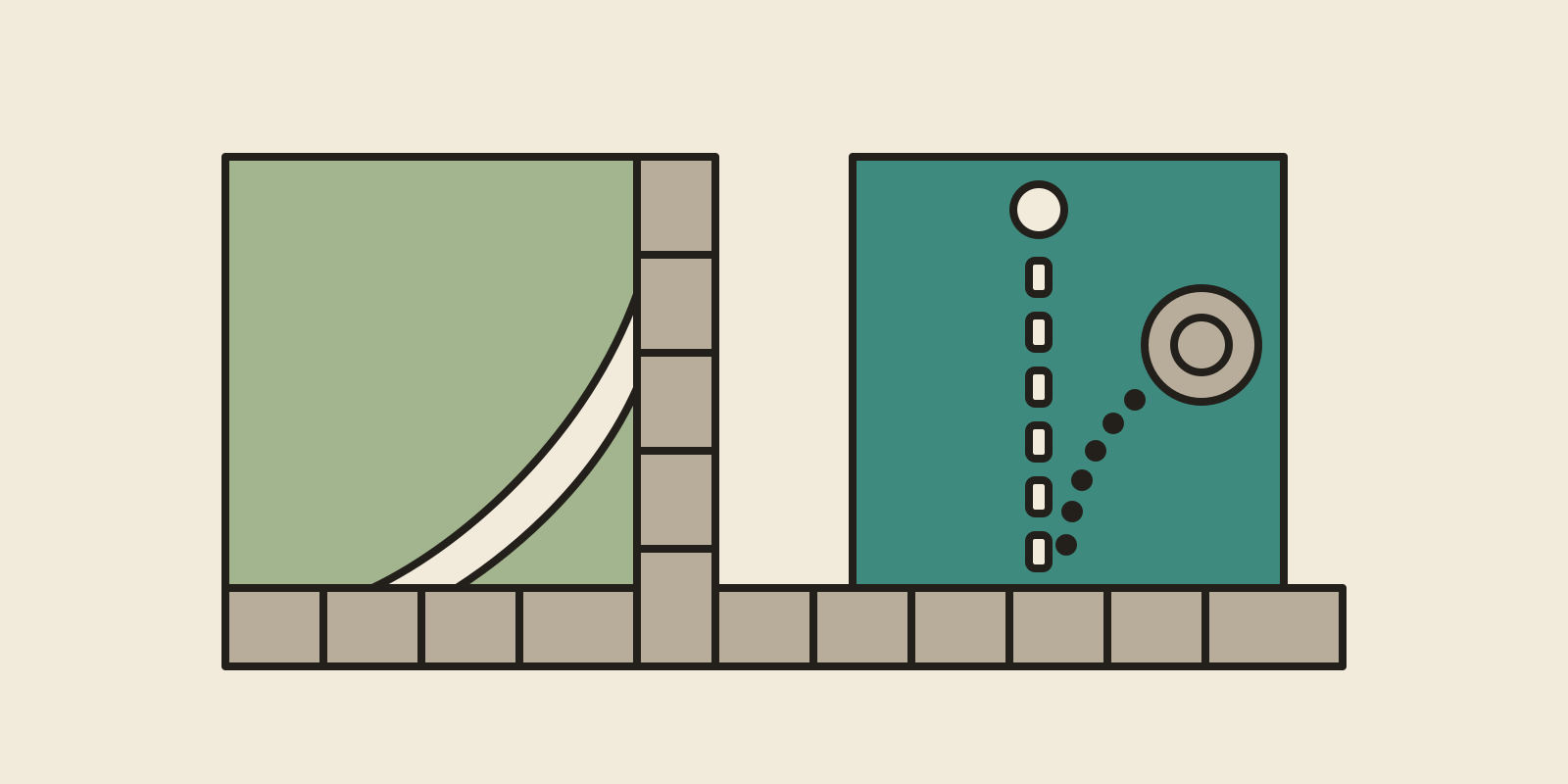
A heuristic is a process and a bias is a result
Read as text
Two columns divided by kind of thing. A heuristic is a process: the shortcut itself, often accurate enough and seen in the method a person uses. A cognitive bias is a result: a repeated error that leans one way and is seen by comparing answers against a standard.
Why people confuse them
They arrived in psychology as a pair. Tversky and Kahneman's 1974 paper tied three heuristics to the biases each one produces, and the research programme that followed is called heuristics and biases. Popular lists of thinking errors then mixed the two, so the same label turns up as a shortcut on one page and an error on the next. Readers come away thinking that every shortcut is a mistake, or that the two words are interchangeable.
When the difference matters
A baker orders flour by a rule of thumb: whatever sold in the same week last year, plus a little. A consultant tells her this is bias and sells her forecasting software.
The rule is a heuristic, and whether it produces a cognitive bias is a separate question that her own records can answer. Suppose she runs short before every festival. That is a consistent error in one direction, which is exactly what a bias is, and the cure is to adjust the rule for festival weeks. Suppose instead that her misses fall both ways and stay small, in which case the shortcut is doing its job and the software has to prove it can do better.
Heuristic
A simple rule for judging or deciding that uses only part of the information, trading thoroughness for speed.
Cognitive bias
A regular lean in human judgement: an error that most people make in the same direction and that can be predicted in advance.
Treating the shortcut as the fault leads people to throw out rules that work. The thing to hunt is the lean.
Where they overlap
Both belong to cognitive psychology's picture of a mind with limited time and attention, and both were taken up by behavioural economics to explain why real choosers depart from the textbook one. Both run without our noticing much of the time. Both also drew fire from Gerd Gigerenzer in 1996. He found the heuristic labels too vague to test, and he argued that many biases are judged against the wrong standard.
Further reading
- Gigerenzer, G. (1996). On narrow norms and vague heuristics: A reply to Kahneman and Tversky. Psychological Review, 103(3), 592–596. https://doi.org/10.1037/0033-295X.103.3.592
- Kahneman, D. (2011). Thinking, fast and slow. Farrar, Straus and Giroux.
- Pólya, G. (1945). How to solve it: A new aspect of mathematical method. Princeton University Press.
- Tversky, A., & Kahneman, D. (1974). Judgment under uncertainty: Heuristics and biases. Science, 185(4157), 1124–1131. https://doi.org/10.1126/science.185.4157.1124
Cite this entry
Scholia. (2026). Heuristic vs cognitive bias. In Scholia: Notes in the margin of the human sciences. Retrieved November 28, 2026, from https://scholia.zennia.sg/versus/heuristic-vs-cognitive-bias