VersusPhilosophy
Logical validity vs measurement validity
In logic, validity belongs to an argument's form. In measurement, it belongs to an interpretation of scores and rests on evidence.
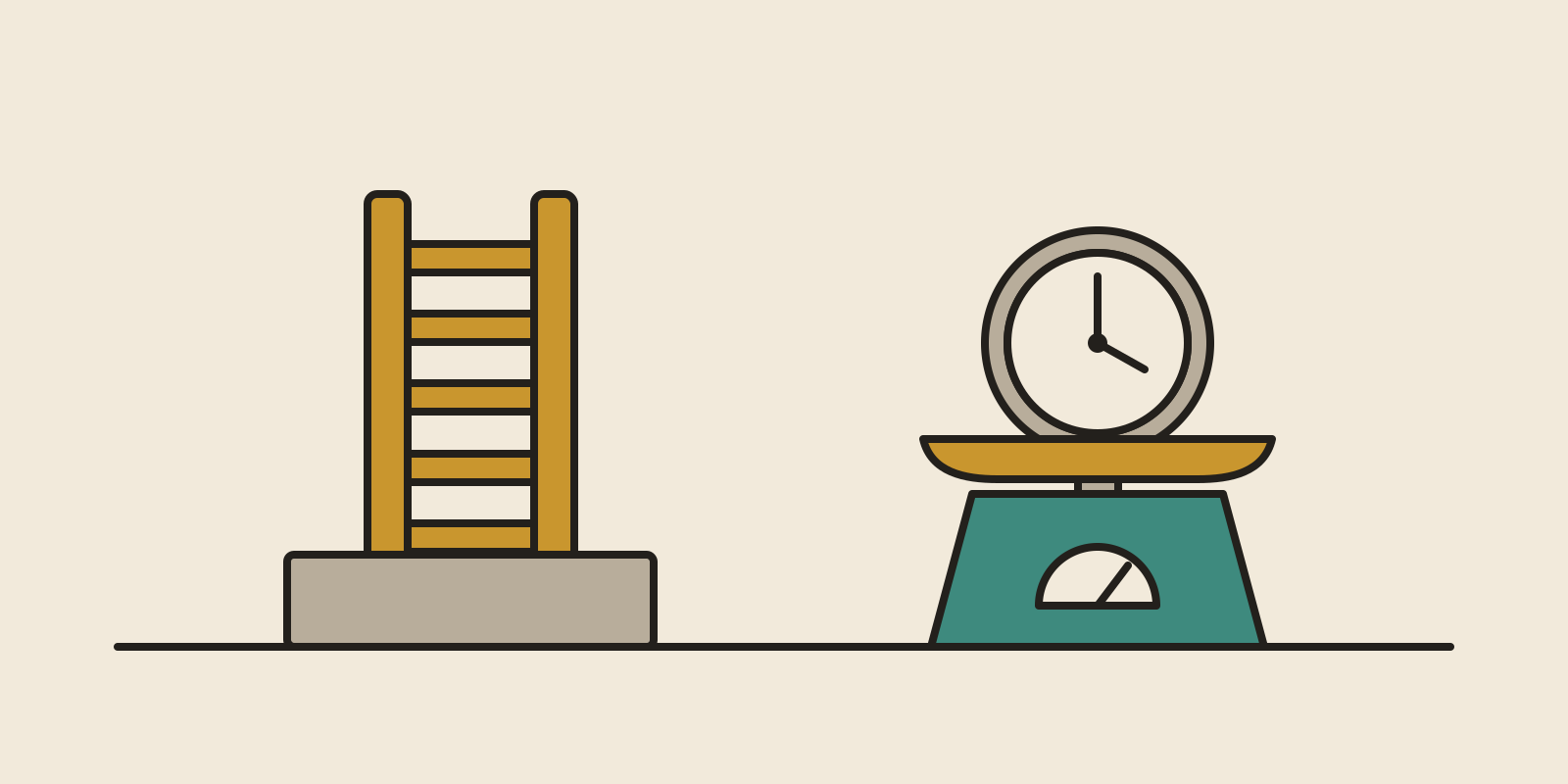
Comparison
| Validity and soundnessPhilosophy | Validity (measurement)Psychology | |
|---|---|---|
| Home field | Logic | Testing and research methods in psychology and the social sciences |
| What is judged | An argument: the step from premises to conclusion | An interpretation or use of the scores from a test or questionnaire |
| The test | If the premises were true, would the conclusion have to be true? | Does the evidence support reading the score as a measure of what is claimed? |
| Degrees | All or nothing | A matter of degree, argued from evidence and never proved |
| Companion term | Soundness: a valid argument whose premises are in fact true | Reliability: whether the scores are consistent |
| Source | Aristotle's definition of a deduction, about 350 BCE. Tarski's modern definition, 1936 | Truman Kelley in the 1920s. Cronbach and Meehl on construct validity, 1955 |
Home field
- Validity and soundness
- Logic
- Validity (measurement)
- Testing and research methods in psychology and the social sciences
What is judged
- Validity and soundness
- An argument: the step from premises to conclusion
- Validity (measurement)
- An interpretation or use of the scores from a test or questionnaire
The test
- Validity and soundness
- If the premises were true, would the conclusion have to be true?
- Validity (measurement)
- Does the evidence support reading the score as a measure of what is claimed?
Degrees
- Validity and soundness
- All or nothing
- Validity (measurement)
- A matter of degree, argued from evidence and never proved
Companion term
- Validity and soundness
- Soundness: a valid argument whose premises are in fact true
- Validity (measurement)
- Reliability: whether the scores are consistent
Source
- Validity and soundness
- Aristotle's definition of a deduction, about 350 BCE. Tarski's modern definition, 1936
- Validity (measurement)
- Truman Kelley in the 1920s. Cronbach and Meehl on construct validity, 1955
Diagram
One word names two standards for two different things
Read as text
Two columns divided on what is being judged. On the left, logical validity belongs to an argument's form, is all or nothing and pairs with soundness. On the right, measurement validity belongs to a reading of scores, is a matter of degree and pairs with reliability.
Why people confuse them
A single word is doing two jobs here, and because both jobs express a kind of approval the shift between them is easy to miss. Everyday speech adds a third sense, since "a valid point" means a true or reasonable one. Research writing makes things worse by using both technical senses on the same page. A report can praise a valid argument in its introduction and a valid questionnaire in its method section, and nothing warns the reader that the meaning has changed.
When the difference matters
A school reasons that pupils who score above 80 on its placement quiz are ready for the advanced class, that Mei scored 85 and that Mei is therefore ready.
A parent objects that this isn't valid. In the logician's sense the parent is mistaken, because the conclusion follows from the premises and so the argument is valid. The trouble sits inside the first premise, a question of measurement validity. Do scores on this quiz support a judgement about readiness, or only about who has memorised the textbook?
Validity and soundness
An argument is valid when its conclusion follows from its premises, and sound when it is valid and its premises are true.
Validity (measurement)
Validity is how well the evidence supports reading a score as a measure of what it is claimed to measure.
When the senses are mixed the two sides talk past each other. The school defends its reasoning, which was valid all along. The parent attacks the logic and never asks for the evidence that the quiz predicts how pupils fare in the advanced class.
Where they overlap
Both ask whether someone is entitled to a conclusion. Each field also sets a weaker standard beneath a stronger one, and the weaker is needed and not enough. An argument must be valid before it can be sound, and a measure must be reliable before it can be valid. The word validity names the weaker standard in logic and the stronger one in testing. The two meet in practice as well. A claim that a test measures something is defended by an argument from evidence, and that argument can itself be checked for logical validity.
Reliability (measurement)
Reliability is the consistency of a measure: how far it gives the same result when the thing measured has not changed.
Further reading
- Aristotle. (1989). Prior analytics. Hackett.
- Cronbach, L. J., & Meehl, P. E. (1955). Construct validity in psychological tests. Psychological Bulletin, 52(4), 281–302. https://doi.org/10.1037/h0040957
- Messick, S. (1995). Validity of psychological assessment: Validation of inferences from persons' responses and performances as scientific inquiry into score meaning. American Psychologist, 50(9), 741–749. https://doi.org/10.1037/0003-066X.50.9.741
- Priest, G. (2000). Logic: A very short introduction. Oxford University Press. https://doi.org/10.1093/actrade/9780192893208.001.0001
Cite this entry
Scholia. (2026). Logical validity vs measurement validity. In Scholia: Notes in the margin of the human sciences. Retrieved November 28, 2026, from https://scholia.zennia.sg/versus/validity-and-soundness-vs-validity-measurement