CrossingAnthropology
Cultural materialism + the tragedy of the commons
If Harris is right that some taboos protect a resource base, belief is a remedy for overuse that Hardin ruled out.
- School or branchCultural materialismMarvin Harris's research strategy, which explains customs and beliefs by the practical problems of feeding and reproducing a population.Anthropology
- IdeaTragedy of the commonsWhen a resource is open to all, each user gains by taking more, and together they can ruin it for everyone.Economics
What each entry sees
Cultural materialism
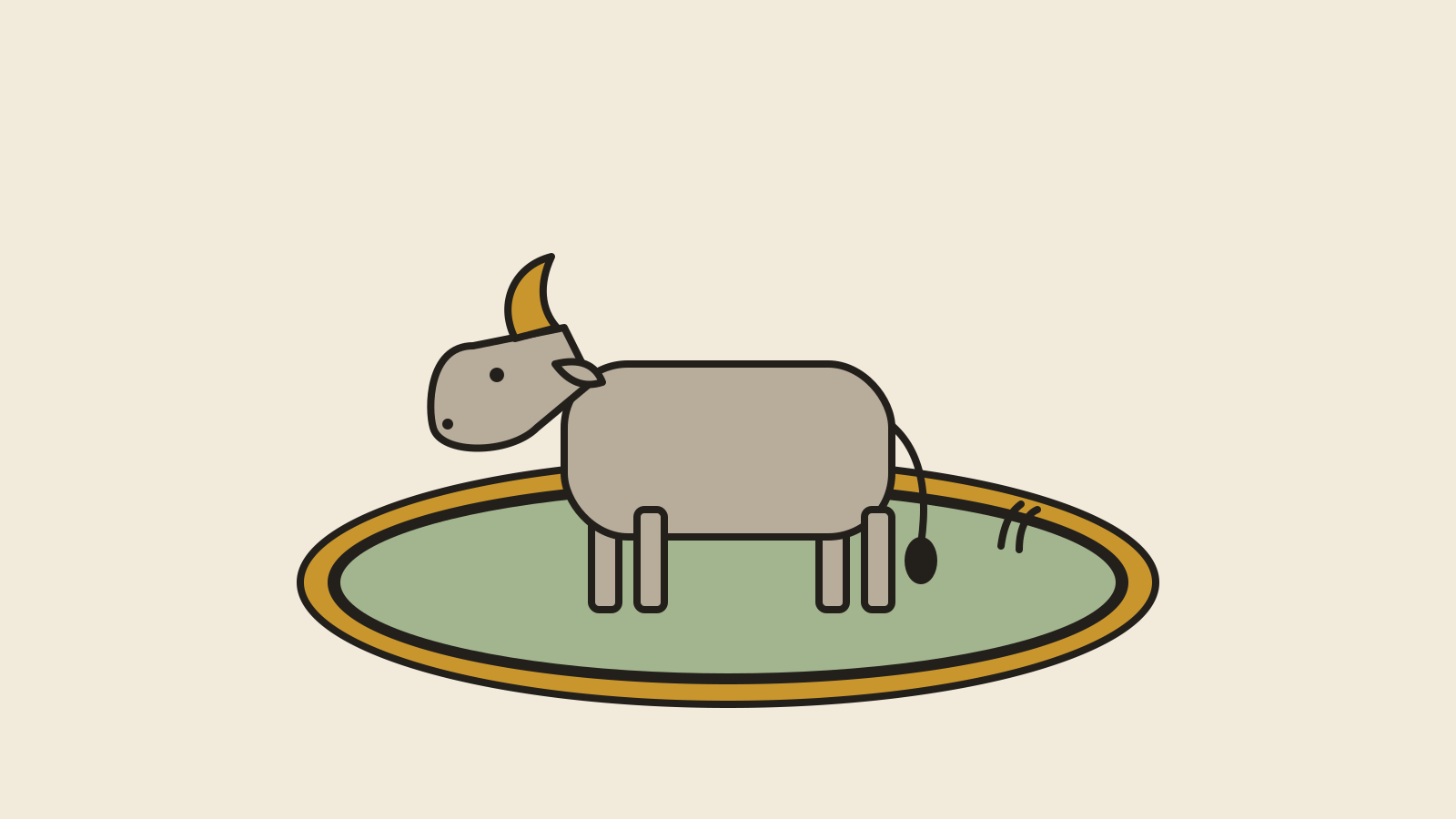
Cultural materialism is Marvin Harris's strategy of explaining customs and beliefs by the practical problems of feeding and reproducing a population. His best-known case is the Hindu ban on killing cattle. For a small farmer a living cow bears plough oxen, gives milk and drops dung for fuel and fertiliser, so on his account the religious rule protects an animal the farm can't do without. Marshall Sahlins objected that usefulness is itself defined by culture. Other critics called such explanations stories fitted after the fact.
Cultural materialism
Marvin Harris's research strategy, which explains customs and beliefs by the practical problems of feeding and reproducing a population.
Tragedy of the commons
The tragedy of the commons is Garrett Hardin's argument that a resource open to all can be ruined by users who each act sensibly. The gain from taking more goes to one user and the cost is spread across all. Hardin held that appeals to conscience would fail, and that only private ownership or rules backed by force could save a commons. Elinor Ostrom documented pastures, forests and irrigation systems that users had managed for centuries by rules of their own. The evidence is mixed.
Tragedy of the commons
When a resource is open to all, each user gains by taking more, and together they can ruin it for everyone.
Elinor Ostrom
The American political scientist who showed that communities can manage shared resources themselves, and won the Nobel prize in economics for it.
Diagram
Cultural materialism + the tragedy of the commons
Read as text
Overlap of Cultural materialism (School or branch, Anthropology) and Tragedy of the commons (Idea, Economics). Only Cultural materialism: Emic and etic and Hegelian dialectic. Only Tragedy of the commons: Collective action problem and Common-pool resource. Shared: Thomas Malthus.
What the crossing shows
Hardin offered two remedies and ruled out a third. A taboo, as Harris reads it, looks like the third made to work: a restraint carried in belief, with no fence and no state. Neighbours and fear of the sacred stand behind it, so it is more than the bare appeal Hardin dismissed. If Harris is right about some food rules, conscience can protect a resource when it arrives as religion.
Harris's cow belongs to a household, and the temptation he describes is a farmer eating next year's plough team in a bad season. That sets this year against next, where Hardin sets many users against one pasture. Ritual bans that close a shared reef for a season, known from parts of the Pacific, fit Hardin's case better. Ostrom's users made their rules on purpose and could revise them. A taboo, on Harris's account, works whatever believers think it is for.
The question it opens
Are food taboos a society's unplanned answer to the overuse Hardin thought only coercion could stop? Saying yes means showing that a taboo arose because it protected a resource, and Harris's critics doubt such histories can be told without fitting them to the result. The claim remains open.
Further reading
- Hardin, G. (1968). The tragedy of the commons. Science, 162(3859), 1243–1248. https://doi.org/10.1126/science.162.3859.1243
- Harris, M. (1979). Cultural materialism: The struggle for a science of culture. Random House.
- Harris, M. (1966). The cultural ecology of India's sacred cattle. Current Anthropology, 7(1), 51–66. https://doi.org/10.1086/200662
- Ostrom, E. (1990). Governing the commons: The evolution of institutions for collective action. Cambridge University Press. https://doi.org/10.1017/cbo9780511807763
Cite this entry
Scholia. (2026). Cultural materialism + the tragedy of the commons. In Scholia: Notes in the margin of the human sciences. Retrieved November 28, 2026, from https://scholia.zennia.sg/crossings/cultural-materialism-plus-tragedy-of-the-commons