CrossingAnthropology
Differential mode of association + civil society
Fei describes a society organised without associations of equal members, which tests whether civil society names a universal or a local form.
- IdeaDifferential mode of association (chaxu geju)Fei Xiaotong's model of Chinese society as rings of personal ties spreading from each person, with obligations that weaken as the rings widen.Anthropology
- TermCivil societyThe associations people form and run for themselves, outside the state and, on most modern definitions, outside the market.Political theory & science
What each entry sees
Differential mode of association (chaxu geju)
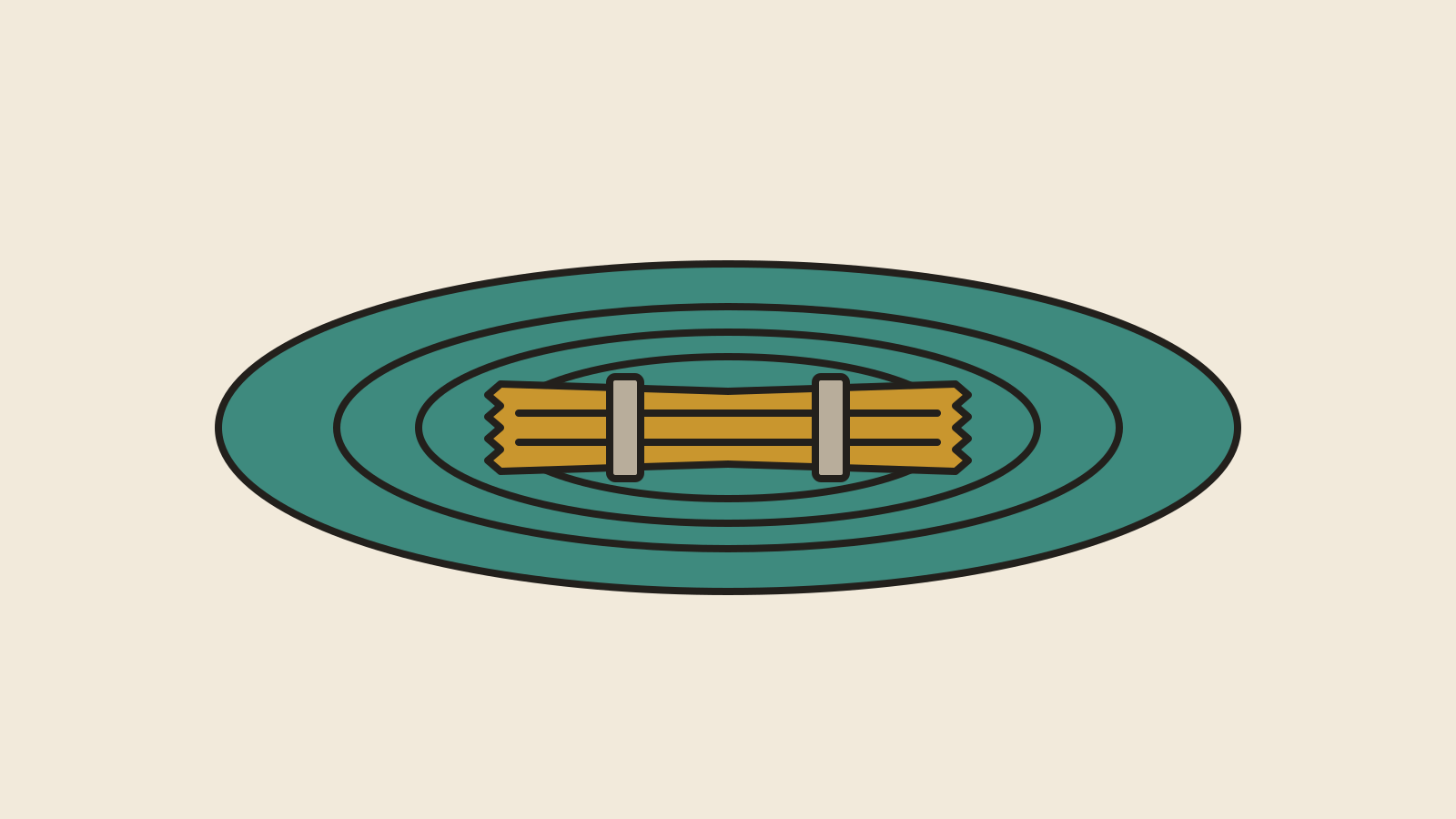
Fei Xiaotong pictured Chinese society as rings spreading from a stone dropped in a pond. In his differential mode of association, each person stands at the centre of their own rings, and what they owe another depends on how close that other stands. He set this against a Western pattern that he likened to straw tied in bundles: bounded groups whose members have equal standing under common rules. He used it to explain neglected shared goods, such as a canal nobody kept clean. Jack Barbalet holds that Fei's picture of the West was drawn for contrast.
Fei Xiaotong
The Chinese anthropologist who studied his own country's villages from the inside and pictured its society as ripples of personal ties.
Differential mode of association (chaxu geju)
Fei Xiaotong's model of Chinese society as rings of personal ties spreading from each person, with obligations that weaken as the rings widen.
Civil society
Civil society is the part of social life that people organise for themselves, outside the state and, on most modern definitions, outside the market. Its examples include charities, unions, congregations and clan associations. People join by choice and the associations govern themselves. A residents' group that cleans up a canal is the term's own example. Sheri Berman's study of Weimar Germany showed that dense associations can also serve undemocratic ends.
Civil society
The associations people form and run for themselves, outside the state and, on most modern definitions, outside the market.
Diagram
Differential mode of association + civil society
Read as text
Overlap of Differential mode of association (chaxu geju) (Idea, Anthropology) and Civil society (Term, Political theory & science). Only Differential mode of association: Confucianism and Fei Xiaotong. Only Civil society: Comparative politics and Democratic theory. Shared: The question it opens.
What the crossing shows
The two entries happen to use the same canal. In Fei's it lies dirty because it belongs to nobody's web of ties, and in the other a residents' group cleans it. The difference is the bundle: a set of people with equal standing who owe something to the group as such. Fei's model says his society lacked that form, so the crossing asks whether civil society is a general feature of social life or the Western bundle under another name. The term's own list complicates the matter, since it counts clan associations, which recruit through kinship. Its test is voluntary membership, and nobody volunteers for the centre of their own rings. Yet rings do part of the same work, because they deliver help without the state. The second job is the doubtful one. It is unclear that rings can press those who govern on behalf of strangers.
The question it opens
Can civil society be made of graded personal ties, or does it need the bond between strangers that Fei found missing? An association built from one person's connections might act like a club and still dissolve when that person leaves. The elastic circle Fei described can stretch to a whole lineage, which leaves room for larger forms. Fei called his essays tentative, and which outcome is usual has not been shown.
Further reading
- Berman, S. (1997). Civil society and the collapse of the Weimar Republic. World Politics, 49(3), 401–429. https://doi.org/10.1353/wp.1997.0008
- Fei, X. (1992). From the soil: The foundations of Chinese society. University of California Press. https://doi.org/10.1525/9780520912489 (Original work published 1948)
- Hegel, G. W. F. (1991). Elements of the philosophy of right. Cambridge University Press. https://doi.org/10.1017/cbo9780511808012 (Original work published 1821)
Cite this entry
Scholia. (2026). Differential mode of association + civil society. In Scholia: Notes in the margin of the human sciences. Retrieved November 28, 2026, from https://scholia.zennia.sg/crossings/differential-mode-of-association-plus-civil-society