CrossingAnthropology
Reciprocity + security dilemma
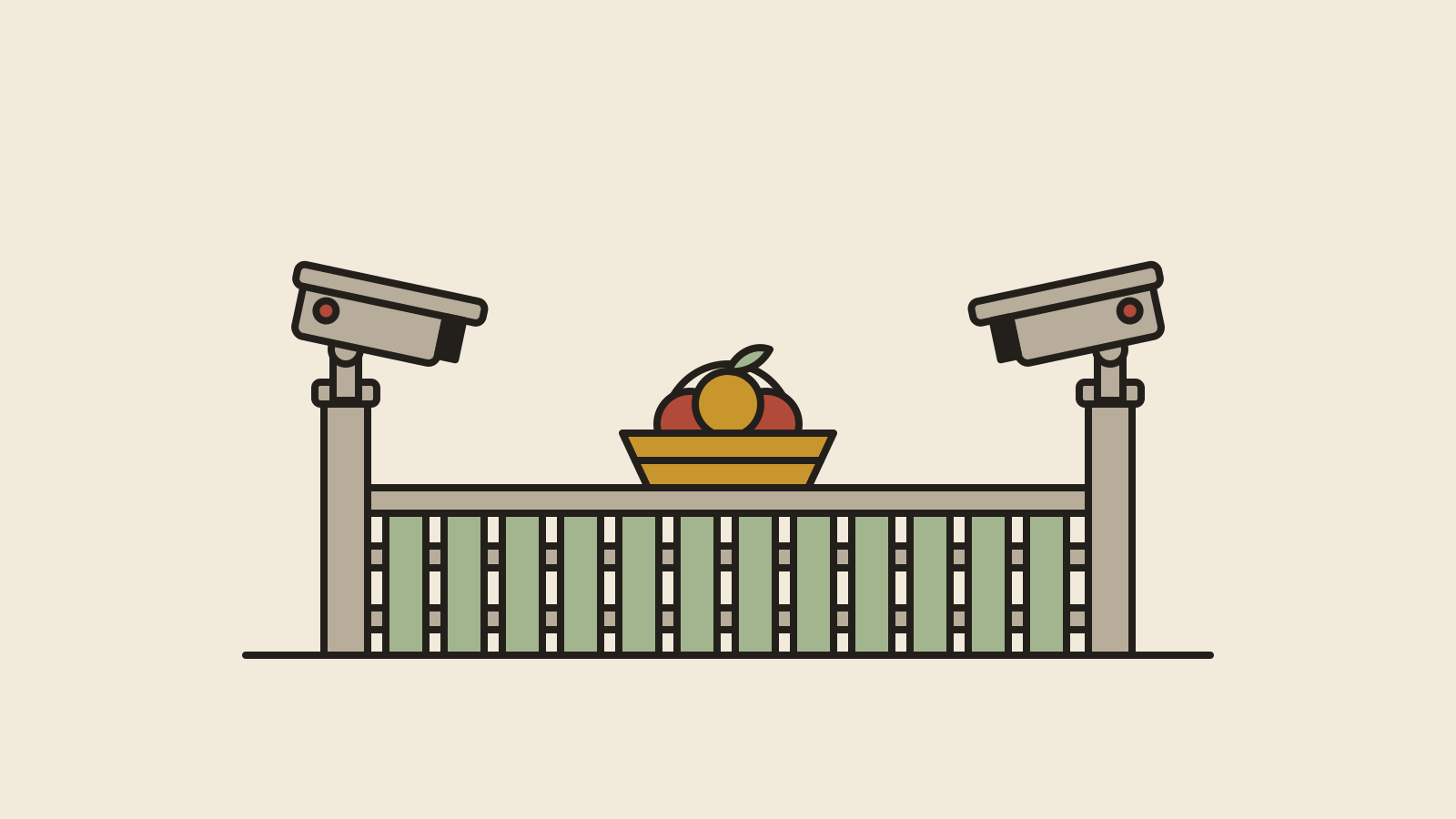
Answering in kind can build a bond or an arms race, because the reply matches what was perceived, whatever was meant.
- TermReciprocityThe principle that what is received should be answered with something of matching kind, whether a favour, a gift or an injury.Anthropology
- IdeaSecurity dilemmaSteps a state takes to make itself safer can frighten its neighbours into arming too, and everyone ends up less secure than before.Political theory & science
What each entry sees
Reciprocity
Reciprocity is the principle that what is received should be answered with something of matching kind. Neighbours who mind each other's children keep no ledger, but each knows roughly where the balance stands. Anthropologists use the word for exchange that runs on mutual obligation, with no prices and no central authority to enforce the return. Bronisław Malinowski made it a principle of social order in 1926. It can be hostile as well as friendly, as in feuds. Marshall Sahlins sorted it into generalised, balanced and negative kinds. In the negative kind each side tries to get the better of the other.
Reciprocity
The principle that what is received should be answered with something of matching kind, whether a favour, a gift or an injury.
Security dilemma
The security dilemma describes how states that want only safety can end up as enemies. One strengthens its defences. Its neighbours can't see its intentions, and most weapons that defend can also attack, so they arm in turn. The first state takes that as proof it was right to worry. John Herz named the dilemma in 1950, and Robert Jervis showed what makes it sharper or milder. It needs no aggressor, only uncertainty. The remedies it suggests are reassurance, transparency and arms control. Randall Schweller objects that real conflict comes from states that want more than security.
Security dilemma
Steps a state takes to make itself safer can frighten its neighbours into arming too, and everyone ends up less secure than before.
Diagram
Reciprocity + security dilemma
Read as text
Overlap of Reciprocity (Term, Anthropology) and Security dilemma (Idea, Political theory & science). Only Reciprocity: Behavioural economics and Bronisław Malinowski. Only Security dilemma: Anarchy (international relations) and Balance of power. Shared: The question it opens.
What the crossing shows
Both entries describe parties who answer in kind with no authority above them. In one the result is a bond and in the other a spiral. Together they suggest that reciprocity is a mechanism with no direction built in. It returns whatever is fed into it, so favours come back as favours and threats as threats.
Each entry also supplies what the other lacks. Anthropologists note that reciprocity can be hostile, and the term alone does not say how a hostile exchange begins between parties who meant no harm. The security dilemma does. A move meant as defence is read as an injury, and the reply matches the injury that was perceived. Seen from the other side, arms control is an attempt at balanced reciprocity, built from matched and visible concessions. The borrowing is on record: Robert Keohane's 1986 account of reciprocity between states set its two kinds beside Sahlins's.
The question it opens
Is an arms race reciprocity run in injuries, and could the same habit of answering in kind wind it down? Charles Osgood proposed in 1962 that one side open with a small, announced concession and invite a matching one. The risk is the dilemma's own, since the first giver is exposed if the neighbour is hostile after all. Whether such openings work between armed rivals is still argued over.
Further reading
- Herz, J. H. (1950). Idealist internationalism and the security dilemma. World Politics, 2(2), 157–180. https://doi.org/10.2307/2009187
- Jervis, R. (1978). Cooperation under the security dilemma. World Politics, 30(2), 167–214. https://doi.org/10.2307/2009958
- Malinowski, B. (1926). Crime and custom in savage society. Kegan Paul, Trench, Trubner.
- Sahlins, M. (1972). Stone age economics. Aldine-Atherton.
Cite this entry
Scholia. (2026). Reciprocity + security dilemma. In Scholia: Notes in the margin of the human sciences. Retrieved November 28, 2026, from https://scholia.zennia.sg/crossings/reciprocity-plus-security-dilemma