CrossingPhilosophy
Stoicism + learned helplessness
The Stoics advise accepting what lies outside our control, and helplessness research shows how that boundary comes to be drawn in the wrong place.
- School or branchStoicismAn ancient school teaching that good character is the only true good, and that distress comes from our judgements about events, which we can change.Philosophy
- IdeaLearned helplessnessAfter repeated bad events they cannot control, animals and people may stop trying, even when escape later becomes possible.Psychology
What each entry sees
Stoicism
Stoicism is the ancient school holding that good character is the only true good and is within anyone's reach. Health, money and reputation are worth preferring, though they aren't ours to command. Events never cause distress by themselves: it comes from our judgements about them, and judgements can be examined and changed. A delayed flight is outside your control, while three hours of rage at the airline is up to you. The Stoic asks what the situation requires and does it. The school's members stayed in public life, and they approved of joy and goodwill.
Stoicism
An ancient school teaching that good character is the only true good, and that distress comes from our judgements about events, which we can change.
Learned helplessness
Learned helplessness is the claim that living through bad events you can't control can teach you that nothing you do matters, and that the lesson carries into situations where action would work. In Martin Seligman and Steven Maier's 1967 experiments, dogs given shocks they could not stop later lay down and endured shocks they could have escaped. A pupil who fails test after test despite revising may leave easy problems blank. Earlier experience of control protects. In 2016 the authors revised the mechanism: passivity is the default response to prolonged stress, and what animals learn is control.
Learned helplessness
After repeated bad events they cannot control, animals and people may stop trying, even when escape later becomes possible.
Diagram
Stoicism + learned helplessness
Read as text
Overlap of Stoicism (School or branch, Philosophy) and Learned helplessness (Idea, Psychology). Only Stoicism: Aaron Beck and Adam Smith. Only Learned helplessness: Behavioural psychology and Behaviourism (psychology). Shared: The question it opens.
What the crossing shows
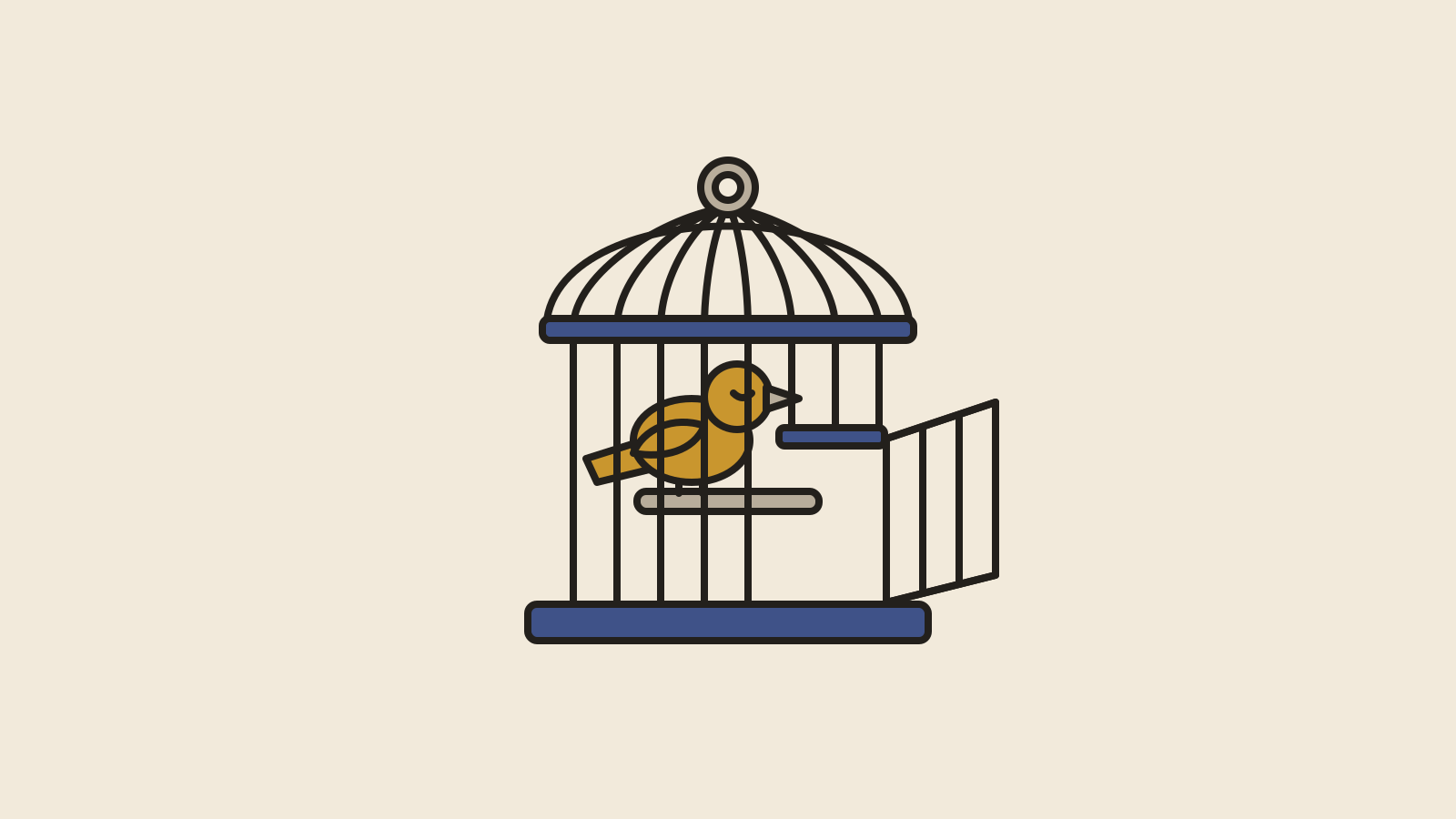
Stoic advice depends on a sorting step: this is up to me, that isn't. Seligman's research is about how the sorting goes wrong. The dog in the second box treats escape as outside its control, and it is mistaken, though to an onlooker its stillness could pass for composure. On the 2016 revision the dog learned nothing false. It lacked the experience that teaches control, so a correct sorting has to be acquired.
The Stoic gives up command over outcomes and keeps judgement and effort. The helpless pupil gives up effort, which a Stoic would count as hers to give, and a Stoic pupil would revise and then accept the mark. Helplessness also flattens mood, where the Stoics approved of joy. Seligman's experiments came out of animal learning theory, with no Stoic source, though cognitive behavioural therapy did borrow the Stoic point that beliefs drive distress.
Cognitive behavioural therapy
A family of short, structured talking treatments that ease distress by changing unhelpful habits of thinking and behaving, tested in more trials than any other.
The question it opens
When is accepting what you cannot control wisdom, and when is it helplessness that was learned? The Stoic needs an accurate map of what is up to her, and a history of defeats may fix the map before reasoning starts. Whether reflection alone can correct it, or only fresh experience of control can, is open.
Further reading
- Epictetus. (2014). Discourses, fragments, handbook. Oxford University Press. (Original work published 108)
- Maier, S. F., & Seligman, M. E. P. (2016). Learned helplessness at fifty: Insights from neuroscience. Psychological Review, 123(4), 349–367. https://doi.org/10.1037/rev0000033
- Seligman, M. E. P., & Maier, S. F. (1967). Failure to escape traumatic shock. Journal of Experimental Psychology, 74(1), 1–9. https://doi.org/10.1037/h0024514
- Sellars, J. (2006). Stoicism. Acumen. https://doi.org/10.1017/upo9781844653720
Cite this entry
Scholia. (2026). Stoicism + learned helplessness. In Scholia: Notes in the margin of the human sciences. Retrieved November 28, 2026, from https://scholia.zennia.sg/crossings/stoicism-plus-learned-helplessness