IdeaPsychologyAlso in Economics, Sociology
Cognitive dissonance
Acting against a belief, or holding two beliefs that clash, creates a discomfort that people relieve by changing what they think.
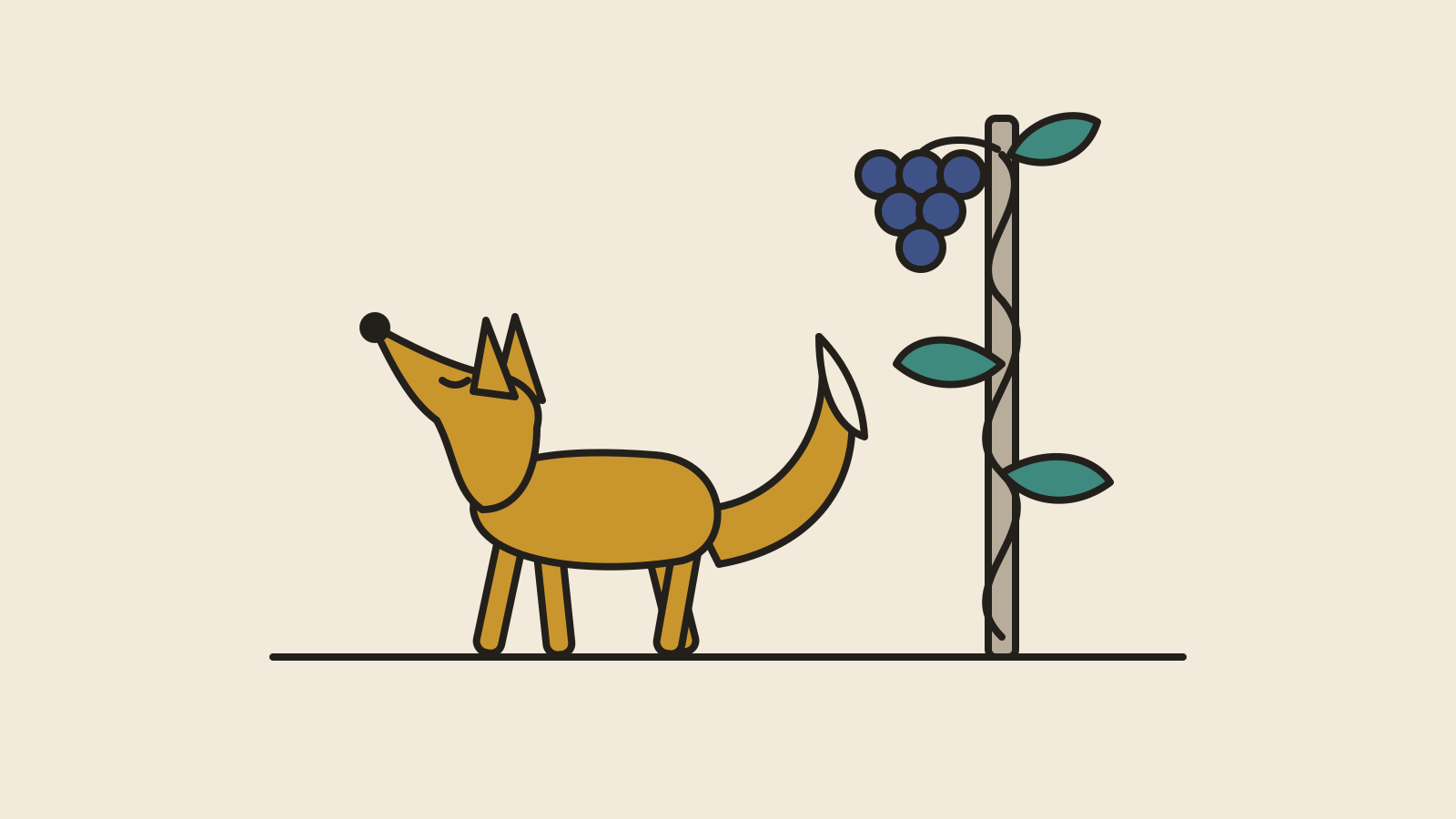
The idea
Someone pays a great deal for a pair of running shoes that turn out to pinch. Returning them would mean admitting a mistake. Within a week they are telling friends that a snug fit is better for the foot. Cognitive dissonance is the theory behind that small revision. It says that two clashing thoughts, or an act that goes against a belief, produce an unpleasant tension that people are driven to get rid of.
There are three ways out. The person can change the behaviour, change one of the beliefs or add a new thought that makes the two fit. Changing a belief is usually cheapest, since what has been done can't be undone. So the theory makes a prediction that sets it apart from common sense. Actions shape attitudes as much as attitudes shape actions, and people come to believe in what they have already done.
Diagram
When an act can't be undone, the belief moves to fit it
Read as text
Four steps in a row. First, a person acts in a way that clashes with a belief they hold. Second, the clash produces an uncomfortable tension. Third, because the act can't be taken back, the belief shifts to fit it. Fourth, the tension eases. Festinger also allowed two other routes, changing the behaviour or adding a new justifying thought, which are not drawn.
Key features
- The tension is a felt discomfort with bodily arousal, which later studies measured directly.
- Dissonance is strongest when the person chose freely and can't blame the act on pressure or pay.
- A small reward for acting against a belief changes the belief more than a large one, because the large reward is its own excuse.
- Effort raises value, so people rate a group or a goal more highly the more they suffered to reach it.
- After a hard choice people talk up the option they took and talk down the one they passed over.
Not to be confused with
| Look-alike | The difference | Differs on |
|---|---|---|
| Defence mechanisms | Freud's defences are unconscious and keep a forbidden wish out of awareness. Dissonance theory needs no unconscious and no hidden wish, only two thoughts that clash. | Differs onMechanism |
| Akrasia | In akrasia, or weakness of will, a person acts against their better judgement and the judgement stays put. Dissonance theory says the judgement will not stay put for long. | Differs onClaim |
| Self-perception theory | Daryl Bem's rival account of the same experiments. On his view there is no inner tension to reduce. People work out their attitudes by watching what they do, as an outsider would. | Differs onMechanism |
| Confirmation bias | Confirmation bias is the habit of seeking and favouring evidence for what one already thinks. It is one way of avoiding dissonance, and the theory covers actions and choices as well. | Differs onScope |
- Differs onMechanism
Freud's defences are unconscious and keep a forbidden wish out of awareness. Dissonance theory needs no unconscious and no hidden wish, only two thoughts that clash.
- Differs onClaim
In akrasia, or weakness of will, a person acts against their better judgement and the judgement stays put. Dissonance theory says the judgement will not stay put for long.
- Differs onMechanism
Self-perception theory
Daryl Bem's rival account of the same experiments. On his view there is no inner tension to reduce. People work out their attitudes by watching what they do, as an outsider would.
- Differs onScope
Confirmation bias
Confirmation bias is the habit of seeking and favouring evidence for what one already thinks. It is one way of avoiding dissonance, and the theory covers actions and choices as well.
Origins and development
Leon Festinger set out the theory in 1957. A year earlier he and two colleagues had described a small group that predicted the end of the world and, by their account, believed more firmly once the date had passed. Thomas Kelly argued from the archives in 2025 that the book misreported the group. In 1959 Festinger and Merrill Carlsmith paid students either one dollar or twenty to tell a stranger that a dull task was fun. Those paid one dollar came to rate the task as more enjoyable. Elliot Aronson later argued that dissonance bites hardest when an act threatens a person's view of themselves as decent and sensible.
Leon Festinger
American social psychologist who proposed cognitive dissonance and social comparison theory, and set the standard for inventive laboratory experiments on belief.
Why it matters
The theory explains why people who have been swindled defend the swindler, why harsh initiations bind members to a group and why owning up to an error is so hard for doctors, police and politicians. Sales staff use it when they ask for a small commitment first. The economists George Akerlof and William Dickens used it to explain why workers in dangerous trades come to believe the job is safe.
Critiques and limits
Bem's self-perception theory explains many of the same results without any discomfort. Keith Chen and Jane Risen showed in 2010 that the usual way of studying choices can produce the effect by statistics alone. In 2024 a replication in 39 laboratories, led by David Vaidis, found that writing an essay against one's own view did shift attitudes, but that being free to refuse made no difference, contrary to the theory. The evidence is rated supported. Self-justification is well documented, and its explanation is less secure than textbooks imply.
Connections
Belongs to
It gave the branch its most productive theory of the 1960s and its account of self-justification.
Originated by
Festinger set out the theory in his 1957 book and tested it in the forced-compliance experiments that followed.
Influenced by
Festinger was Lewin's student and took from him the picture of the mind as a field of tensions seeking balance.
Contrasts with
Differs on mechanism. Dissonance theory explains self-justification by clashing beliefs alone, with no unconscious and no forbidden wish.
AkrasiaPhilosophy
Differs on claim. Dissonance is relieved by changing a belief to fit the act, where in akrasia the judgement stays and the act defies it.
Double consciousnessSociology
Differs on mechanism. Dissonance comes from a clash among one's own beliefs and acts, double consciousness from the gaze of a hostile society.
Parallels
Pragmatism (philosophy)Philosophy
Peirce called doubt an irritation that thought struggles to end, and Festinger measured a similar discomfort and showed people end it by changing beliefs.
Applied in
Behavioural economicsEconomics
Akerlof and Dickens built dissonance into a 1982 model of workers who come to believe a dangerous job is safe.
Sociology of religionSociology
Sociologists of religion use it to ask why some movements grow more committed after a prophecy fails.
Cross with
Two distant entries to read beside this one, each with the question the pairing opens.
HegemonyPolitical theory & science
When people consent to rule that works against them, is dissonance reduction part of how that consent is produced? Set them side by side
Rational choice theoryEconomics
If people change their preferences to fit what they have already done, can choices reveal preferences that existed beforehand? Set them side by side
Further reading
- Bem, D. J. (1967). Self-perception: An alternative interpretation of cognitive dissonance phenomena. Psychological Review, 74(3), 183–200. https://doi.org/10.1037/h0024835
- Festinger, L. (1957). A theory of cognitive dissonance. Stanford University Press. https://doi.org/10.1515/9781503620766
- Festinger, L., & Carlsmith, J. M. (1959). Cognitive consequences of forced compliance. The Journal of Abnormal and Social Psychology, 58(2), 203–210. https://doi.org/10.1037/h0041593
- Tavris, C., & Aronson, E. (2007). Mistakes were made (but not by me): Why we justify foolish beliefs, bad decisions, and hurtful acts. Harcourt.
Cite this entry
Scholia. (2026). Cognitive dissonance. In Scholia: Notes in the margin of the human sciences. Retrieved November 28, 2026, from https://scholia.zennia.sg/ideas/cognitive-dissonance