IdeaPhilosophy
Cosmological argument
The cosmological argument reasons from the existence of the world to a first cause or necessary being that explains it.
The idea
The cosmological argument reasons from the existence of the world to a cause or explanation beyond it. Its starting point is something everyone grants: things exist, change and depend on other things. Each such thing is explained by something earlier or deeper. The argument holds that this chain cannot run on without end or hang unsupported, so there must be a first cause or a being that exists by its own nature. Its defenders identify this with God.
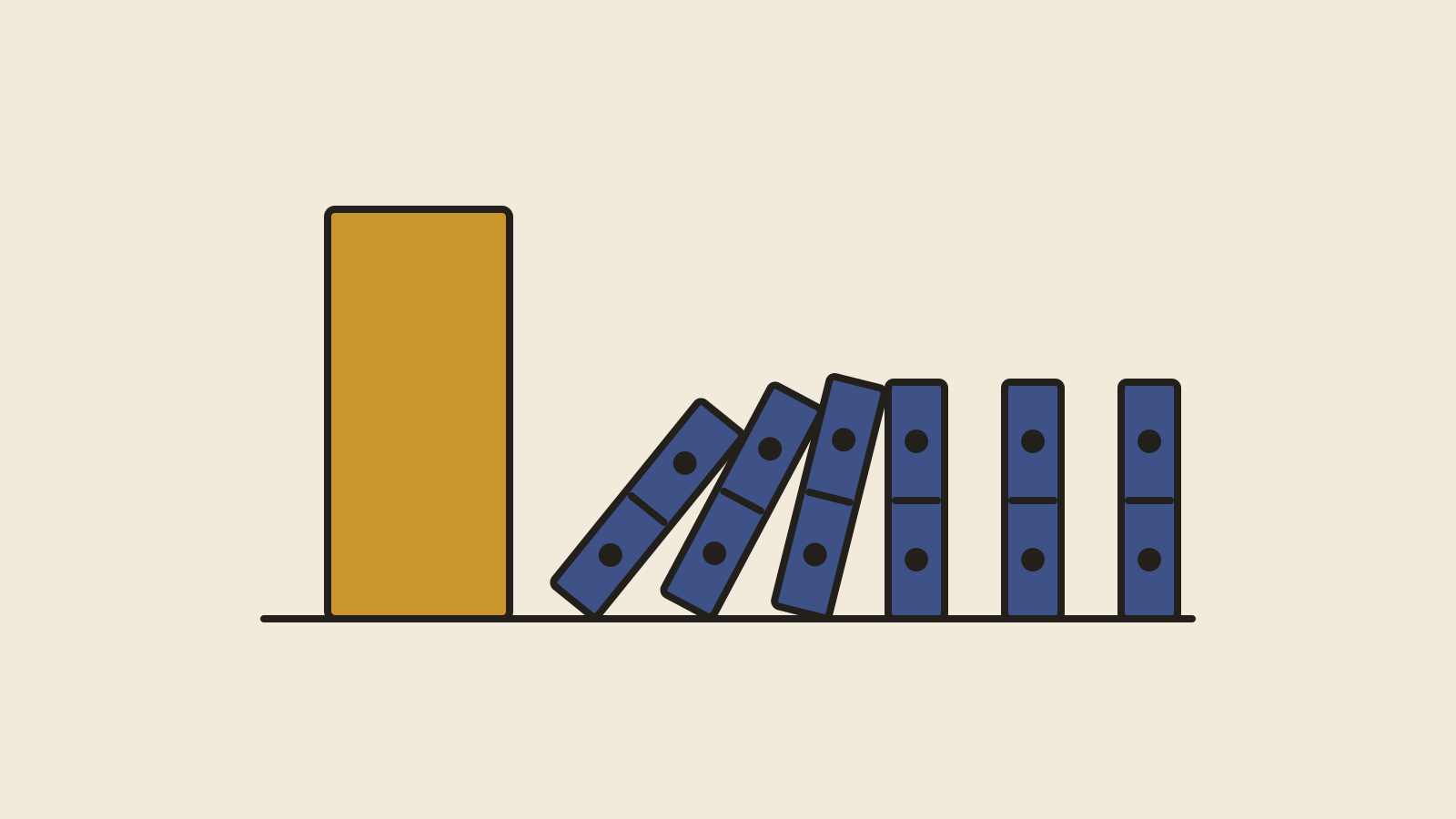
A child's run of "why" questions has the same shape. Why is the pavement wet? It rained. Why did it rain? Each answer invites another question. The cosmological argument claims that the series must stop at something which needs no further explanation, and that the universe itself cannot be that stopping point.
It is a family of arguments. Three main forms differ in what they think needs explaining.
Diagram
Three forms of the argument start from different facts about the world
Read as text
A tree with the cosmological argument at the root and three branches. The argument from change, given by Aristotle and Aquinas, ends in an unmoved mover. The argument from a beginning, the kalam form, ends in a cause of the universe. The argument from contingency, given by Avicenna and Leibniz, ends in a necessary being.
Key features
- It starts from experience, though only from the most general facts: that something exists, changes or began.
- The argument from change, due to Aristotle and Aquinas, reasons from things in motion to an unmoved mover.
- The kalam argument, developed in medieval Islamic theology, holds that the universe began and that whatever begins has a cause.
- The argument from contingency, given by Avicenna and Leibniz, holds that things which might not have existed require a necessary being.
- No form shows by itself that the first cause has the attributes of the God of any religion.
Not to be confused with
| Look-alike | The difference | Differs on |
|---|---|---|
| Ontological argument | The ontological argument reasons from the concept of God alone. The cosmological argument needs one premise from experience, that a world exists. | Differs onMethod |
| Argument from design | The design argument appeals to particular features of the world, its order and apparent purpose. The cosmological argument would apply to any world at all, however disorderly. | Differs onScope |
| Kalam cosmological argument | One member of the family, often treated as the whole. It alone depends on the universe having a beginning in time. Aquinas and Leibniz thought their arguments would hold even for an eternal world. | Differs onScope |
| Big Bang cosmology | A scientific account of the universe's early history. Kalam defenders cite it as support, but it does not itself describe a cause of the universe. | Differs onMethod |
- Differs onMethod
The ontological argument reasons from the concept of God alone. The cosmological argument needs one premise from experience, that a world exists.
- Differs onScope
The design argument appeals to particular features of the world, its order and apparent purpose. The cosmological argument would apply to any world at all, however disorderly.
- Differs onScope
Kalam cosmological argument
One member of the family, often treated as the whole. It alone depends on the universe having a beginning in time. Aquinas and Leibniz thought their arguments would hold even for an eternal world.
- Differs onMethod
Big Bang cosmology
A scientific account of the universe's early history. Kalam defenders cite it as support, but it does not itself describe a cause of the universe.
Origins and development
Plato and Aristotle argued from motion to a first mover in the fourth century BCE. Theologians of the kalam tradition, among them al-Ghazali, argued from the world's beginning, while Avicenna argued from contingency. Thomas Aquinas gathered three versions into his Five Ways in the 1260s. Leibniz rested his on the principle that everything has a sufficient reason. Kant gave the argument its name, and William Lane Craig revived the kalam form in 1979.
Aristotle
Plato's pupil, who founded logic and biology and wrote the works on ethics, politics and nature that organised learning for two thousand years.
Al-Ghazali
The Persian theologian who turned the philosophers' own logic against them, denied that causes act by necessity and brought Sufism into mainstream Islam.
Why it matters
It is the philosophical form of a question most people have asked: why is there something and not nothing? Public debates about whether physics can explain the origin of the universe replay its moves, with one side asking what caused the Big Bang and the other asking why a cause is needed there. It also gave philosophy the distinction between necessary and contingent existence.
Necessary and contingent
A necessary truth could not have been otherwise, while a contingent truth is true but might have been false.
Critiques and limits
David Hume asked why the chain needs an outside cause once each link is explained by the one before, and why the universe itself could not be the necessary being. Kant argued that the step from first cause to God quietly relies on the ontological argument. Bertrand Russell said in a 1948 radio debate that the universe is simply there. The argument's standing is conceptual. It turns on disputed principles about causation and explanation, no observation settles it and philosophers remain divided.
David Hume
A Scottish philosopher who argued that our beliefs about causes, the self and morality rest on habit and feeling more than on reason.
Ontological argument
The ontological argument tries to prove that God exists from the concept of God alone, with no appeal to observation.
Connections
Belongs to
It is one of the three classic arguments for God's existence that the field examines.
Originated by
Aristotle argued in the Physics and Metaphysics that all change traces back to an unmoved first mover.
Influenced by
Avicenna argued that things which might not have existed depend on a being whose existence is necessary.
The first three of his Five Ways argue from change, causation and contingency to a first being.
Leibniz rested the argument on the principle that everything, the whole series of things included, has a sufficient reason.
Plato's Laws argues from motion to a self-moving soul as its first source, before Aristotle's unmoved mover.
Contrasts with
Differs on scope. The cosmological argument starts from the existence of any world, where the design argument starts from this world's order.
Differs on method. The ontological argument reasons from a concept alone, where the cosmological argument needs the observed fact that a world exists.
Cross with
Two distant entries to read beside this one, each with the question the pairing opens.
SovereigntyPolitical theory & science
Sovereignty names a final authority with none above it: is stopping a chain of commands there any less arbitrary than stopping a chain of causes? Set them side by side
Solow growth modelEconomics
Solow's model explains growth by technology it leaves unexplained: does every explanation need a term that explains the rest and is not itself explained? Set them side by side
Further reading
- Craig, W. L. (1979). The kalām cosmological argument. Macmillan. https://doi.org/10.1007/978-1-349-04154-1
- Hume, D. (2007). Dialogues concerning natural religion and other writings. Cambridge University Press. (Original work published 1779)
- Leibniz, G. W. (1989). Philosophical essays. Hackett.
- Rowe, W. L. (1975). The cosmological argument. Princeton University Press.
Cite this entry
Scholia. (2026). Cosmological argument. In Scholia: Notes in the margin of the human sciences. Retrieved November 28, 2026, from https://scholia.zennia.sg/ideas/cosmological-argument