IdeaPhilosophyAlso in Sociology
Gender performativity
Judith Butler's claim that gender is produced by acts repeated under social pressure, which create the impression of an inner gender behind them.
The idea
Gender performativity is the claim that gender is something done, and that the doing produces the doer. People usually suppose a person has a gender inside them, which shows in how they walk, talk and dress. Judith Butler reversed the order, so that on their account the walking, talking and dressing come first. Repeated day after day under pressure from others, these acts create the impression of an inner core that was there all along.
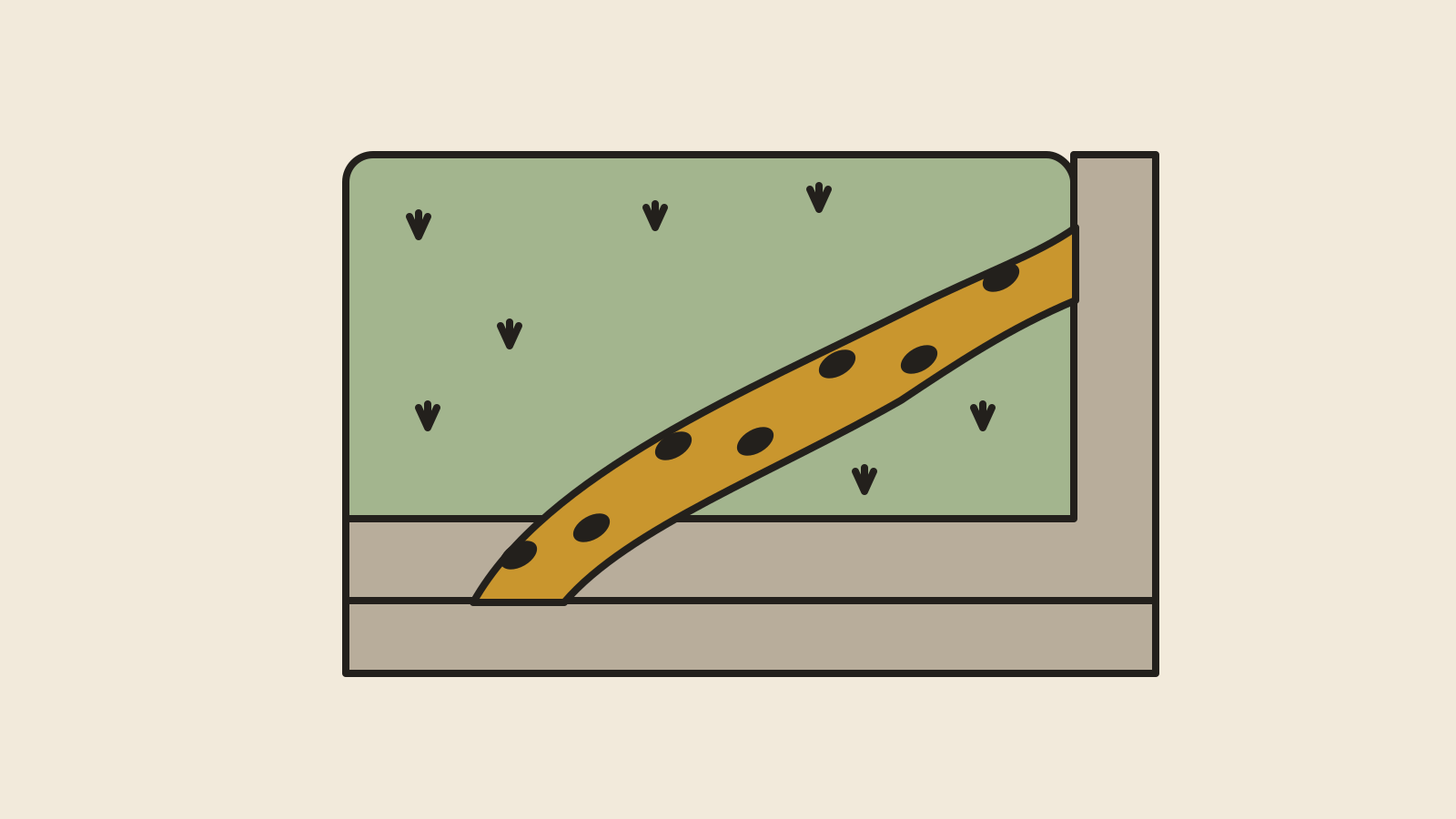
Take a boy told not to cry. He is praised when he holds back tears and mocked when he doesn't. By adulthood he may feel that not crying is simply who he is. For Butler that feeling is the result of the training and was never its cause. A footpath across a lawn works the same way: it looks like a given route only because so many feet have followed it.
Diagram
Repeated acts make gender norms look like facts of nature
Read as text
A loop of three nodes. Gender norms, enforced by praise and ridicule, lead to repeated everyday acts. The repeated acts produce the impression of an inner gender. That impression makes the norms look natural, which strengthens them and starts the loop again.
Key features
- Gender is "a stylized repetition of acts", in Butler's phrase, and has no existence apart from them.
- The acts are not freely chosen: they follow norms older than the person, enforced by praise, ridicule and sometimes violence.
- Performative is a term from the philosophy of language, where it names speech that brings about what it says, as "I promise" makes a promise.
- No one repeats a norm perfectly, and Butler sees in those failures the room for change.
- The division of bodies into two sexes is, on this view, also read through gender norms and gives no neutral starting point.
Not to be confused with
| Look-alike | The difference | Differs on |
|---|---|---|
| Doing gender | West and Zimmerman, from sociology, locate gender in face-to-face interaction, where people hold each other to account. Butler, from philosophy, locates it in repeated acts and speech that produce the appearance of an inner gender. | Differs onMechanism |
| Woman as Other | Beauvoir argued that society makes a woman out of a female body and defines her against man. Butler questions the starting point and holds that the sexed body is already understood through gender. | Differs onClaim |
| Social constructionism | Social constructionism is the general view that many categories are made by shared practice. Performativity is one account of how a single category, gender, gets made and why it feels natural. | Differs onScope |
| Gender as performance | A performance has an actor who picks a role and can drop it. Butler denies there is a doer behind the deed, and says the norms were never the person's to choose. | Differs onClaim |
- Differs onMechanism
West and Zimmerman, from sociology, locate gender in face-to-face interaction, where people hold each other to account. Butler, from philosophy, locates it in repeated acts and speech that produce the appearance of an inner gender.
- Differs onClaim
Beauvoir argued that society makes a woman out of a female body and defines her against man. Butler questions the starting point and holds that the sexed body is already understood through gender.
- Differs onScope
Social constructionism is the general view that many categories are made by shared practice. Performativity is one account of how a single category, gender, gets made and why it feels natural.
- Differs onClaim
Gender as performance
A performance has an actor who picks a role and can drop it. Butler denies there is a doer behind the deed, and says the norms were never the person's to choose.
Origins and development
Butler first set out the idea in a 1988 essay and developed it in Gender Trouble (1990). They drew on Simone de Beauvoir's claim that one becomes a woman, on Michel Foucault's view that power produces the kinds of person it seems only to regulate, and on J. L. Austin's performative speech. Many readers took the book to say that gender is a role put on at will. Bodies That Matter (1993) corrected this and stressed constraint and the slow force of repetition. The idea became a starting point of queer theory and transgender studies.
Simone de Beauvoir
The French existentialist philosopher and novelist whose book The Second Sex argued that womanhood is made by society more than given by biology.
Michel Foucault
A French philosopher and historian who argued that knowledge and power shape each other in prisons, clinics, asylums and ideas of sexuality.
Why it matters
The idea stands behind much current argument about gender. Supporters use it to explain why expectations of men and women vary so widely across times and places, and why people who break them are punished. It informs campaigns for the legal recognition of transgender and nonbinary people. Opponents, among them some governments and churches, name Butler as a source of what they call gender ideology. The word performative has also drifted into everyday use to mean insincere, which is close to the opposite of Butler's sense.
Critiques and limits
Martha Nussbaum argued in 1999 that the theory offers symbolic gestures and no ground for saying which norms are unjust. Seyla Benhabib asked who is left to resist if the self is an effect of norms. Jay Prosser held that it cannot account for transgender people's lasting sense of their sexed body. Kathleen Stock argues that sex is a biological fact no theory of norms removes. The idea is an interpretation of social life, argued from texts and cases, and it remains disputed among philosophers and feminists alike.
Martha Nussbaum
The American philosopher who named ten capabilities every state owes its citizens, and who treats emotions as judgements about what matters.
Connections
Belongs to
It applies the school's view that language and power form the self to the case of gender.
Originated by
Butler set the idea out in a 1988 essay and in Gender Trouble two years later.
Influenced by
Speech act theoryCognitive science & linguistics
The word performative comes from Austin's account of speech that brings about what it says.
Beauvoir's claim that one becomes a woman is the premise Butler radicalises.
Foucault's argument that power produces the subjects it seems to regulate supplies the account of how norms work.
Contrasts with
Doing genderSociology
Differs on mechanism. West and Zimmerman locate gender in accountable interaction, where Butler locates it in repeated acts that produce a seeming inner gender.
Differs on claim. Beauvoir has society make a woman from a female body, where Butler holds the sexed body is already read through gender.
Social constructionismSociology
Differs on scope. Social constructionism is the general view that categories are made, and performativity is one account of how gender is.
Speech act theoryCognitive science & linguistics
Differs on scope. A performative utterance is one act by an authorised speaker, while Butler's claim is that repeated acts produce gender itself.
Applied in
Sociology of genderSociology
Sociologists use it beside doing gender to study how everyday repetition keeps gender categories in place.
Further reading
- Butler, J. (1990). Gender trouble: Feminism and the subversion of identity. Routledge.
- Butler, J. (1988). Performative acts and gender constitution: An essay in phenomenology and feminist theory. Theatre Journal, 40(4), 519–531. https://doi.org/10.2307/3207893
- Nussbaum, M. C. (1999). The professor of parody. The New Republic, 220(8), 37–45.
- Salih, S. (2002). Judith Butler. Routledge. https://doi.org/10.4324/9780203118641
Cite this entry
Scholia. (2026). Gender performativity. In Scholia: Notes in the margin of the human sciences. Retrieved November 28, 2026, from https://scholia.zennia.sg/ideas/gender-performativity
This topic is contested. The entry sets out the main positions rather than settling them.