IdeaCognitive science & linguisticsAlso in Philosophy, Psychology
Language of thought
The hypothesis that thinking happens in an inner symbolic code with a grammar of its own, separate from any spoken language.
The idea
The language of thought hypothesis says that thinking is carried out in an inner code, often called Mentalese. The code is neither English nor Mandarin. It is a system of symbols in the brain that combine by rules, much as words combine into sentences, and reasoning is the processing of those symbol strings.
A bilingual speaker gives a feel for the claim. She can say the same thing in Malay or in English, and when the word escapes her in both she still knows what she wants to say. The thought seems to be there before either wording. Babies and animals point the same way. A dog expects its owner behind the door, and an infant is surprised when a toy vanishes, though neither has any words. Jerry Fodor argued that they must be thinking in something, and that this something has the structure of a language.
Jerry Fodor
An American philosopher who argued that thinking is computation in an inner language and that parts of the mind work as sealed modules.
Diagram
A finite stock of symbols plus combining rules yields unlimited thoughts
Read as text
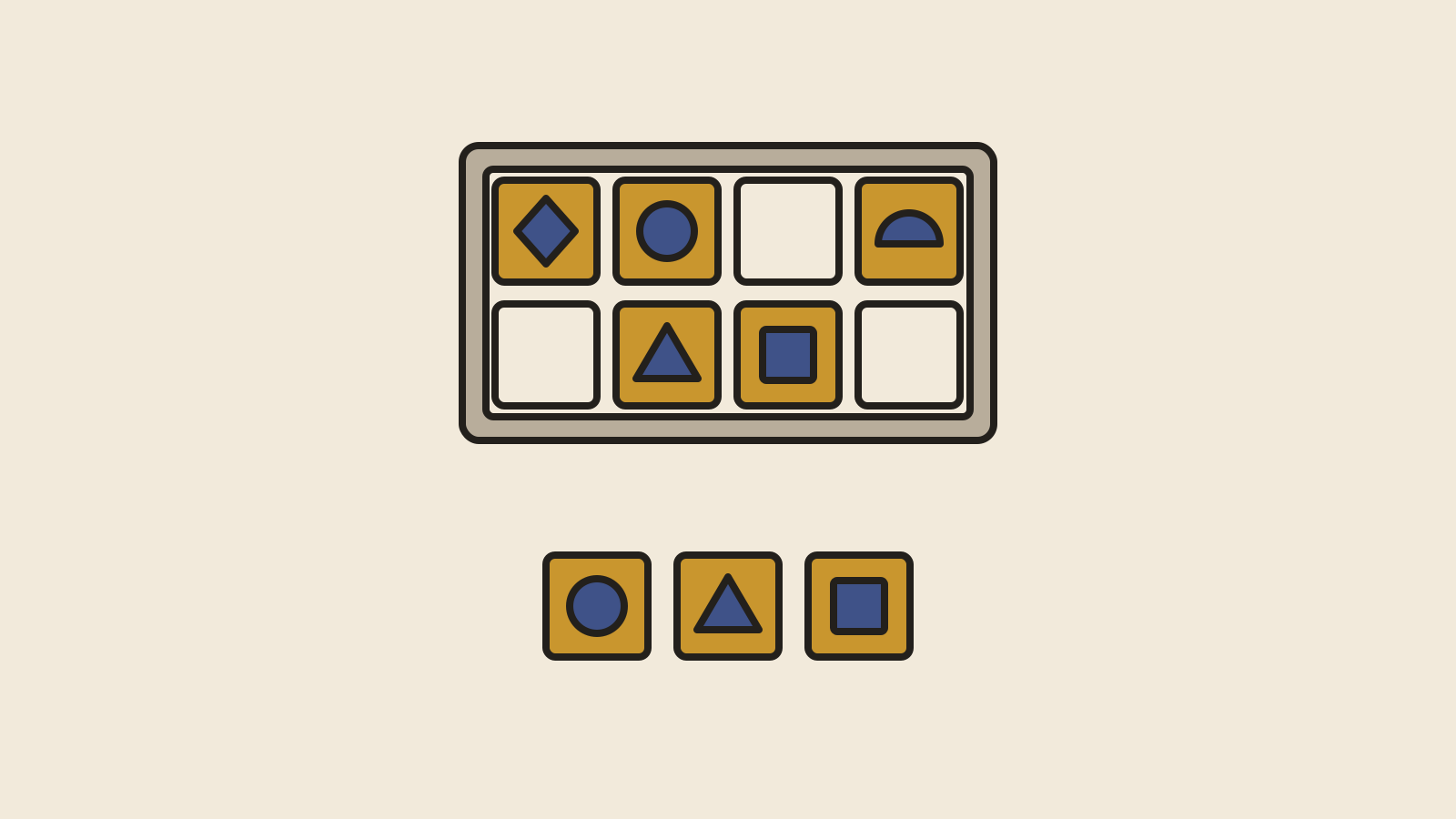
Two factors combine to produce thoughts. The first is a finite stock of inner symbols, such as those for dog, cat and chases. The second is a set of rules of combination, which settle who does what to whom and allow one thought to be placed inside another. Together they yield an unlimited number of new thoughts: the dog chases the cat, the cat chases the dog, and so on without end.
Key features
- Thoughts are built from reusable parts, so the symbols for dog, cat and chases can be arranged into different thoughts.
- Productivity: finite parts and rules yield unlimited thoughts, which is why you can think one you have never met before.
- Systematicity: anyone who can think that the dog chased the cat can also think that the cat chased the dog.
- Processing follows form: the brain works on the shapes of the symbols, as a computer does, in ways that respect what they mean.
- The code is unlearned: learning a first language means testing guesses about what words mean, and the guesses need a medium that is already there.
Not to be confused with
| Look-alike | The difference | Differs on |
|---|---|---|
| Computational theory of mind | The computational theory says thinking is computation over inner representations. The language of thought adds a claim about their format: they are structured like sentences. A network that computes with no sentence-like symbols fits the first and breaks the second. | Differs onScope |
| Linguistic relativity | Linguistic relativity says the language you speak shapes how you think. This hypothesis says thinking runs in a code that is the same whatever you speak and that comes before any spoken language. | Differs onClaim |
| Private language argument | Wittgenstein argued against a language whose words refer to what only the speaker can know. Mentalese is unlearned and common to the species, so its defenders deny that it is private in his sense. | Differs onClaim |
| Inner speech | Talking silently to yourself happens in whatever language you speak, and you are aware of it. Mentalese is a proposed brain code below awareness. | Differs onLevel |
- Differs onScope
The computational theory says thinking is computation over inner representations. The language of thought adds a claim about their format: they are structured like sentences. A network that computes with no sentence-like symbols fits the first and breaks the second.
- Differs onClaim
Linguistic relativity says the language you speak shapes how you think. This hypothesis says thinking runs in a code that is the same whatever you speak and that comes before any spoken language.
- Differs onClaim
Wittgenstein argued against a language whose words refer to what only the speaker can know. Mentalese is unlearned and common to the species, so its defenders deny that it is private in his sense.
- Differs onLevel
Inner speech
Talking silently to yourself happens in whatever language you speak, and you are aware of it. Mentalese is a proposed brain code below awareness.
Origins and development
The thought that the mind has its own language is old. William of Ockham described a mental language common to all people in the fourteenth century. The modern hypothesis is Fodor's, set out in The Language of Thought (1975), when Noam Chomsky's grammars and the digital computer had made rule-governed symbol systems the leading model of mind. In 1988 Fodor and Zenon Pylyshyn turned it against connectionism. Interest revived after 2008 with models that treat learning a concept as composing a short program in an inner code.
William of Ockham
The English Franciscan who held that only individual things exist, pared theories down to what the evidence requires and denied the pope power over kings.
Noam Chomsky
American linguist who argued that the capacity for grammar is inborn, and one of the best-known critics of United States foreign policy.
Why it matters
The hypothesis sits under a live argument about artificial intelligence. Language models are networks with no built-in symbols or rules, and they write fluent prose. If they also reason reliably, thought may not need a language of thought. If they keep failing on problems that call for recombining familiar parts in new ways, Fodor's side gains. The same question decides how psychologists picture the thinking of infants and animals, who have no words to think in.
Critiques and limits
Daniel Dennett pointed to a chess program that reliably brings its queen out early though no line of its code says so. So a belief need not be a stored sentence. Patricia Churchland and Paul Churchland argued that brain science finds patterns of activity across many neurons and no sentences. Paul Smolensky showed how networks can mimic structured thought without explicit symbols. The evidence is contested. A 2023 review by Jake Quilty-Dunn and colleagues claimed support from studies of infants and animals, and many replies printed with it disagreed.
Daniel Dennett
An American philosopher who argued that consciousness, free will and meaning can be explained by evolution and brain science with nothing left over.
Patricia Churchland
A Canadian-American philosopher who argued that questions about the mind are questions about the brain and must be answered with neuroscience.
Connections
Belongs to
It is the branch's classical account of the format in which the mind's computations are carried out.
Philosophy of mindPhilosophy
It offers the field a concrete answer to what a belief is, a stored sentence in an inner code.
Originated by
Fodor's 1975 book gave the hypothesis its modern form and its main arguments, and he defended it for forty years.
Extends
It adds to the claim that thinking is computation a claim about format, that the symbols computed over are structured like sentences.
Influenced by
Chomsky's grammars showed how finite rules yield unlimited sentences, the property Fodor claimed for thoughts.
Critiques
Its defenders argue that networks without structured symbols cannot explain why the ability to think one thought brings related thoughts with it.
Contrasts with
Differs on scope. The computational theory says thinking is computation over representations, and the language of thought adds that they are structured like sentences.
Differs on claim. Linguistic relativity says your spoken language shapes thought, where this hypothesis says thought runs in one code whatever you speak.
Private language argumentPhilosophy
Differs on claim. Wittgenstein's target is a language only its speaker could know, where Mentalese is unlearned and common to the species.
Applied in
Cognitive psychologyPsychology
Models of concept learning treat a new concept as a short expression composed in an inner code and chosen by probability.
Critiqued by
Patricia ChurchlandPhilosophy
She held that brains represent through patterns of activity across many neurons, with no sentences in an inner code.
Further reading
- Fodor, J. A. (1975). The language of thought. Thomas Y. Crowell.
- Fodor, J. A., & Pylyshyn, Z. W. (1988). Connectionism and cognitive architecture: A critical analysis. Cognition, 28(1–2), 3–71. https://doi.org/10.1016/0010-0277(88)90031-5
- Quilty-Dunn, J., Porot, N., & Mandelbaum, E. (2023). The best game in town: The reemergence of the language-of-thought hypothesis across the cognitive sciences. Behavioral and Brain Sciences, 46, e261. https://doi.org/10.1017/S0140525X22002849
- Rescorla, M. (2023). The language of thought hypothesis. Stanford Encyclopedia of Philosophy. https://plato.stanford.edu/entries/language-thought/
Cite this entry
Scholia. (2026). Language of thought. In Scholia: Notes in the margin of the human sciences. Retrieved November 28, 2026, from https://scholia.zennia.sg/ideas/language-of-thought