IdeaEconomics
Market for lemons
When sellers know the quality of their goods and buyers cannot tell, bad goods can drive good ones out and the market can collapse.
The idea
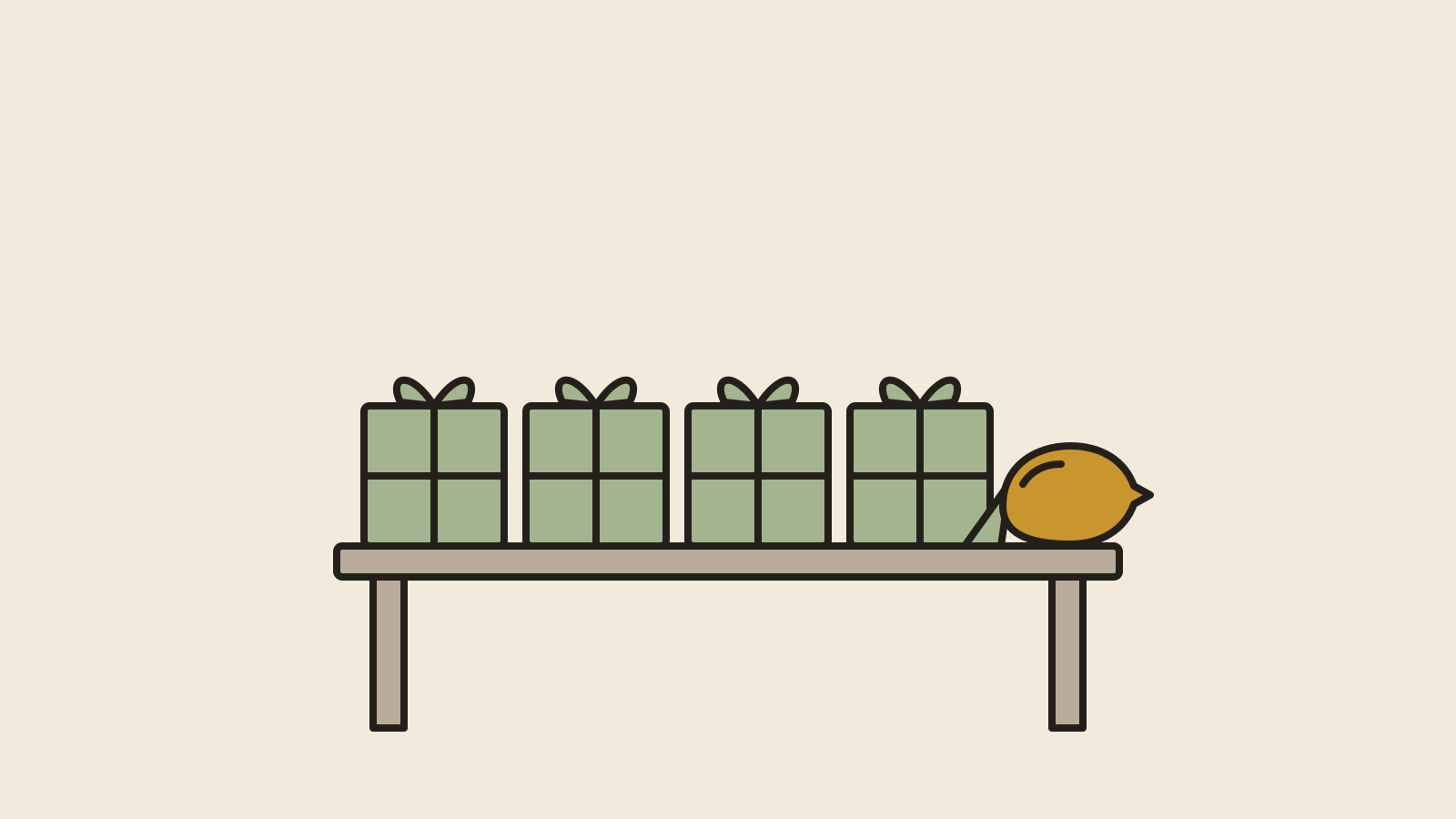
When sellers know the quality of what they are selling and buyers cannot tell, bad goods can drive good ones out of the market. George Akerlof made the argument in 1970 with used cars. In American slang a lemon is a car that turns out to be faulty.
Suppose half the used cars on offer are sound and half are lemons, and only the owners know which. A buyer who cannot tell them apart will pay no more than the price of an average car. That price is too low for the owners of sound cars, so they keep them. The cars left on sale are now worse on average, buyers lower their offers again and more good cars are withdrawn. In the extreme case nothing sells at all, although willing buyers and sellers of good cars exist.
Diagram
Hidden quality starts a spiral that pushes good cars off the market
Read as text
A loop of three linked quantities. The average quality of cars on sale sets the price buyers will pay, and the two move in the same direction. The price moves the number of good cars withdrawn in the opposite direction, so a lower price means more owners of good cars keep them. Withdrawals move average quality in the opposite direction, so more withdrawals mean lower quality, with mostly lemons remaining. The loop reinforces itself: lower quality, lower price, more withdrawals and lower quality again.
Key features
- The trouble starts with asymmetric information: one side of the deal knows something relevant that the other cannot check.
- Price stops working as a guide, because a lower price attracts worse goods on average and a higher one proves nothing.
- The market can shrink or vanish even when every lost trade would have benefited both sides.
- Honest sellers bear much of the cost, since they cannot prove that their goods are sound.
- Warranties, brand names, licences and inspections exist largely to restore the missing trust.
Not to be confused with
| Look-alike | The difference | Differs on |
|---|---|---|
| Adverse selection | Adverse selection is the general process in which hidden information skews who takes part in a deal. The lemons model is one worked case of it, with the added claim that the market can break down completely. | Differs onScope |
| Moral hazard | A lemon is faulty before the sale, and the seller hides a fact. Moral hazard arises after a deal, when one party hides what they do, as when an insured driver takes less care. | Differs onMechanism |
| Gresham's law | The old rule that bad money drives out good works when everyone can tell the coins apart and spends the bad ones first. Bad cars drive out good because buyers cannot tell them apart. | Differs onMechanism |
| Signalling | The lemons model says hidden quality can destroy trade. Signalling, Michael Spence's idea of 1973, says informed sellers can reveal quality through actions too costly for others to copy. | Differs onClaim |
- Differs onScope
Adverse selection is the general process in which hidden information skews who takes part in a deal. The lemons model is one worked case of it, with the added claim that the market can break down completely.
- Differs onMechanism
A lemon is faulty before the sale, and the seller hides a fact. Moral hazard arises after a deal, when one party hides what they do, as when an insured driver takes less care.
- Differs onMechanism
Gresham's law
The old rule that bad money drives out good works when everyone can tell the coins apart and spends the bad ones first. Bad cars drive out good because buyers cannot tell them apart.
- Differs onClaim
Signalling
The lemons model says hidden quality can destroy trade. Signalling, Michael Spence's idea of 1973, says informed sellers can reveal quality through actions too costly for others to copy.
Origins and development
Akerlof wrote the paper in 1966–67, his first year teaching at Berkeley. Three journals rejected it, two as trivial and one as mistaken. The Quarterly Journal of Economics published it in 1970. Michael Spence and Joseph Stiglitz then showed how the informed can signal quality and the uninformed can screen for it. The three shared the 2001 Nobel memorial prize in economics.
Why it matters
The argument offers one explanation of why a new car loses value the moment it leaves the showroom, why private health insurance is hard to buy late in life and why lenders charge strangers so much. It also describes the business of online marketplaces. Seller ratings, buyer protection and certified second-hand goods are all devices for making hidden quality visible.
Critiques and limits
Real used-car markets do not collapse. In 1982 Eric Bond compared pickup trucks bought used and new and found that the used ones needed no more repairs, which suggests that dealers, warranties and reputation contain the problem. In 2000 Pierre-André Chiappori and Bernard Salanié reported no sign of hidden-risk selection in French car insurance. Studies of annuities and some health plans do find it. The evidence status is supported: the logic is accepted, and the effect is strong in some markets and weak or absent in others.
Connections
Belongs to
The model opened the study of markets with unequal information, now a standard part of the theory of markets.
Influenced by
Arrow's 1963 study of medical care had already shown how unequal knowledge between the two sides bends a market.
Critiques
Standard equilibrium models assume everyone knows what is being traded, and without that assumption some markets cannot exist.
Contrasts with
Differs on scope. Adverse selection is the general process, and the lemons model is one worked case in which it destroys a market.
Differs on mechanism. A lemon's fault is a hidden fact before the sale, while moral hazard is hidden conduct after a deal.
Applied in
Akerlof used it to explain why village moneylenders who know their borrowers can charge far more than city banks.
Economic anthropologyAnthropology
Clifford Geertz's study of a Moroccan bazaar found buyers coping with hidden quality by returning to traders they knew.
Cross with
Two distant entries to read beside this one, each with the question the pairing opens.
StereotypePsychology
When an employer cannot judge an applicant's quality and judges by group instead, is stereotyping a response to the lemons problem? Set them side by side
DramaturgySociology
If sellers perform trustworthiness for buyers as actors do for audiences, which performances are too costly for a bad seller to fake? Set them side by side
Further reading
- Akerlof, G. A. (1970). The market for "lemons": Quality uncertainty and the market mechanism. The Quarterly Journal of Economics, 84(3), 488–500. https://doi.org/10.2307/1879431
- Bond, E. W. (1982). A direct test of the "lemons" model: The market for used pickup trucks. The American Economic Review, 72(4), 836–840.
- Löfgren, K.-G., Persson, T., & Weibull, J. W. (2002). Markets with asymmetric information: The contributions of George Akerlof, Michael Spence and Joseph Stiglitz. The Scandinavian Journal of Economics, 104(2), 195–211. https://doi.org/10.1111/1467-9442.00280
Cite this entry
Scholia. (2026). Market for lemons. In Scholia: Notes in the margin of the human sciences. Retrieved November 28, 2026, from https://scholia.zennia.sg/ideas/market-for-lemons