IdeaPsychology
Operant conditioning
Learning in which an action becomes more or less frequent because of the consequences that have followed it.
The idea
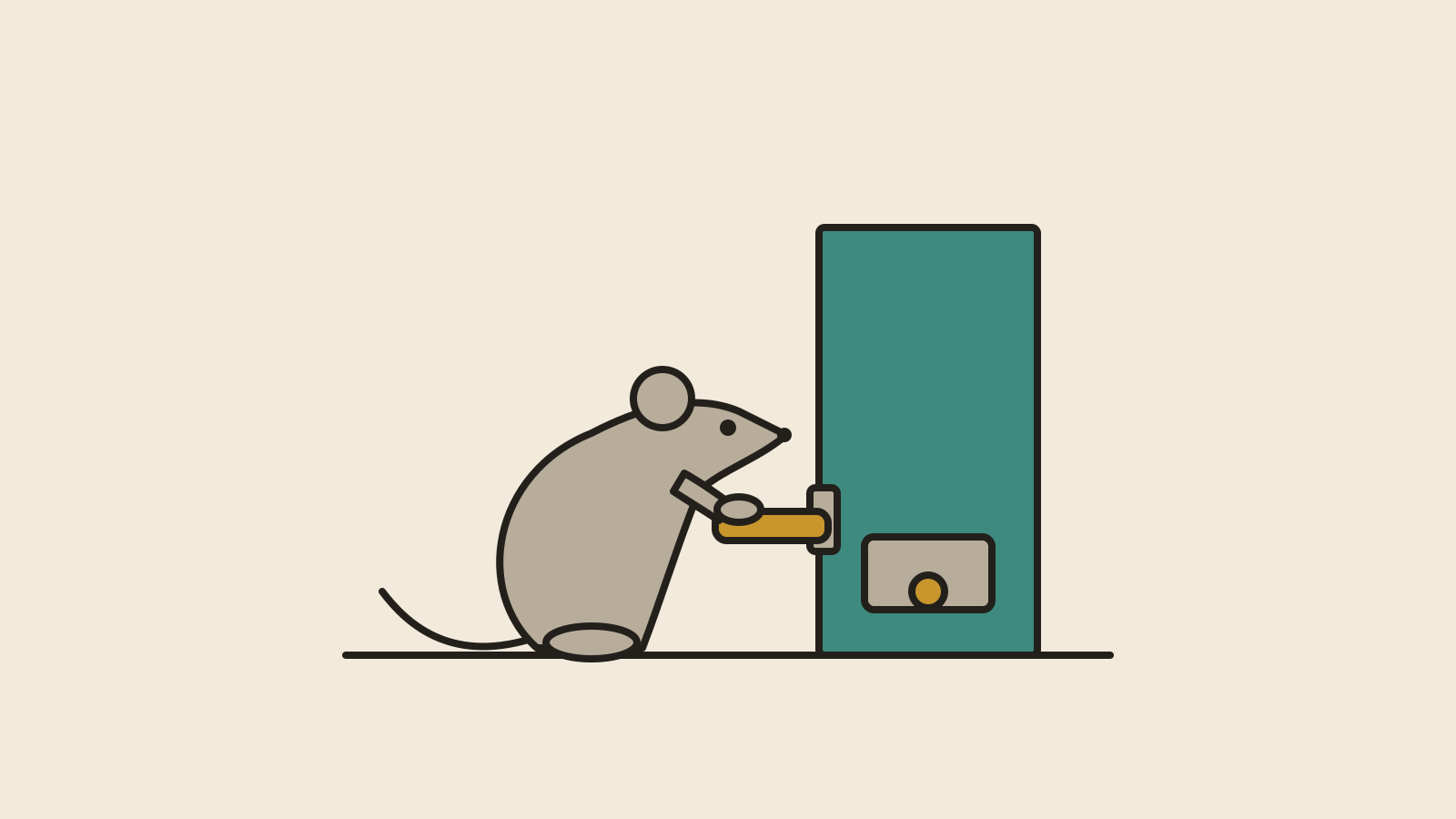
Operant conditioning is learning from consequences. An action that is followed by something good tends to be repeated. An action followed by something bad, or by nothing, tends to drop away. The word operant is B. F. Skinner's: the behaviour operates on the world and the world answers back.
B. F. Skinner
American psychologist who showed how consequences shape behaviour and argued that the same process explains everything people do.
A toddler who says please and gets the biscuit says it more often. A teenager who is ignored when she sulks and listened to when she talks things through comes to sulk less. A slot machine pays out rarely and unpredictably, and players keep pulling long after a steady loss would have stopped them.
Skinner's claim was that this one process, working on the variety of things an animal happens to do, builds most of its behaviour. No insight or intention is required. Consequences select actions, much as natural selection picks among the variations in a species.
Diagram
Two questions about what follows an act give four kinds of consequence
Read as text
A two-by-two grid. The horizontal axis asks whether something is removed or added after the act. The vertical axis asks whether the behaviour becomes less or more frequent. When something is added and behaviour grows, that is positive reinforcement, as with praise for tidying. When something is removed and behaviour grows, that is negative reinforcement, as when a seatbelt chime stops. When something is added and behaviour falls, that is positive punishment, as with a telling-off. When something is removed and behaviour falls, that is negative punishment, as when a phone is taken away.
Key features
- Reinforcement makes a behaviour more frequent and punishment makes it less frequent, and each can work by adding something or by taking something away.
Reinforcement
Any consequence that makes the behaviour it follows more likely to happen again.
- Timing matters: a consequence works best when it follows the act at once.
- Schedules matter: payoffs that come unpredictably produce steadier, more persistent behaviour than payoffs every time.
- Shaping builds new behaviour by reinforcing rough attempts first and then only closer ones.
- Signals set the occasion: an animal learns when an act will pay, as a pigeon pecks only while a light is on.
Not to be confused with
| Look-alike | The difference | Differs on |
|---|---|---|
| Classical conditioning | Classical conditioning links a signal with an event that follows whatever the learner does, and the response is an automatic reflex. Operant conditioning links an action with its result, so the learner's behaviour controls the outcome. | Differs onMechanism |
| Social learning theory | Operant conditioning says behaviour changes when the learner's own acts meet consequences. Social learning theory says people also learn by watching what happens to others, before they have acted at all. | Differs onClaim |
| Reinforcement | Reinforcement is one operation within operant conditioning, the strengthening of behaviour by its consequences. Operant conditioning is the whole process and includes punishment, extinction and shaping. | Differs onScope |
| Law of effect | Edward Thorndike's principle, from his 1898 experiments, that acts followed by satisfaction are stamped in. He timed escapes on separate trials. Skinner dropped the appeal to satisfaction and measured the rate of a freely repeated act. | Differs onMethod |
- Differs onMechanism
Classical conditioning links a signal with an event that follows whatever the learner does, and the response is an automatic reflex. Operant conditioning links an action with its result, so the learner's behaviour controls the outcome.
- Differs onClaim
Operant conditioning says behaviour changes when the learner's own acts meet consequences. Social learning theory says people also learn by watching what happens to others, before they have acted at all.
- Differs onScope
Reinforcement is one operation within operant conditioning, the strengthening of behaviour by its consequences. Operant conditioning is the whole process and includes punishment, extinction and shaping.
- Differs onMethod
Law of effect
Edward Thorndike's principle, from his 1898 experiments, that acts followed by satisfaction are stamped in. He timed escapes on separate trials. Skinner dropped the appeal to satisfaction and measured the rate of a freely repeated act.
Origins and development
Edward Thorndike found in 1898 that cats escaped his puzzle boxes faster with each success, and he later called the principle the law of effect. Skinner, at Harvard in the 1930s, built a chamber in which a rat could press a lever again and again, and he set out the results in The Behavior of Organisms in 1938. He named the behaviour operant to mark it off from Pavlov's reflexes. With Charles Ferster he mapped schedules of reinforcement in 1957. Applications in classrooms, hospitals and animal training followed from the 1960s.
Why it matters
Star charts, loyalty cards, performance bonuses and speeding fines all assume it. Applied behaviour analysis uses it to teach skills to children with developmental disabilities, and some addiction clinics give vouchers for drug-free tests. Video games and social media apps hand out unpredictable rewards on schedules Skinner would recognise. Many dog trainers and zoo keepers now prefer shaping by reward to punishment.
Critiques and limits
That consequences change behaviour is established beyond serious doubt. The dispute is over how much this explains. Keller and Marian Breland reported in 1961 that their trained pigs and raccoons slid back into instinctive rooting and rubbing, even at the cost of food. Noam Chomsky argued in 1959 that the theory cannot explain language. Edward Tolman showed that rats learn a maze's layout with no reward. Edward Deci and others have found that rewards can sap interest in tasks people already enjoy, though how widely this holds is disputed.
Noam Chomsky
American linguist who argued that the capacity for grammar is inborn, and one of the best-known critics of United States foreign policy.
Connections
Belongs to
Behavioural psychology (learning and behaviour analysis)
It is one of the two basic forms of associative learning the branch studies.
Originated by
Skinner named operant behaviour in 1937 and built the chamber and measures used to study it.
Contrasts with
Differs on mechanism. Classical conditioning links a signal with an event, while operant conditioning links an act with its consequence.
Differs on claim. Operant conditioning requires the learner's own acts to meet consequences, while social learning theory says watching others can be enough.
Differs on scope. Reinforcement is one operation inside operant conditioning, which also covers punishment, extinction and shaping.
Intrinsic and extrinsic motivation
Differs on claim. Operant theory says consequences sustain behaviour, while this distinction allows that added rewards can weaken an activity people already enjoy.
Parallels
Rational choice theoryEconomics
Economists reached a similar rule, that actions which pay are chosen more often, while assuming a chooser who calculates ahead.
Applied in
Programmed instruction, classroom reward systems and immediate feedback all apply reinforcement to schoolwork.
Its behavioural techniques change what follows a problem behaviour so that healthier acts pay off.
Extended by
It keeps reinforcement but lets it work at second hand, through consequences the learner sees others receive.
Cross with
Two distant entries to read beside this one, each with the question the pairing opens.
ElasticityEconomics
When each reward costs more lever presses, does an animal's consumption fall as an elasticity of demand would predict? Set them side by side
Labelling theorySociology
Punishment should make an act rarer, yet labelling theory says a public label can deepen deviance: which holds for first offenders? Set them side by side
Further reading
- Breland, K., & Breland, M. (1961). The misbehavior of organisms. American Psychologist, 16(11), 681–684. https://doi.org/10.1037/h0040090
- Skinner, B. F. (1938). The behavior of organisms: An experimental analysis. Appleton-Century.
- Staddon, J. E. R., & Cerutti, D. T. (2003). Operant conditioning. Annual Review of Psychology, 54, 115–144. https://doi.org/10.1146/annurev.psych.54.101601.145124
Cite this entry
Scholia. (2026). Operant conditioning. In Scholia: Notes in the margin of the human sciences. Retrieved November 28, 2026, from https://scholia.zennia.sg/ideas/operant-conditioning