IdeaPsychologyAlso in Philosophy
Stages of moral development
Kohlberg's claim that moral reasoning matures through six stages, from fear of punishment to principles a person would apply to everyone.
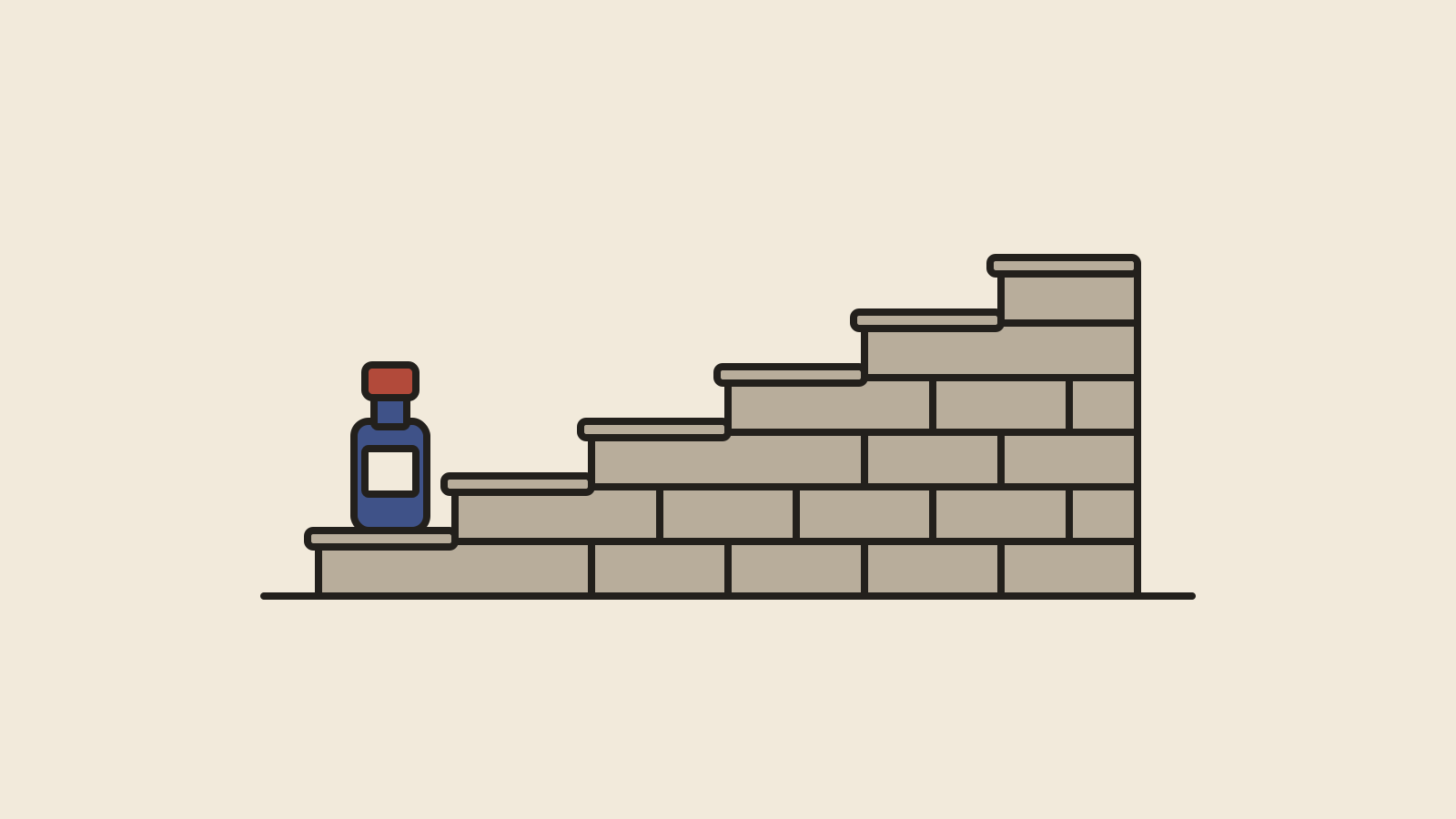
The idea
Ask three people why they pay their train fare when no inspector is in sight. The first says she might get fined. The second says rules are rules, and decent people do not cheat. The third says the railway only runs because passengers pay, and he could not justify riding at the expense of those who do. All three buy a ticket. Their reasons differ, and Lawrence Kohlberg held that the difference is the thing to study.
His theory says moral reasoning develops through six stages, grouped into three levels. Young children judge right and wrong by what brings punishment or reward. Older children and most adults judge by what their group approves and what the law requires. A minority come to judge laws themselves against principles such as fairness and human dignity. Kohlberg claimed that people everywhere move through these stages in the same order, though most stop before the end.
Diagram
Kohlberg ordered moral reasoning in six stages, each wider in view
Read as text
A ranked stack of six stages of moral reasoning, highest first, ordered by how wide a point of view each takes. Stage six is universal ethical principles and stage five is social contract and rights. These two form the postconventional level. Stage four is law and social order and stage three is the approval of others. These form the conventional level. Stage two is self-interest and exchange and stage one is obedience and punishment. These form the preconventional level.
Key features
- The three levels are preconventional (punishment and self-interest), conventional (approval and law) and postconventional (social contract and universal principle).
- What is scored is the reasoning behind an answer. Two people can reach opposite verdicts at the same stage.
- The stages come in a fixed order: nobody skips one, and people seldom slip back.
- Progress depends on growing powers of thought and on meeting arguments pitched one stage above one's own.
- Most adults reason at stages three and four, and few reach stage five.
Not to be confused with
| Look-alike | The difference | Differs on |
|---|---|---|
| Stages of cognitive development | Piaget's stages describe how all of a child's reasoning matures by adolescence. Kohlberg applied the same stage logic to moral reasoning alone and carried it into adulthood. | Differs onScope |
| Ethics | Ethics asks which moral reasoning is sound. Kohlberg's stages describe how reasoning in fact changes with age. He also held that later stages are better, which is a philosophical claim. | Differs onDescriptive or normative |
| Ethics of care | Kohlberg ranks reasoning by how impartially it weighs rights and rules. Care ethics judges moral maturity by attention to particular people and relationships. | Differs onStandard of judgement |
| Moral foundations theory | Jonathan Haidt's theory says moral judgements come from quick intuitions, with reasons found afterwards. For Kohlberg, reasoning does the work. | Differs onMechanism |
- Differs onScope
Stages of cognitive development
Piaget's stages describe how all of a child's reasoning matures by adolescence. Kohlberg applied the same stage logic to moral reasoning alone and carried it into adulthood.
- Differs onDescriptive or normative
Ethics asks which moral reasoning is sound. Kohlberg's stages describe how reasoning in fact changes with age. He also held that later stages are better, which is a philosophical claim.
- Differs onStandard of judgement
Ethics of care
Kohlberg ranks reasoning by how impartially it weighs rights and rules. Care ethics judges moral maturity by attention to particular people and relationships.
- Differs onMechanism
Moral foundations theory
Jonathan Haidt's theory says moral judgements come from quick intuitions, with reasons found afterwards. For Kohlberg, reasoning does the work.
Origins and development
Jean Piaget had described two phases in children's moral judgement in 1932. Kohlberg, a Chicago doctoral student, extended the approach in 1958 by interviewing 72 boys aged ten to sixteen about invented dilemmas. The best known asks whether a man named Heinz should steal a drug to save his dying wife. He followed many of the boys for twenty years and revised the scoring several times. Stage six, modelled on Kant and Rawls, was dropped from the scoring manual when no one in the long-term study reached it.
Why it matters
The stages are taught on most psychology and teacher-training courses, and phrases such as "law and order morality" come from them. They carry a point that outlasts the scheme: the same act can spring from very different reasons, and a child who obeys out of fear has not yet learned what the adult hoped to teach.
Critiques and limits
Carol Gilligan argued in 1982 that a scheme built on boys' interviews treats justice as the whole of morality and scores care as a lower stage. Later reviews found little sex difference in stage scores. John Snarey's 1985 review of 45 studies in 27 cultures confirmed the order of the first four stages and found stage five mainly among educated city dwellers. Jonathan Haidt holds that reasoning mostly follows intuition. The evidence is contested: the early sequence stands, while the upper stages, universality and the primacy of reasoning are disputed.
Carol Gilligan
The American psychologist who argued that moral theory had ignored a voice of care and relationship, one she heard most often from women.
In education and policy
Kohlberg and Moshe Blatt found that weekly classroom debates on dilemmas, led by a teacher arguing one stage above the pupils, raised many pupils' reasoning by part of a stage. Kohlberg went further with "just community" schools, where pupils and staff voted on rules as equals. Critics in education point out that better reasoning about invented cases does not reliably produce better behaviour.
Connections
Belongs to
It is the branch's classic stage account of how children and adults come to reason about right and wrong.
Originated by
Kohlberg proposed the stages in his 1958 Chicago doctorate and revised them over the next 25 years.
Extends
Stages of cognitive development
It carries Piaget's stage logic over from reasoning about the physical world to reasoning about right and wrong, and on into adulthood.
Influenced by
Categorical imperativePhilosophy
Stage six asks whether the principle behind an act could hold for everyone, the test Kant's imperative sets.
Justice as fairnessPolitical theory & science
Kohlberg used Rawls's choice of rules from behind a veil as his model of the most mature moral reasoning.
Social contractPolitical theory & science
Kohlberg's fifth stage is the social-contract orientation: laws bind because they are agreements made for the common good and open to revision.
Kohlberg started from Piaget's 1932 study of children's moral judgement, which found two phases, and stretched it to six stages.
Critiques
Moral relativismPhilosophy
Kohlberg claimed the stages appear in the same order in every culture, and offered that as evidence against relativism.
Contrasts with
EthicsPhilosophy
Differs on descriptive or normative. Kohlberg's stages describe how moral reasoning does form in people, where ethics asks which reasoning is sound.
Stages of cognitive development
Differs on scope. Kohlberg's stages cover only how people justify moral decisions, while Piaget's cover reasoning in general.
Applied in
Teachers use structured discussion of dilemmas, at a level just above the pupils' own, to stretch their moral reasoning.
Critiqued by
She argued that the stages, built from interviews with boys, score an ethic of care as immature reasoning about justice.
Cross with
Two distant entries to read beside this one, each with the question the pairing opens.
Guilt and shame culturesAnthropology
Would Kohlberg's scale score a person guided by shame before others lower than one guided by private guilt, and is that fair? Set them side by side
RenPhilosophy
Ren begins as care within the family: would Kohlberg rank it below principles applied to everyone alike, and should he? Set them side by side
Further reading
- Crain, W. (2011). Theories of development: Concepts and applications (6th ed.). Pearson.
- Gilligan, C. (1982). In a different voice: Psychological theory and women's development. Harvard University Press.
- Kohlberg, L. (1981). Essays on moral development: Vol. 1. The philosophy of moral development. Harper & Row.
- Snarey, J. R. (1985). Cross-cultural universality of social-moral development: A critical review of Kohlbergian research. Psychological Bulletin, 97(2), 202–232. https://doi.org/10.1037/0033-2909.97.2.202
Cite this entry
Scholia. (2026). Stages of moral development. In Scholia: Notes in the margin of the human sciences. Retrieved November 28, 2026, from https://scholia.zennia.sg/ideas/stages-of-moral-development