PersonEconomics
Frank Knight
An American economist who separated measurable risk from true uncertainty, and taught the first Chicago school to doubt everything, markets included.
Why they matter
Frank Knight drew the line between risk and uncertainty that economists still use. Risk is a chance you can put a number on. Uncertainty is a future so particular that no number means anything.
A fire insurer faces risk. Out of ten thousand similar houses, records show roughly how many will burn, so the insurer can charge a premium and expect to come out ahead. Someone opening the first bubble tea shop in a town faces uncertainty. No table of past cases exists, because the case is new. Knight argued that profit is the reward for acting anyway. Where every outcome can be insured, competition wears profit down to nothing. What's left to earn comes from judgement under Knightian uncertainty.
Knightian uncertainty
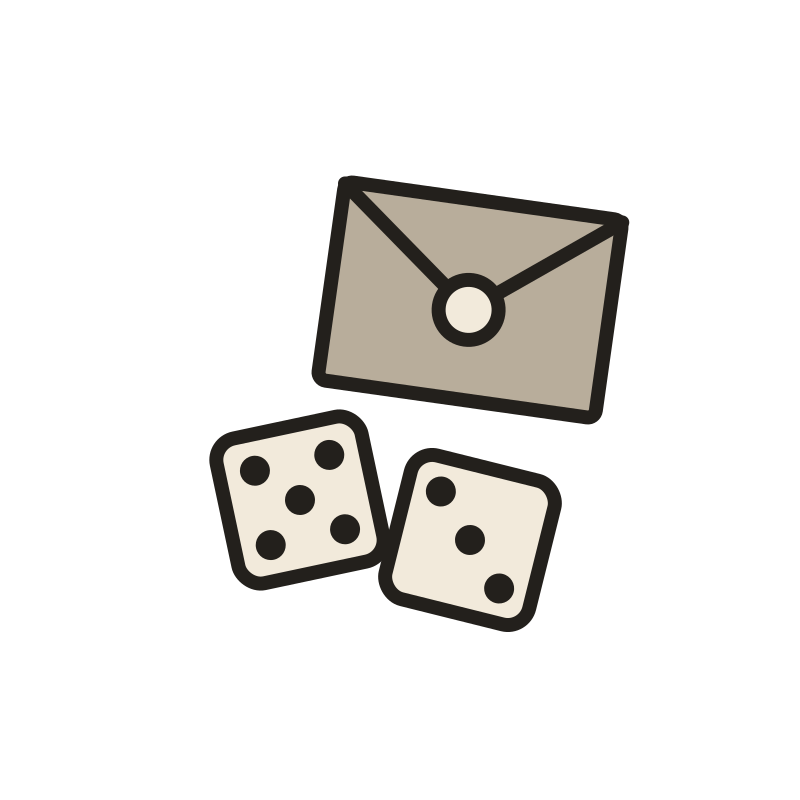
Some futures can be given odds and insured against, while others are so novel that no probability can be calculated at all.
He mattered as a teacher too. At Chicago he trained a generation of market economists while doubting, aloud and often, that markets deserve moral praise.
Key ideas
- Knightian uncertainty: some futures have no calculable odds, and business judgement is the skill of deciding in them.
- Profit and the entrepreneur: profit is what remains for whoever bears uncertainty that can't be insured or hired out.
- Perfect competition: he listed the strict conditions the textbook model needs, which showed how far real markets stand from it.
Perfect competition
An idealised market with so many buyers and sellers of an identical product that none of them can influence the price.
- The ethics of competition: markets reward luck, inheritance and salesmanship as well as effort, so winning isn't proof of desert.
- Social cost: in 1924 he showed that a privately owned road would charge the toll that cures congestion, the textbook externality.
Externality
A cost or benefit of an activity that falls on people who took no part in deciding it.
Not to be confused with
| Look-alike | The difference | Differs on |
|---|---|---|
| John Maynard Keynes | Both published on probability in 1921 and both stressed uncertainty. Keynes used it to explain why investment collapses and to justify public spending. Knight used it to explain profit, and attacked the General Theory in a 1937 review. | Differs onClaim |
| Milton Friedman | Friedman was his student. He held that economics can be a predictive science tested against data, and argued for markets with confidence. Knight doubted that human conduct can be predicted that way, and defended markets as the least bad option. | Differs onMethod |
- Differs onClaim
Both published on probability in 1921 and both stressed uncertainty. Keynes used it to explain why investment collapses and to justify public spending. Knight used it to explain profit, and attacked the General Theory in a 1937 review.
- Differs onMethod
Friedman was his student. He held that economics can be a predictive science tested against data, and argued for markets with confidence. Knight doubted that human conduct can be predicted that way, and defended markets as the least bad option.
Life and context
Knight was born in 1885 on a farm in Illinois, the eldest child of a large and strict evangelical family. He lost his faith early and kept a preacher's intensity. He studied at small Tennessee colleges, began in philosophy at Cornell and was steered into economics. His 1916 thesis became Risk, Uncertainty and Profit (1921).
After some years at the University of Iowa he settled at Chicago in 1927. The Great Depression soon made planning fashionable, and Knight spent the 1930s arguing against the planners and against the easy optimism of market enthusiasts. His students included Milton Friedman, George Stigler and James Buchanan. He helped found the Mont Pelerin Society in 1947, read widely in theology and history, and went on teaching long after he retired. He died in 1972.
Milton Friedman
An American economist who argued that money drives inflation and slumps, and who made the popular case for free markets over state direction.
James M. Buchanan
An American economist who analysed politics as exchange among self-interested people and argued that the rules of the game matter more than who governs.
Life strip
- 1885 Born
- 1885 Born on a farm, McLean County in Illinois
- 1916 Completes his doctorate, Cornell University
- 1921 Publishes Risk, Uncertainty and Profit
- 1923 Publishes the essay The Ethics of Competition
- 1927 Translates Max Weber's General Economic History and joins the University of Chicago
- 1947 Founding member of the Mont Pelerin Society, Switzerland
- 1950 President of the American Economic Association
- 1972 Dies aged 86, Chicago
- 1972 Died
Legacy
The line between risk and uncertainty is standard in finance, insurance and decision theory. It came back into public argument after the 2008 crisis, when models built on calculable odds failed. The textbook picture of money and goods flowing in a circle between households and firms owes much to his teaching notes of the 1920s. Buchanan's economics of politics and Ronald Coase's work on social cost both build on him.
Critiques and limits
Stephen LeRoy and Larry Singell argued in 1987 that Knight's own text doesn't support the sharp line drawn in his name, and that he was really describing markets that fail when insurance is missing. Followers of Leonard Savage hold that a person can always assign personal probabilities, which would dissolve the distinction. Friedman rejected his teacher's view that economics can't be a predictive science, and most of the profession followed Friedman.
Lineage
Influenced by

Influenced

Connections
Belongs to
He set out the exact conditions of perfect competition, then spent decades warning how little they describe.
Influenced by
Max WeberSociology
He translated Weber's General Economic History in 1927 and shared his interest in how capitalism shapes character.
Critiques
In 1924 he argued that Pigou's congested road needs an owner who charges a toll, with no tax required.
In the 1930s he attacked the Austrian view that capital can be measured as a period of production.
Contrasts with
Differs on claim. Keynes used uncertainty to explain slumps and justify public spending, while Knight used it to explain profit.
Differs on method. Friedman treated economics as a predictive science tested on data, which Knight doubted human conduct allows.
Originated
Knight drew the line between measurable risk and unmeasurable uncertainty in Risk, Uncertainty and Profit (1921).
Influenced
Knight, his teacher at Chicago, converted him to markets and taught him to treat economics as the study of rules.
Further reading
Read first
Knight, F. H. (1921). Risk, uncertainty and profit. Houghton Mifflin.
- Emmett, R. B. (2009). Frank Knight and the Chicago school in American economics. Routledge. https://doi.org/10.4324/9780203881743
- Kay, J., & King, M. (2020). Radical uncertainty: Decision-making for an unknowable future. The Bridge Street Press.
- LeRoy, S. F., & Singell, L. D. (1987). Knight on risk and uncertainty. Journal of Political Economy, 95(2), 394–406. https://doi.org/10.1086/261461
Cite this entry
Scholia. (2026). Frank Knight. In Scholia: Notes in the margin of the human sciences. Retrieved November 28, 2026, from https://scholia.zennia.sg/people/frank-knight