School or branchPhilosophy
Cynicism
An ancient Greek movement that taught virtue through poverty and frank speech, mocking wealth and custom as obstacles to living by nature.
Overview
The Cynics held that a good life needs virtue and almost nothing else. Most of what people chase, such as money, rank, fine food and a good name, rests on custom rather than nature, and custom makes people anxious and unfree. So the Cynic owned a cloak, a staff and a bag, slept where he could and said exactly what he thought to anyone, kings included.
The name comes from the Greek kynikos, dog-like, a jibe at Diogenes of Sinope that his followers wore with pride. Like a dog, the Cynic ate and slept in public and felt no shame.
Diogenes of Sinope
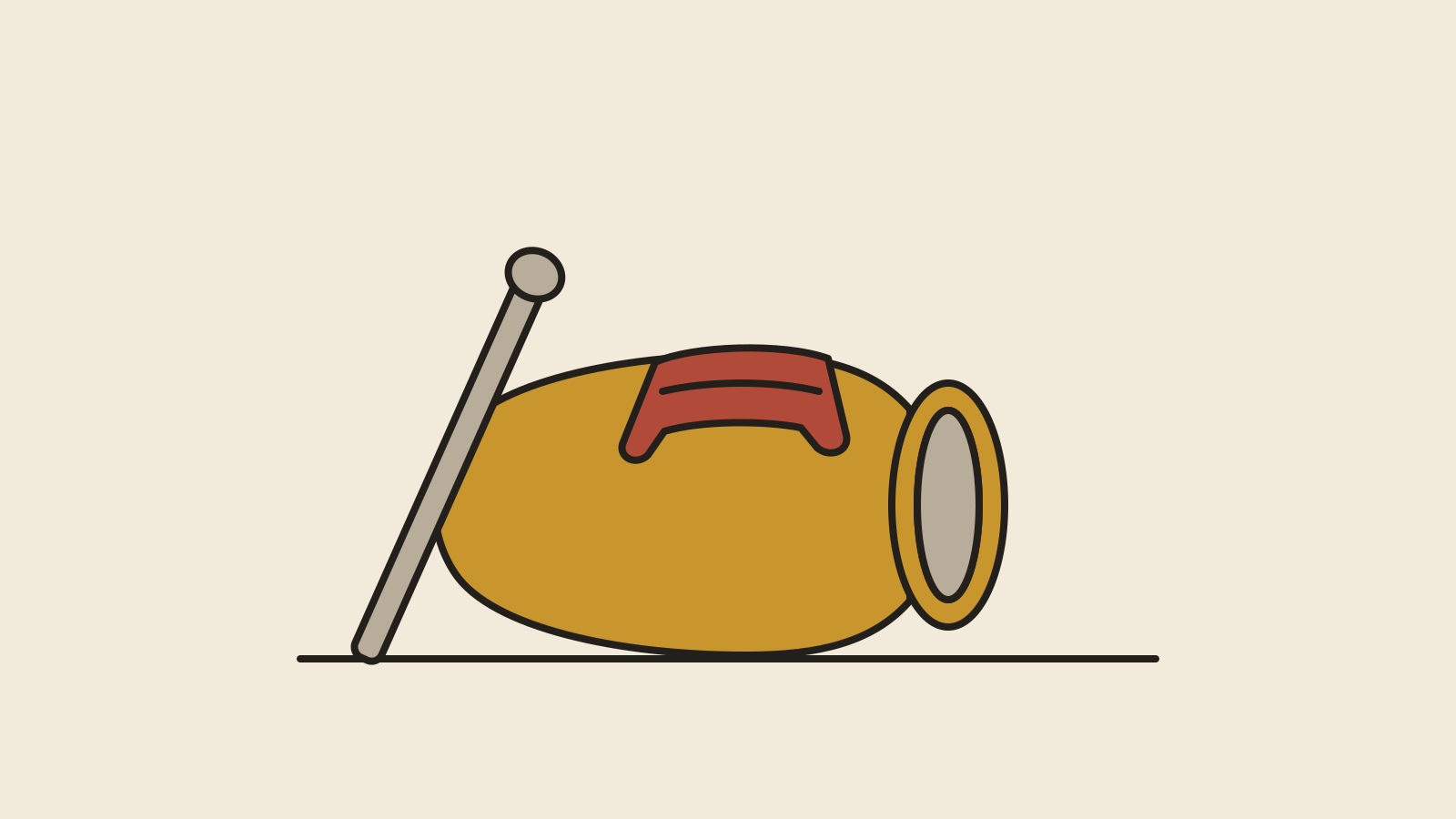
The Cynic who lived in a storage jar in Athens and used shameless public acts to argue that a good life needs almost nothing.
A small modern case shows the appeal. Someone who stops buying clothes to impress colleagues, and finds they mind less than expected, has tested a Cynic claim: much of what we think we need is need created by other people's opinion. The Cynics turned that test into a whole way of life, lived in the street as a lesson.
Diagram
Cynics gave nature authority over how to live and stripped it from custom
Read as text
Two columns divided by one question: what should guide a life? On the left is nature, meaning bodily needs only, virtue won through training and frank speech. On the right is custom, meaning money and rank, shame and etiquette and the laws of one city. The Cynics followed the left-hand column and openly broke the rules of the right.
Core commitments
- Virtue is enough for happiness, and it is won by training of body and mind (askesis), not by study alone.
- Self-sufficiency (autarkeia) is freedom: the less you need, the less anyone can take from you or hold over you.
- Nature has authority and custom (nomos) has none, so conventions of property, rank and modesty may be openly flouted.
- Frank speech (parrhesia) is a duty, owed most of all to the powerful.
- The Cynic belongs to no city, and Diogenes called himself a citizen of the world.
Cosmopolitanism
Every human being belongs to one moral community, so our duties to people do not stop at the borders of our own country or group.
Not to be confused with
| Look-alike | The difference | Differs on |
|---|---|---|
| Stoicism | The Stoics descend from the Cynics through Crates, teacher of Zeno. They kept the claim that virtue is enough, but called health and wealth worth preferring, took part in civic life and built a system of logic and physics. | Differs onClaim |
| Epicureanism | Both prize self-sufficiency and simple living. Epicureans made pleasure, understood as freedom from pain and worry, the goal and lived quietly among friends. Cynics made virtue the goal and sought out hardship in public. | Differs onClaim |
| Modern cynicism | A cynic today assumes that everyone acts from self-interest. The ancient Cynics were moralists who believed virtue was real and within anyone's reach. | Differs onClaim |
| Religious asceticism | Monks and hermits give up comforts for the sake of salvation or holiness. The Cynic gave them up to become free and self-sufficient in this life, and saw no further reward. | Differs onStandard of judgement |
- Differs onClaim
The Stoics descend from the Cynics through Crates, teacher of Zeno. They kept the claim that virtue is enough, but called health and wealth worth preferring, took part in civic life and built a system of logic and physics.
- Differs onClaim
Both prize self-sufficiency and simple living. Epicureans made pleasure, understood as freedom from pain and worry, the goal and lived quietly among friends. Cynics made virtue the goal and sought out hardship in public.
- Differs onClaim
Modern cynicism
A cynic today assumes that everyone acts from self-interest. The ancient Cynics were moralists who believed virtue was real and within anyone's reach.
- Differs onStandard of judgement
Religious asceticism
Monks and hermits give up comforts for the sake of salvation or holiness. The Cynic gave them up to become free and self-sufficient in this life, and saw no further reward.
Origins and development
Ancient writers traced the movement to Antisthenes, a companion of Socrates, though many historians doubt he and Diogenes ever met. Diogenes, in Athens and Corinth from the mid-fourth century BCE, set the pattern. His follower Crates gave away a fortune and lived as a Cynic with his wife Hipparchia. Cynicism never had a school building or a fixed doctrine. It passed from teacher to pupil as a way of living. It revived under the Roman empire, when wandering Cynic preachers became a familiar sight, and faded after the fifth century CE.
Socrates
An Athenian who wrote nothing, questioned everyone about how to live and was executed for it, giving Western philosophy its founding example.
Why it matters
The Cynics gave the West its first sustained attack on convention and its word "cosmopolitan". Through Crates and Zeno they shaped Stoicism, and so much of later ethics. Michel Foucault devoted his last lectures, in 1984, to their fearless speech. Anyone drawn to minimalism, or to telling uncomfortable truths to power, is walking a path the Cynics cleared.
Stoicism
An ancient school teaching that good character is the only true good, and that distress comes from our judgements about events, which we can change.
Michel Foucault
A French philosopher and historian who argued that knowledge and power shape each other in prisons, clinics, asylums and ideas of sexuality.
Critiques and limits
Cicero rejected the Cynic way outright, since it wars on the sense of shame that decent conduct needs. The emperor Julian, who admired Diogenes, attacked the Cynics of his own day in 362 CE as ignorant beggars who copied the rudeness and missed the discipline. Historians such as William Desmond add a limit of evidence. Cynic writings are almost all lost, and the movement is known mainly through anecdotes told centuries later.
Cicero
The Roman orator and statesman who put Greek philosophy into Latin and defined a republic as the property of its people.
Key figures
- Antisthenes
- Diogenes of Sinopec. 412–323 BCE
- Crates of Thebes
- Hipparchia
- Bion of Borysthenes
- Menippus
- Demonax
- Peregrinus Proteus

Connections
Originated by
Diogenes gave the movement its model life and its name, from the nickname "the dog" that Athenians gave him.
Influenced by
The Cynics took from Socrates his poverty, his indifference to opinion and his claim that virtue is enough for a good life.
Contrasts with
Differs on claim. The Stoics kept the Cynic claim that virtue suffices, but called health and wealth worth preferring and added logic and physics.
Differs on claim. Epicureans sought freedom from pain among friends in a quiet garden, where Cynics sought virtue through public hardship.
Parallels
Zhuangzi likewise mocked rank, ritual and cleverness and praised an unforced life close to nature, with no contact with Greece.
Contains
Diogenes set the pattern of the Cynic life, and his nickname 'the dog' gave the school its name.
Influenced
His first teacher was the Cynic Crates, from whom he kept the view that virtue is enough for a good life.
Zeno studied with the Cynic Crates, and the Stoics kept the Cynic claim that virtue alone is enough for happiness.
Further reading
- Branham, R. B., & Goulet-Cazé, M.-O. (1996). The Cynics: The Cynic movement in antiquity and its legacy. University of California Press.
- Desmond, W. (2008). Cynics. University of California Press.
- Diogenes the Cynic. (2012). Sayings and anecdotes, with other popular moralists. Oxford University Press.
Cite this entry
Scholia. (2026). Cynicism. In Scholia: Notes in the margin of the human sciences. Retrieved November 28, 2026, from https://scholia.zennia.sg/schools/cynicism