School or branchPsychologyAlso in Anthropology, Cognitive science & linguistics, Philosophy
Evolutionary psychology
A school that explains the human mind as a set of mechanisms shaped by natural selection to solve our ancestors' problems.
Overview
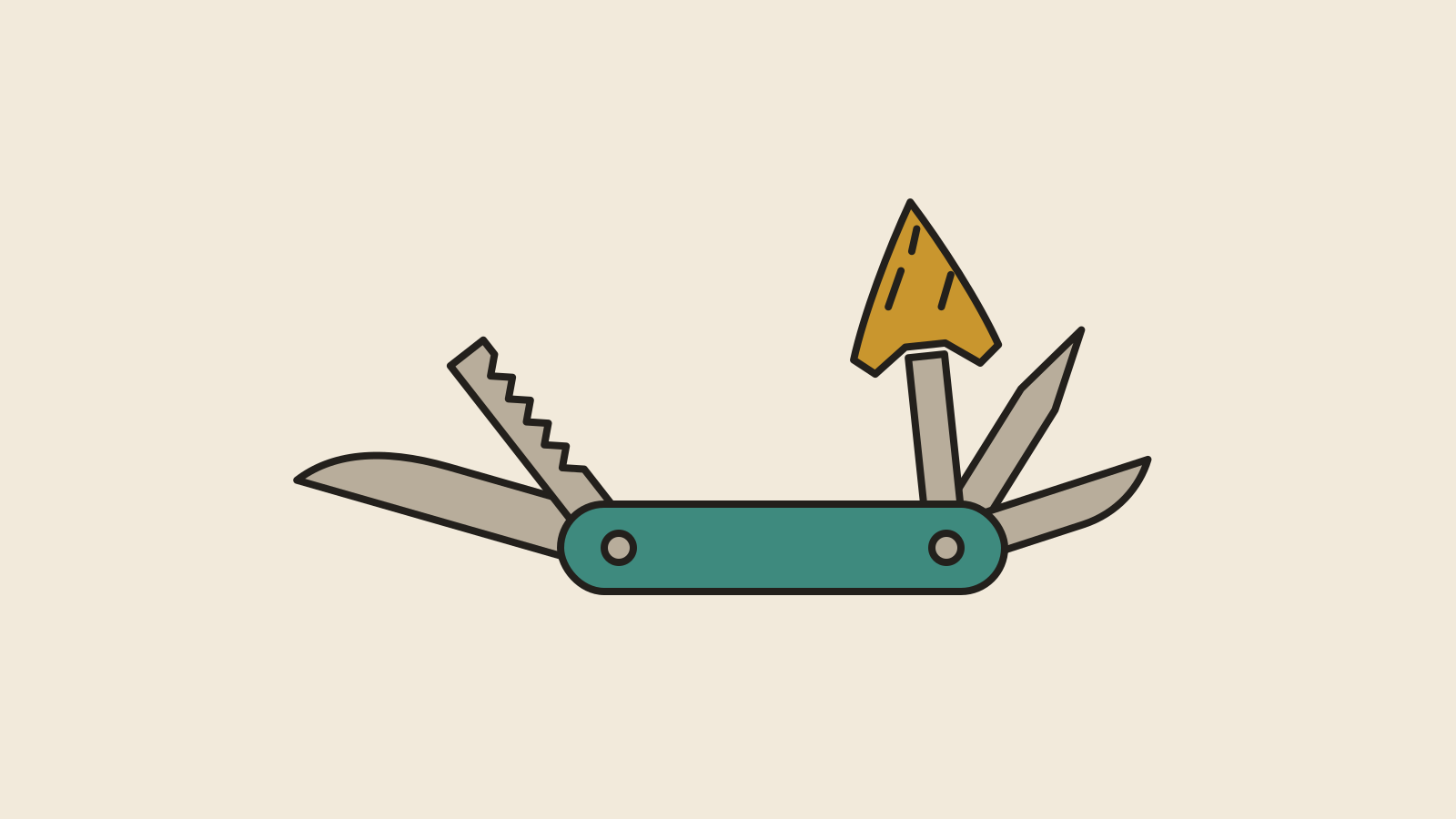
Evolutionary psychology holds that the mind, like the body, was shaped by natural selection. Its supporters argue that the brain contains many specialised mechanisms, each built over thousands of generations to solve a problem our ancestors met again and again: finding food, choosing mates, raising children, spotting cheats, avoiding predators and disease. To understand a mental trait, they ask what it was for.
Fear is a standard example. Children and adults pick up fears of snakes, spiders and heights quickly and lose them slowly. Fears of cars and electrical sockets, which kill far more people today, are rare. On the evolutionary account the mind comes prepared to learn the dangers of the ancestral world and has had no time to adjust to the modern one.
The school presents itself as a way of doing all of psychology. Its research covers cooperation, mating, parenting, aggression, language and reasoning.
Diagram
Evolutionary psychologists reason from ancestral problems to present-day minds
Read as text
A flow of four steps. A problem that recurred in ancestral life, such as avoiding snakes, led to natural selection over many generations. Selection built a specialised mental mechanism for that problem. The mechanism now produces behaviour in modern settings, where it may or may not still fit the conditions.
Core commitments
- The mind is a collection of evolved adaptations, and each can be studied by asking what problem it solved.
- These mechanisms are specialised for particular kinds of content, and no single all-purpose learning device does the work.
- They were fitted to the lives of Pleistocene hunter-gatherers, so they can misfire in modern settings, as a taste for sugar does.
- Human nature is universal, and cultural differences arise as the same mechanisms meet different conditions.
- To call a tendency evolved is not to call it good, fixed or beyond the reach of circumstance.
Not to be confused with
| Look-alike | The difference | Differs on |
|---|---|---|
| Sociobiology | E. O. Wilson's sociobiology of the 1970s explained social behaviour directly by its effect on reproduction. Evolutionary psychology places evolved mental mechanisms in between, and expects them to serve past conditions more than present advantage. | Differs onMechanism |
| Social Darwinism | Social Darwinism was a nineteenth-century political doctrine that competition among people and nations ought to run unchecked. Evolutionary psychology describes how minds came to be and draws no conclusion about how society should be arranged. | Differs onDescriptive or normative |
| Behavioural genetics | Behavioural genetics asks how far differences between individuals reflect differences in their genes. Evolutionary psychology studies the design all humans share. | Differs onScope |
| Biological psychology | Biological psychology explains how a mechanism works in the body now. Evolutionary psychology explains why it exists. | Differs onLevel |
- Differs onMechanism
Sociobiology
E. O. Wilson's sociobiology of the 1970s explained social behaviour directly by its effect on reproduction. Evolutionary psychology places evolved mental mechanisms in between, and expects them to serve past conditions more than present advantage.
- Differs onDescriptive or normative
Social Darwinism
Social Darwinism was a nineteenth-century political doctrine that competition among people and nations ought to run unchecked. Evolutionary psychology describes how minds came to be and draws no conclusion about how society should be arranged.
- Differs onScope
Behavioural genetics
Behavioural genetics asks how far differences between individuals reflect differences in their genes. Evolutionary psychology studies the design all humans share.
- Differs onLevel
Biological psychology explains how a mechanism works in the body now. Evolutionary psychology explains why it exists.
Origins and development
Darwin predicted in 1859 that psychology would one day rest on evolutionary foundations. The modern school drew on theories of kin selection and reciprocal altruism from the 1960s and 1970s, and on the quarrel over Wilson's Sociobiology (1975). Its founding text is The Adapted Mind (1992), edited by Jerome Barkow, Leda Cosmides and John Tooby. Cosmides had shown that people solve a logic puzzle far more easily when it is framed as catching a rule-breaker. David Buss's survey of mate preferences in 37 cultures and Steven Pinker's books carried the approach to a wide public.
Why it matters
Evolutionary explanations of jealousy, status, diet, sex differences and political tribalism fill popular science shelves and opinion columns. The mismatch between old minds and new settings informs public health thinking about obesity and sleep. The school brought questions about human universals back into psychology, and its claims about differences between the sexes keep it at the centre of public argument.
Critiques and limits
Stephen Jay Gould and Richard Lewontin warned in 1979 that adaptive stories are easy to invent and hard to test, a charge Gould later aimed at this school. David Buller argued in 2005 that its best-known findings fail on inspection and that too little is known about Pleistocene life to reason back from it. Alice Eagly and Wendy Wood explain sex differences in mate preference by social roles, noting that they shrink where women have more equality. Defenders such as Buss reply that their hypotheses are tested and sometimes rejected.
Key figures
- Leda Cosmides
- John Tooby
- Jerome Barkow
- Donald Symons
- David Buss
- Martin Daly
- Margo Wilson
- Steven Pinker
Connections
Influenced by
Noam ChomskyCognitive science & linguistics
His case for an inborn language faculty became the model for other specialised, evolved mental organs.
The school took from him the notion of an environment of evolutionary adaptedness, the ancestral setting a trait was fitted to.
Computational theory of mindCognitive science & linguistics
It describes each adaptation as an information-processing program and asks what problem the program was built to solve.
Critiques
Tabula rasaPhilosophy
It denies that the mind starts blank and is filled by culture, holding that evolved mechanisms shape what is learned.
It rejects a few general laws of learning in favour of many specialised mechanisms, each prepared for particular content.
Contrasts with
Differs on level. Biological psychology explains how a mechanism works in the body now, evolutionary psychology why natural selection built it.
Applications
Incest tabooAnthropology
Westermarck's aversion is a standard example of an evolved mechanism, here one for detecting kin and avoiding inbreeding.
Modularity of mindCognitive science & linguistics
Evolutionary psychologists stretched the thesis to the whole mind, picturing many evolved modules, a move Fodor rejected.
Prisoner's dilemmaEconomics
The repeated game is the standard model of how cooperation between unrelated individuals could evolve through reciprocity.
TeleologyPhilosophy
It explains mental traits by the function they were selected to serve, a purpose-shaped account grounded in past causes.
Cross with
Two distant entries to read beside this one, each with the question the pairing opens.
Original affluent societyAnthropology
If the mind was shaped by foragers' lives, does Sahlins's picture of foragers wanting little change which problems it evolved to solve? Set them side by side
Functionalism (anthropology)Anthropology
Both explain a trait or custom by the job it does: what evidence separates a real function from a plausible story? Set them side by side
Further reading
- Barkow, J. H., Cosmides, L., & Tooby, J. (1992). The adapted mind: Evolutionary psychology and the generation of culture. Oxford University Press.
- Buller, D. J. (2005). Adapting minds: Evolutionary psychology and the persistent quest for human nature. MIT Press.
- Confer, J. C., Easton, J. A., Fleischman, D. S., Goetz, C. D., Lewis, D. M. G., Perilloux, C., & Buss, D. M. (2010). Evolutionary psychology: Controversies, questions, prospects, and limitations. American Psychologist, 65(2), 110–126. https://doi.org/10.1037/a0018413
- Laland, K. N., & Brown, G. R. (2002). Sense and nonsense: Evolutionary perspectives on human behaviour. Oxford University Press.
Cite this entry
Scholia. (2026). Evolutionary psychology. In Scholia: Notes in the margin of the human sciences. Retrieved November 28, 2026, from https://scholia.zennia.sg/schools/evolutionary-psychology
This topic is contested. The entry sets out the main positions rather than settling them.