School or branchEconomicsAlso in Political theory & science, Sociology
Political economy
The study of how politics and economic life shape each other, and the name economics itself went by until about 1890.
Overview
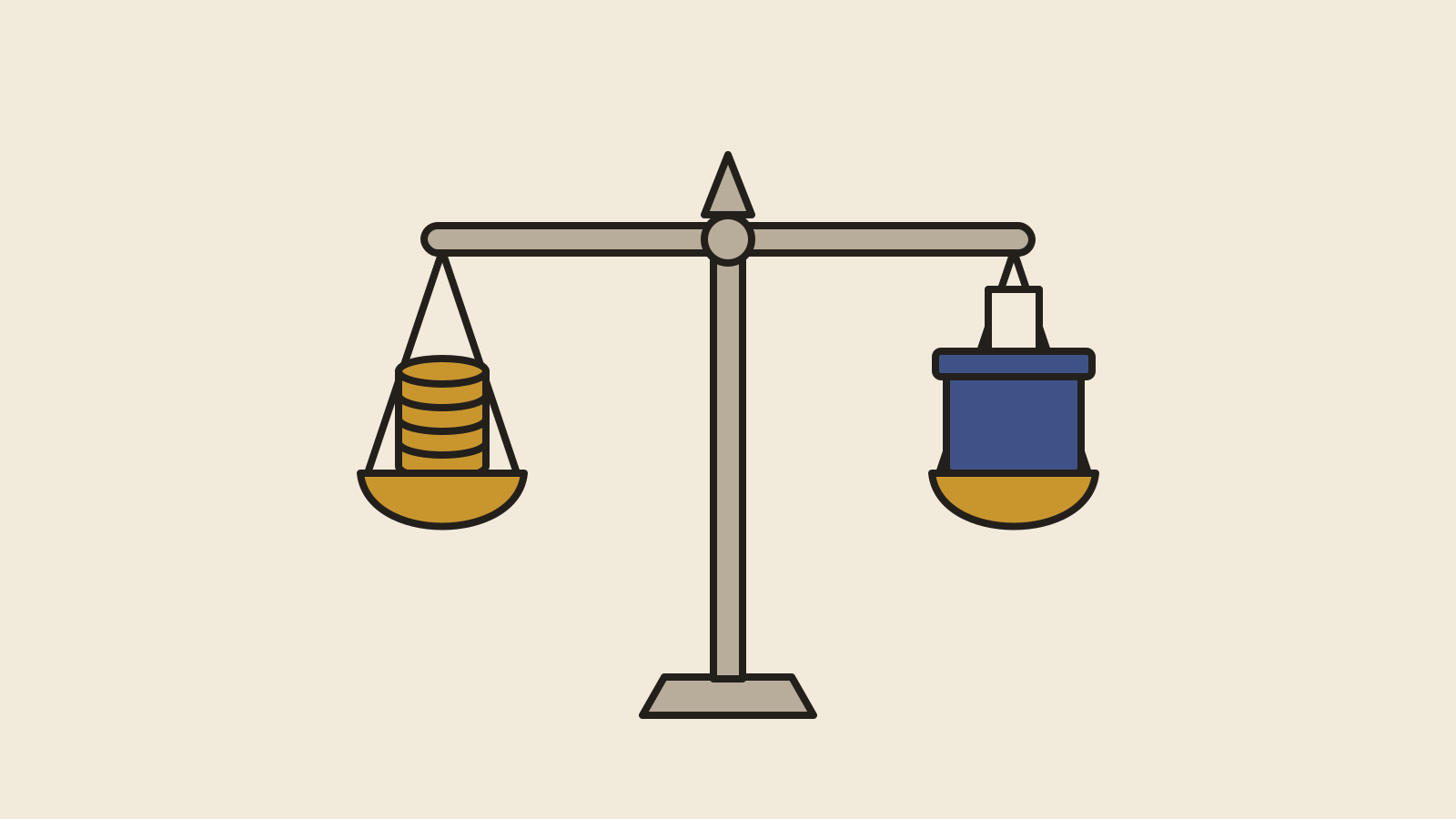
Political economy studies how political power and economic life shape each other. It asks who gains and who loses from the way an economy is arranged, and why governments choose the policies they do.
Take a tariff on imported rice. A standard economic analysis works out the effect on prices and output. A political economist adds further questions. Rice farmers are few and organised and each gains a great deal, while rice buyers are many and scattered and each loses a little. Which group will the minister hear from? And who wrote the rules under which the decision is made?
The phrase carries three meanings today. It is the old name for economics as a whole, and in economics departments it now means applying economic tools to politics. In political science, sociology and the Marxian tradition it means studying how power, class and institutions shape markets. The three camps share a subject and little else.
Diagram
Political economy named the whole subject until 1890 and returned in the 1960s
Read as text
A timeline of the phrase political economy. Montchrestien uses it in the title of a treatise in 1615. Smith's Wealth of Nations follows in 1776, Ricardo's Principles in 1817 and Marx's Capital, subtitled a critique of political economy, in 1867. From 1615 to 1890 the phrase is the name for all economics. In 1890 Marshall's Principles of Economics fixes the shorter name. The older name returns with Buchanan and Tullock's The Calculus of Consent in 1962 and Susan Strange's 1970 article on the mutual neglect of economics and international relations. The branch is active today.
Core commitments
- Markets and governments cannot be studied apart, because each sets the conditions under which the other works.
- Distribution is central, since every arrangement of an economy favours some groups over others and the losers rarely stay quiet.
- Policies are explained by some mixture of interests, institutions and ideas. The camps disagree, often sharply, over which of the three weighs most.
- History and place matter, so the same policy can work differently under different political settlements.
Not to be confused with
| Look-alike | The difference | Differs on |
|---|---|---|
| Economics | Since Alfred Marshall's day economics has been the narrower name: the analysis of choice, prices and output, with political arrangements usually held fixed. Political economy puts those arrangements back into the question. | Differs onScope |
| Classical economics | Smith, Ricardo and Mill called their subject political economy, so the two names are often swapped. Classical economics is one school with its own doctrines. Political economy is the wider subject, which includes that school's fiercest critics. | Differs onScope |
| Public choice | Public choice is one approach within political economy. It models voters, politicians and officials as self-interested choosers. Other approaches start from class, from institutions or from ideas. | Differs onScope |
| International political economy | This subfield studies trade, finance and power between states. Political economy also covers what happens inside one country. | Differs onLevel |
- Differs onScope
Economics
Since Alfred Marshall's day economics has been the narrower name: the analysis of choice, prices and output, with political arrangements usually held fixed. Political economy puts those arrangements back into the question.
- Differs onScope
Smith, Ricardo and Mill called their subject political economy, so the two names are often swapped. Classical economics is one school with its own doctrines. Political economy is the wider subject, which includes that school's fiercest critics.
- Differs onScope
Public choice is one approach within political economy. It models voters, politicians and officials as self-interested choosers. Other approaches start from class, from institutions or from ideas.
- Differs onLevel
International political economy
This subfield studies trade, finance and power between states. Political economy also covers what happens inside one country.
Origins and development
The French writer Antoine de Montchrestien used the phrase in the title of a treatise in 1615. He stretched "economy", which then meant household management, to cover a kingdom. Adam Smith called political economy a branch of the science of the statesman. Ricardo and Mill wrote its textbooks, and Karl Marx subtitled Capital a critique of it. Alfred Marshall's Principles of Economics (1890) fixed the shorter name. The older one returned in the 1960s and 1970s, claimed at once by public choice theorists, by radical economists and by students of international relations.
Adam Smith
The Scottish moral philosopher whose Wealth of Nations made economics a subject of its own, built on the division of labour and free exchange.
Karl Marx
The German thinker who argued that the way a society produces its living shapes its classes, its conflicts and its ideas.
Why it matters
Most economic arguments in the news are political economy, whatever they are called. Why do fuel subsidies survive when most economists oppose them? Why do some countries tax and spend twice as much as others with similar incomes? Who bears the cost of a bank rescue or a carbon price? In each case the technical economics is only part of the answer.
Critiques and limits
The objections come from opposite sides. Lionel Robbins argued in 1932 that economics is a science of means, so that judgements about ends, which political economy had always mixed in, lie outside it. Marxian writers such as Ben Fine object to the economists' newer version from the other direction. By modelling politics as individual choice, they say, it carries market assumptions into the study of power and leaves class out. Susan Strange complained in 1970 that economists and students of international relations ignored each other.
Key figures
- Antoine de Montchrestien
- Adam Smith1723–1790
- David Ricardo1772–1823
- John Stuart Mill1806–1873
- Karl Marx1818–1883
- James Buchanan
- Susan Strange
- Daron Acemoglu



Connections
Influenced by
Smith made the wealth of a whole nation, and the policies that raise or lower it, a subject of systematic study.
Ricardo made the division of income among landlords, capitalists and workers the central problem.
Karl MarxSociology
Marx's critique turned the subject towards class, exploitation and the historical limits of capitalism.
It supplied the modern field's working idea that rules and their enforcement decide how markets perform.
Contrasts with
Differs on scope. Political economy studies how politics and markets shape each other, while the history of thought studies the ideas economists have held.
Differs on scope. Classical economics is one school that called its subject political economy, and the subject also holds that school's critics.
Public choice and policyPolitical theory & science
Differs on scope. Public choice is one approach within political economy, built on self-interested voters, politicians and officials.
Contains
His work ties a country's poverty to who governs it and where its revenue is spent.
Karl PolanyiSociology
He studied markets as political creations, built and sustained by states.
KautilyaPolitical theory & science
The text treats treasury, taxation, state mines and market regulation as the foundation of a kingdom's power.
It traces a country's poverty to who controls the state's revenue and where that revenue is spent.
The doctrine is one answer to political economy's oldest question, how far the state should direct trade and industry.
Influenced
Social theorySociology
Marx and Weber built their accounts of capitalism in argument with the political economists.
Cross with
Two distant entries to read beside this one, each with the question the pairing opens.
Band, tribe, chiefdom, stateAnthropology
As societies move from bands towards states, at what point do ruling and provisioning become separate enough to study apart? Set them side by side
Biopsychosocial modelPsychology
Engel argued that illness needs body, mind and society in one account, so what is lost when economy and politics are studied apart? Set them side by side
Further reading
- Caporaso, J. A., & Levine, D. P. (1992). Theories of political economy. Cambridge University Press. https://doi.org/10.1017/cbo9780511840197
- Robbins, L. (1932). An essay on the nature and significance of economic science. Macmillan.
- Smith, A. (1776). An inquiry into the nature and causes of the wealth of nations. W. Strahan and T. Cadell.
Cite this entry
Scholia. (2026). Political economy. In Scholia: Notes in the margin of the human sciences. Retrieved November 28, 2026, from https://scholia.zennia.sg/schools/political-economy
This topic is contested. The entry sets out the main positions rather than settling them.