VersusAnthropology
Alliance theory vs descent theory
Descent theory finds social order in groups that share an ancestor. Alliance theory finds it in the marriages that link those groups.
- IdeaAlliance theoryLévi-Strauss's claim that marriage is an exchange between groups, and that the ties between in-laws are what bind families into a society.Anthropology
- IdeaDescent theoryThe claim that societies without states are organised by lineages, lasting groups of people descended from one ancestor through a single line.Anthropology
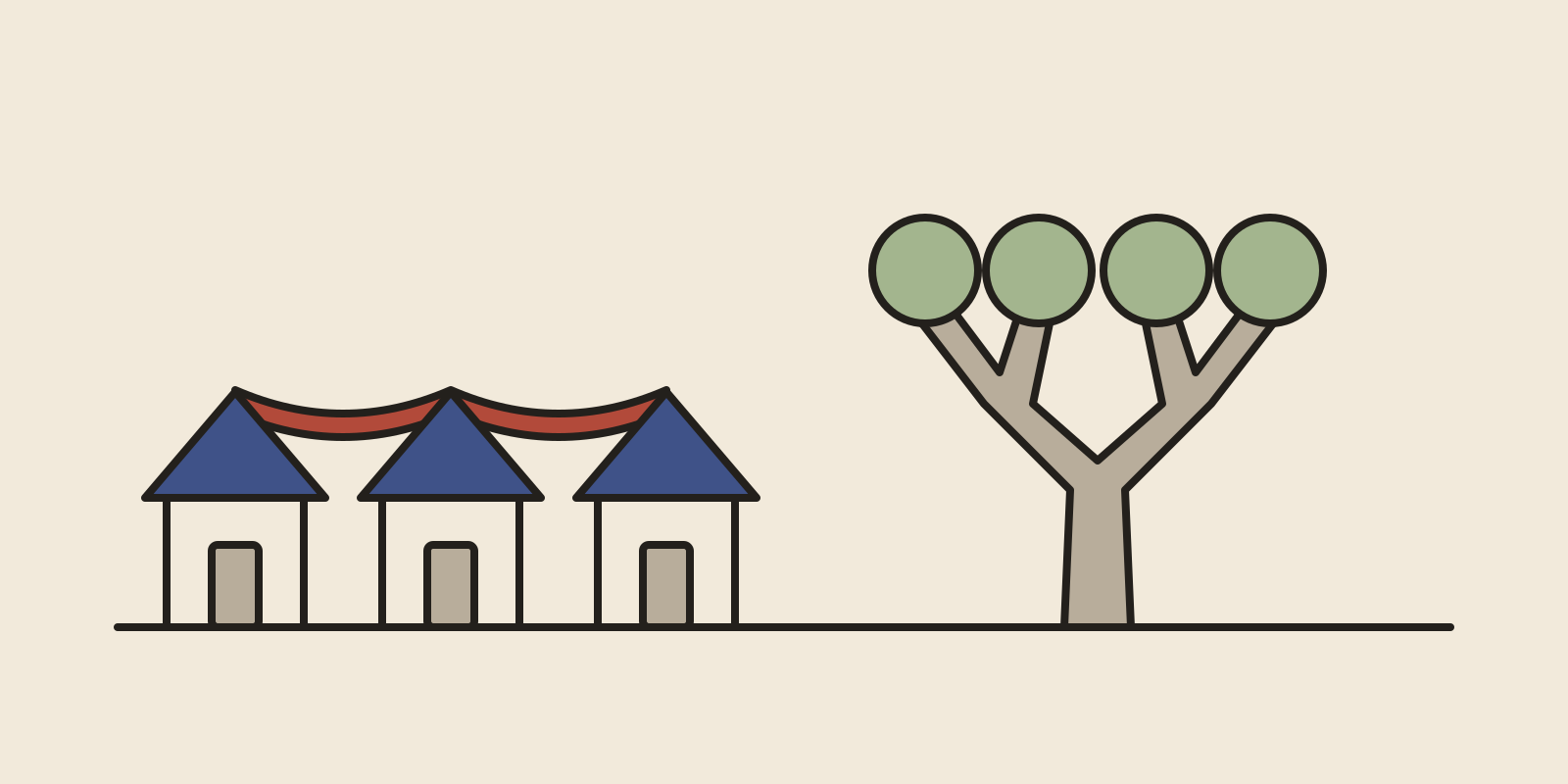
Comparison
| Alliance theoryAnthropology | Descent theoryAnthropology | |
|---|---|---|
| What holds a society together | The marriages between groups | Groups descended from one ancestor through a single line |
| The tie that matters most | The one between in-laws | The one between parent and child |
| Direction of view | Sideways, from group to group | Downwards, from ancestors to descendants |
| What marriage is | An exchange between groups that turns strangers into allies | The way a lineage obtains its next generation |
| Classic work | Lévi-Strauss, The Elementary Structures of Kinship (1949) | Evans-Pritchard, The Nuer (1940), and Fortes's statement of 1953 |
| Standing today | Interpretive. Few anthropologists hold it as a general law | Interpretive. Most anthropologists treat it as an idealised picture |
What holds a society together
- Alliance theory
- The marriages between groups
- Descent theory
- Groups descended from one ancestor through a single line
The tie that matters most
- Alliance theory
- The one between in-laws
- Descent theory
- The one between parent and child
Direction of view
- Alliance theory
- Sideways, from group to group
- Descent theory
- Downwards, from ancestors to descendants
What marriage is
- Alliance theory
- An exchange between groups that turns strangers into allies
- Descent theory
- The way a lineage obtains its next generation
Classic work
- Alliance theory
- Lévi-Strauss, The Elementary Structures of Kinship (1949)
- Descent theory
- Evans-Pritchard, The Nuer (1940), and Fortes's statement of 1953
Standing today
- Alliance theory
- Interpretive. Few anthropologists hold it as a general law
- Descent theory
- Interpretive. Most anthropologists treat it as an idealised picture
Diagram
Alliance theory looks sideways between groups and descent theory looks down the generations
Read as text
Two overlapping circles. The left circle, alliance theory, holds marriage as exchange, in-laws mattering most and a view sideways between groups. The right circle, descent theory, holds a shared ancestor, lineages acting as corporations and a view down the generations. The shared centre holds the claim that kinship orders stateless societies.
Why people confuse them
Both are theories of kinship in societies without a state, and both are taught as the two classic models of the field. To a newcomer "kinship" simply means family, so two theories of it sound like two descriptions of one thing.
Each also depends on what the other puts first. Alliance theory needs groups to do the exchanging, and descent theory needs marriage to supply each lineage with children. The quarrel was over which comes first. It set a French theory against the standard model of British anthropology, and it ran through the 1950s and 1960s before fading in the 1970s.
Alliance theory
Lévi-Strauss's claim that marriage is an exchange between groups, and that the ties between in-laws are what bind families into a society.
Descent theory
The claim that societies without states are organised by lineages, lasting groups of people descended from one ancestor through a single line.
When the difference matters
Two families are planning a wedding. They argue over what gifts should pass between them and which surname the children will carry.
A descent theorist goes straight to the surname, because it decides which line gains new members, who will inherit and which group answers for the children. Seen this way, the wedding is how one family recruits its next generation.
An alliance theorist goes to the gifts. The payments, and the years of visiting and helping that follow, create a tie between two families that had none, and ties of that kind are what a society is made of.
The choice shapes commentary on politics too. A report that explains a conflict by clans lining up against clans is using the descent model, and an alliance theorist would ask about the marriages that cut across those clans.
Where they overlap
Both treat kinship as a matter of social rules, with no claim to be a biological record, and both picture bounded groups acting as units. That shared picture drew the same objection to each, which is that people bend the rules. Pierre Bourdieu found families pursuing marriage strategies of their own, and John Barnes found New Guinea highlanders forming groups by residence and choice. Both theories rest on readings of ethnographic cases, and neither is now held as a general law of how such societies work.
Further reading
- Evans-Pritchard, E. E. (1940). The Nuer: A description of the modes of livelihood and political institutions of a Nilotic people. Clarendon Press.
- Fox, R. (1967). Kinship and marriage: An anthropological perspective. Penguin.
- Kuper, A. (1982). Lineage theory: A critical retrospect. Annual Review of Anthropology, 11, 71–95. https://doi.org/10.1146/annurev.an.11.100182.000443
- Lévi-Strauss, C. (1969). The elementary structures of kinship (Rev. ed.). Beacon Press. (Original work published 1949)
Cite this entry
Scholia. (2026). Alliance theory vs descent theory. In Scholia: Notes in the margin of the human sciences. Retrieved November 28, 2026, from https://scholia.zennia.sg/versus/alliance-theory-vs-descent-theory