VersusEconomics
Labour theory of value vs diminishing marginal utility
The labour theory finds value in the work a good took to make. Marginal utility finds it in the buyer's want for one more unit.
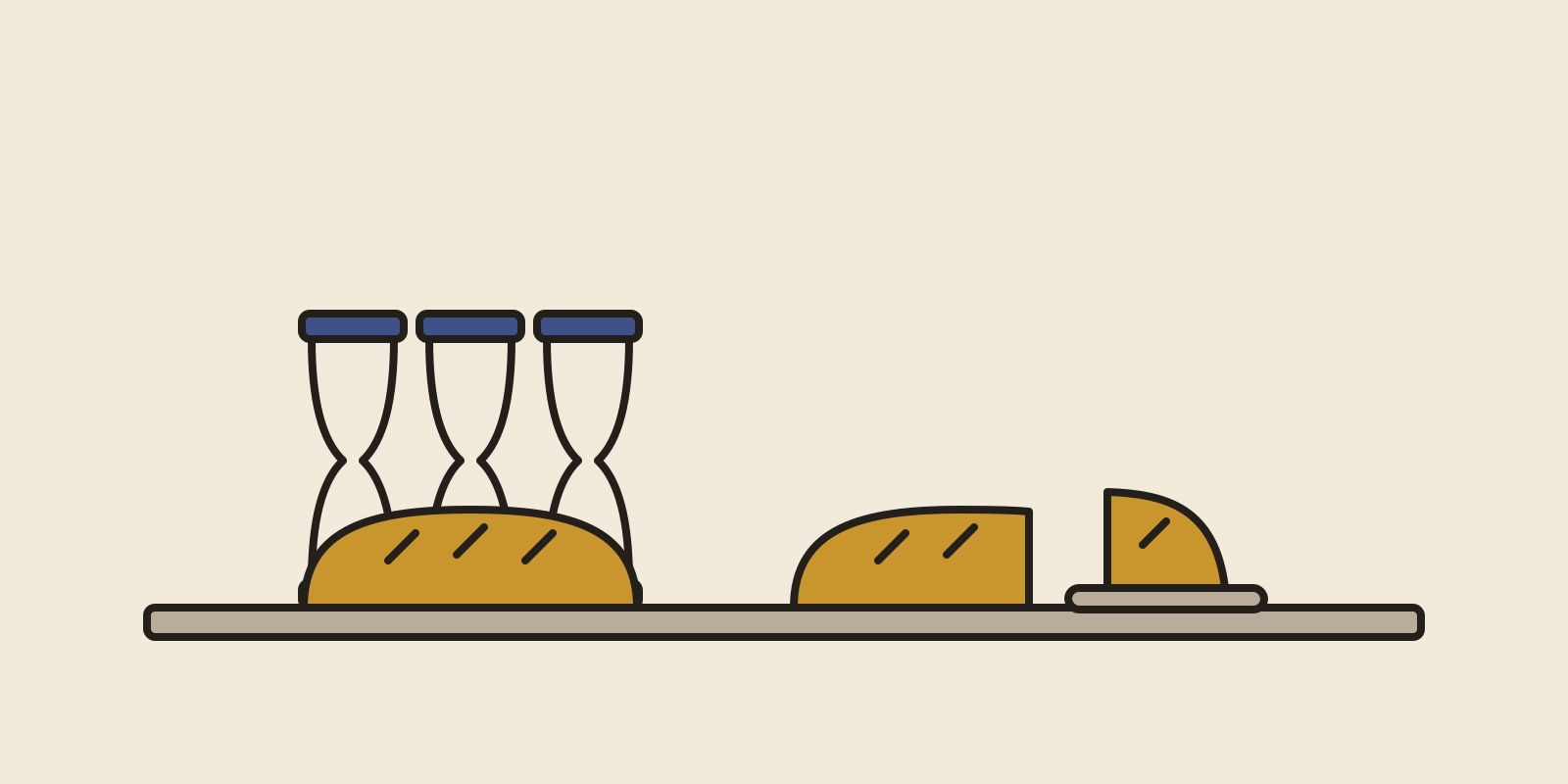
Comparison
| Labour theory of valueEconomics | Diminishing marginal utilityEconomics | |
|---|---|---|
| Main names | Adam Smith, David Ricardo (1817) and Karl Marx (1867) | William Stanley Jevons and Carl Menger (1871), Léon Walras (1874) |
| Value comes from | The labour time a typical producer needs, counting the work stored in tools and materials | The satisfaction a buyer gets from the last unit |
| Side of the market | Supply: the cost of making the good | Demand: how much one more is wanted |
| Role of usefulness | A good must be useful to have value at all, but usefulness doesn't settle how much | The usefulness of the last unit settles it |
| Explains most easily | Why goods that take longer to make cost more over the long run | Why water is cheap and diamonds are dear |
| Standing today | Contested. Mainstream economics treats it as superseded, and Marxian economists defend revised versions | Supported as a regularity, disputed as a law about a measurable quantity |
Main names
- Labour theory of value
- Adam Smith, David Ricardo (1817) and Karl Marx (1867)
- Diminishing marginal utility
- William Stanley Jevons and Carl Menger (1871), Léon Walras (1874)
Value comes from
- Labour theory of value
- The labour time a typical producer needs, counting the work stored in tools and materials
- Diminishing marginal utility
- The satisfaction a buyer gets from the last unit
Side of the market
- Labour theory of value
- Supply: the cost of making the good
- Diminishing marginal utility
- Demand: how much one more is wanted
Role of usefulness
- Labour theory of value
- A good must be useful to have value at all, but usefulness doesn't settle how much
- Diminishing marginal utility
- The usefulness of the last unit settles it
Explains most easily
- Labour theory of value
- Why goods that take longer to make cost more over the long run
- Diminishing marginal utility
- Why water is cheap and diamonds are dear
Standing today
- Labour theory of value
- Contested. Mainstream economics treats it as superseded, and Marxian economists defend revised versions
- Diminishing marginal utility
- Supported as a regularity, disputed as a law about a measurable quantity
Diagram
Two theories of value look for it on opposite sides of the sale
Read as text
Two panels divided by one dimension, where value comes from. The left panel, the labour theory of value, lists the work needed to make a good, the supply side and the long-run price level. The right panel, diminishing marginal utility, lists the want for one more unit, the demand side and the value of the last unit.
Why people confuse them
Few people mix the two up. The trouble is that each matches an everyday intuition and most of us hold both without noticing that they pull apart. A plumber justifies the bill by hours spent, which is labour-theory reasoning. The same plumber, offered a fourth coffee, turns it down for a marginal-utility reason.
Textbooks add a second muddle by presenting one as the error and the other as its correction. The two were rival answers to one question, what sets the rate at which goods exchange, and each was built to explain cases the other finds awkward.
When the difference matters
Someone spends thirty hours knitting a jumper, prices it by her hours at a fair wage and takes it to a craft fair. Nobody buys.
On the labour theory the price was never hers to set by her own hours, because only the time a typical producer needs counts and a machine-knit jumper takes minutes.
Labour theory of value
The claim that a good's value in exchange comes from the labour needed to produce it.
On diminishing marginal utility the hours are beside the point, and the jumper is worth what one more jumper adds for a shopper who already owns several.
Diminishing marginal utility
Each extra unit of a good adds less satisfaction than the one before, which is why abundant things like water are cheap.
The same split runs through arguments about pay. One side asks what the work cost the worker and whether the wage returns it, while the other asks what one more hour of that work is worth to whoever buys it. Disputes over care workers' wages often set one theory against the other.
Where they overlap
Both set out to explain price, and both deny that a good's total usefulness does the job. The labour theory also lets supply and demand move the daily price around its labour-based level. Alfred Marshall later compared cost and utility to the two blades of a pair of scissors, each needed for the cut.
Further reading
- Jevons, W. S. (1871). The theory of political economy. Macmillan.
- Meek, R. L. (1956). Studies in the labour theory of value. Lawrence & Wishart.
- Ricardo, D. (1817). On the principles of political economy, and taxation. John Murray.
- Stigler, G. J. (1950). The development of utility theory. I. Journal of Political Economy, 58(4), 307–327. https://doi.org/10.1086/256962
Cite this entry
Scholia. (2026). Labour theory of value vs diminishing marginal utility. In Scholia: Notes in the margin of the human sciences. Retrieved November 28, 2026, from https://scholia.zennia.sg/versus/labour-theory-of-value-vs-diminishing-marginal-utility
This topic is contested. The entry sets out the main positions rather than settling them.