VersusAnthropology
Taboo vs purity and pollution
Taboo names a kind of prohibition. Purity and pollution is Douglas's claim about why such prohibitions exist: they guard a society's categories.
- TermTabooA prohibition so strong that breaking it is felt to bring danger or defilement by itself, taken into English from the Polynesian tapu.Anthropology
- IdeaPurity and pollutionDouglas's claim that things count as dirty or polluting when they fall outside a society's categories, so rules of purity defend its sense of order.Anthropology
Comparison
| TabooAnthropology | Purity and pollutionAnthropology | |
|---|---|---|
| Kind of thing | A term for a category of rule | A theory that could be wrong |
| Source | The Polynesian word tapu, recorded by James Cook in Tonga in 1777 | Mary Douglas, Purity and Danger (1966) |
| What it says | Some prohibitions carry their own penalty, so harm follows a breach without anyone imposing it | Things pollute when they fall outside a society's categories or blur them |
| Does it explain the rule? | No. It names the rule and stops | It offers to. Rules gather where the scheme of categories is under threat |
| Reach | Prohibitions felt to be dangerous: foods, places, persons, words and acts | Those, and ordinary dirt and modern hygiene as well |
| Named critics | Franz Steiner, who called it a Victorian lumping of unrelated customs | Anna Meigs, Marvin Harris and Valerie Curtis, who each offer a different cause |
Kind of thing
- Taboo
- A term for a category of rule
- Purity and pollution
- A theory that could be wrong
Source
- Taboo
- The Polynesian word tapu, recorded by James Cook in Tonga in 1777
- Purity and pollution
- Mary Douglas, Purity and Danger (1966)
What it says
- Taboo
- Some prohibitions carry their own penalty, so harm follows a breach without anyone imposing it
- Purity and pollution
- Things pollute when they fall outside a society's categories or blur them
Does it explain the rule?
- Taboo
- No. It names the rule and stops
- Purity and pollution
- It offers to. Rules gather where the scheme of categories is under threat
Reach
- Taboo
- Prohibitions felt to be dangerous: foods, places, persons, words and acts
- Purity and pollution
- Those, and ordinary dirt and modern hygiene as well
Named critics
- Taboo
- Franz Steiner, who called it a Victorian lumping of unrelated customs
- Purity and pollution
- Anna Meigs, Marvin Harris and Valerie Curtis, who each offer a different cause
Diagram
Taboo names a kind of rule and Douglas's theory offers to explain it
Read as text
Two overlapping circles. The left circle, taboo, holds a category of prohibition, a penalty that follows unaided and a word that names without explaining. The right circle, purity and pollution, holds a claim about causes, rules that guard category boundaries and coverage of ordinary dirt. The shared centre holds a danger that spreads by contact.
Why people confuse them
Both deal with things that must not be eaten or touched, and the full title of Douglas's book has both "pollution" and "taboo" in it. The Polynesian word adds to the tangle, since tapu covers the holy and the unclean together. A reader who finishes Purity and Danger can come away thinking Douglas redefined taboo. What she offered was an account of where taboos come from.
Loose speech helps too. People say a subject is "taboo" and a habit is "unclean" as though the words were interchangeable ways of marking disapproval.
When the difference matters
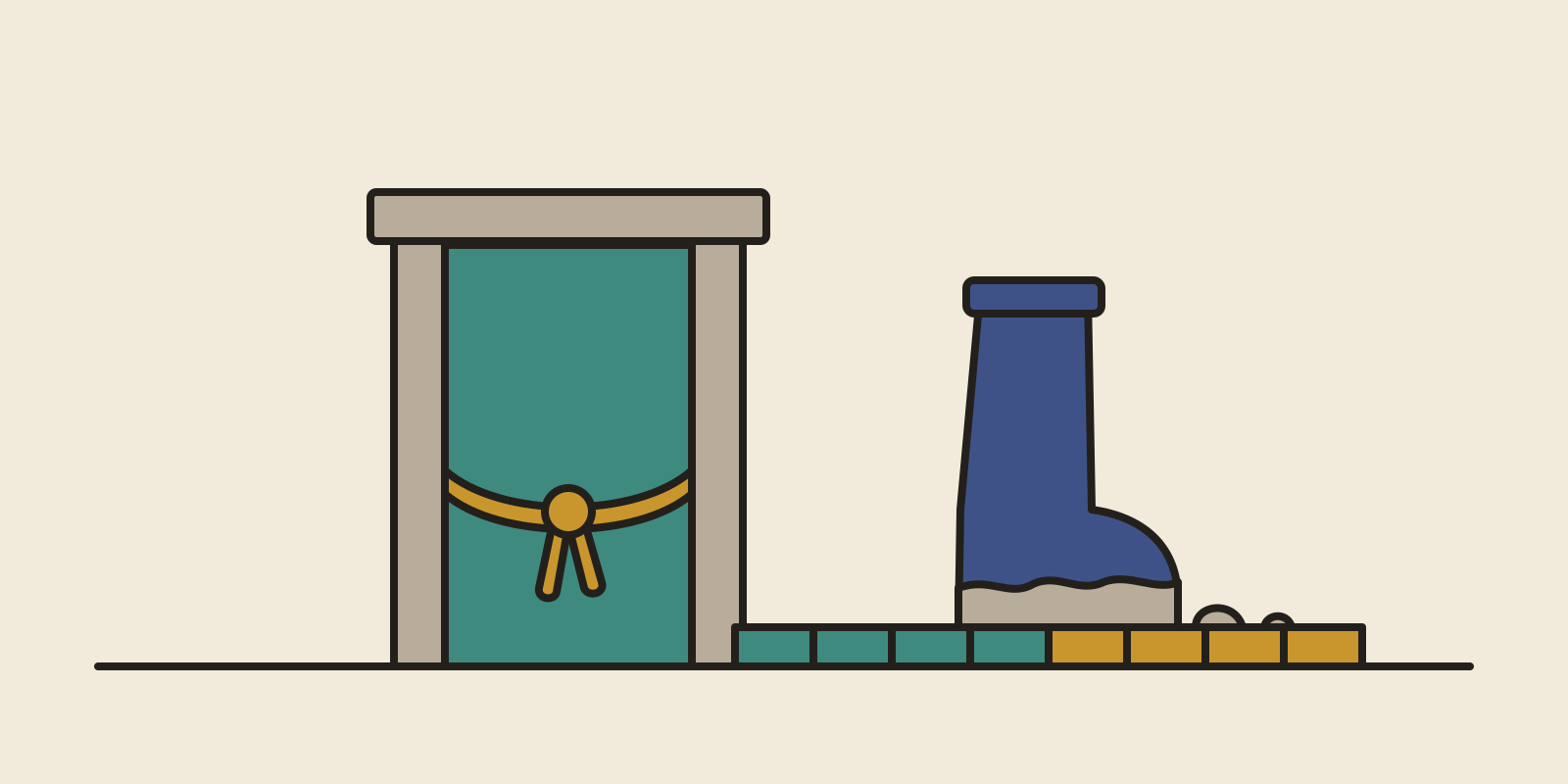
In many households outdoor shoes never go on the dining table. Put a pair there and people recoil, even if the soles are new.
Call that a taboo, in the loose modern sense, and you have described a rule whose breach produces a flinch without saying why. Purity and pollution is an answer: shoes belong to the floor and food to the table, so a shoe beside a plate is matter out of place.
Taboo
A prohibition so strong that breaking it is felt to bring danger or defilement by itself, taken into English from the Polynesian tapu.
Purity and pollution
Douglas's claim that things count as dirty or polluting when they fall outside a society's categories, so rules of purity defend its sense of order.
That answer may be mistaken. Valerie Curtis would say the recoil is an evolved defence against infection and that soles really do carry filth.
The rule stays a taboo whichever account wins. Someone who thinks that naming a taboo explains it has stopped one step short, and someone who treats Douglas's theory as the definition has closed an open question.
Where they overlap
Both pick out a danger that spreads by contact and can be lifted by a cleansing rite, and both refuse to write such rules off as foolish. The word gave anthropologists a way to compare prohibitions across societies, and Douglas found the same logic in a modern kitchen as in ancient ritual.
Further reading
- Cook, J., & King, J. (1784). A voyage to the Pacific Ocean (Vols. 1–3). G. Nicol and T. Cadell.
- Douglas, M. (1966). Purity and danger: An analysis of concepts of pollution and taboo. Routledge & Kegan Paul.
- Fardon, R. (1999). Mary Douglas: An intellectual biography. Routledge.
- Steiner, F. (1956). Taboo. Cohen & West.
Cite this entry
Scholia. (2026). Taboo vs purity and pollution. In Scholia: Notes in the margin of the human sciences. Retrieved November 28, 2026, from https://scholia.zennia.sg/versus/taboo-vs-purity-and-pollution