CrossingPhilosophy
Argument from design + spontaneous order
Paley inferred a maker from nature's order and Hayek denied one for society's, so each needs a test for when order points to design.
- IdeaArgument from designThe argument from design holds that the order and apparent purpose in nature are best explained by an intelligent designer.Philosophy
- IdeaSpontaneous orderMany useful social arrangements, such as language, money and markets, arise from people's actions without anyone having designed them.Economics
What each entry sees
Argument from design
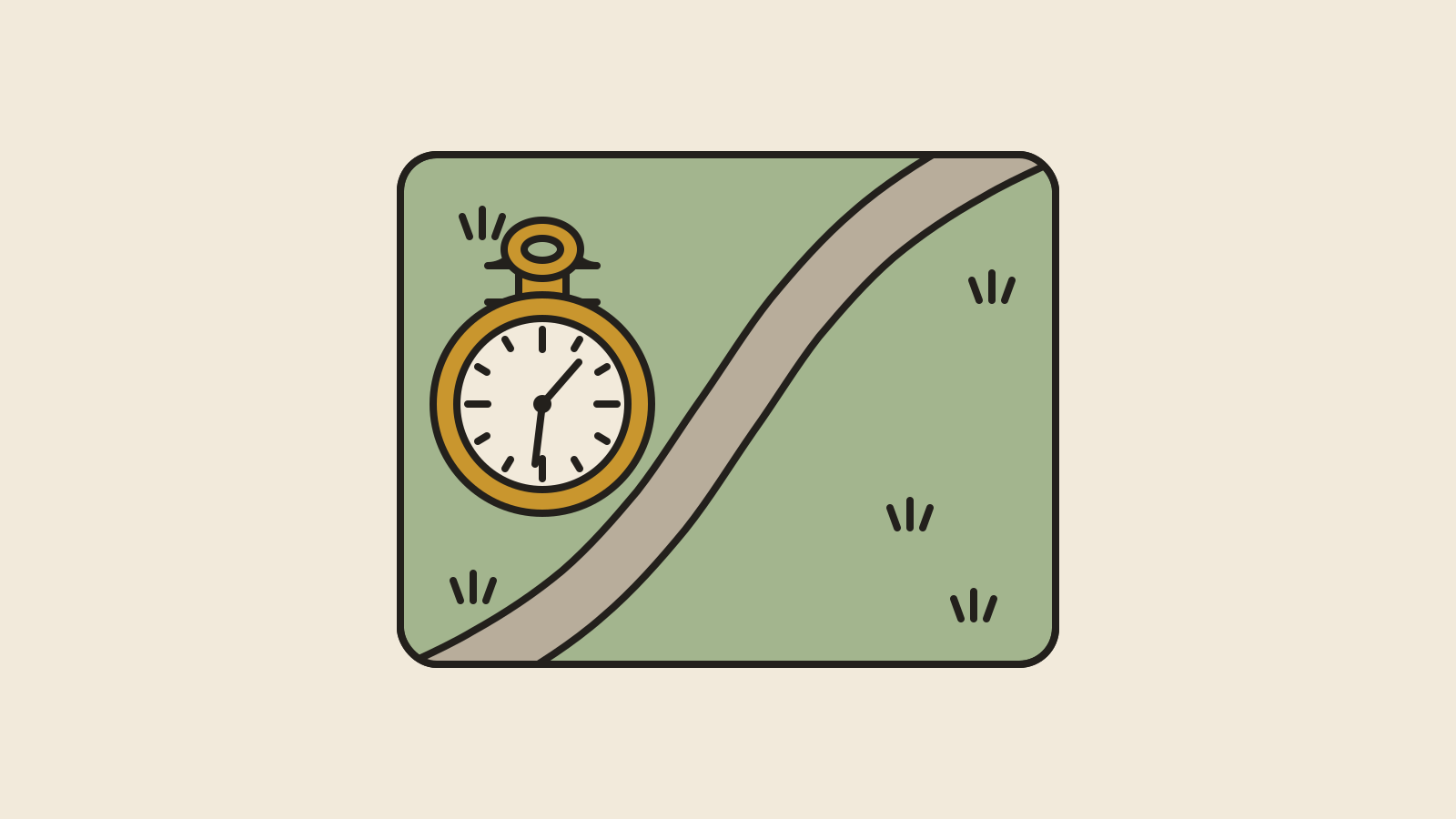
The argument from design holds that the order and apparent purpose in nature are best explained by an intelligent designer. William Paley's version dates from 1802. Find a watch on a heath and you infer a watchmaker, because its parts are arranged to tell the time. An eye is fitted for seeing more finely still, so Paley drew the same conclusion about nature. David Hume had already called the analogy weak. In 1859 Darwin explained the fit of living things by inherited variation and unequal survival, with no foresight involved. The biological argument has lost nearly all scientific support, and a version based on physical constants is still disputed.
Argument from design
The argument from design holds that the order and apparent purpose in nature are best explained by an intelligent designer.
David Hume
A Scottish philosopher who argued that our beliefs about causes, the self and morality rest on habit and feeling more than on reason.
Spontaneous order
Spontaneous order is the claim that many useful social arrangements, such as language, money, markets and common law, were never planned by anyone. They grew as people followed rules and adjusted to each other. A footpath worn across a park is the small case: no one lays it out, yet it serves every walker. Friedrich Hayek gave the idea its modern form. He added that rules are selected over generations, as groups with workable rules prospered and were imitated, and he warned against redesigning such orders wholesale. James Buchanan objected that grown does not mean good.
Spontaneous order
Many useful social arrangements, such as language, money and markets, arise from people's actions without anyone having designed them.
Friedrich Hayek
An Austrian-born economist and philosopher who argued that market prices carry knowledge no planner could gather, and defended liberty under general rules.
Diagram
Argument from design + spontaneous order
Read as text
Overlap of Argument from design (Idea, Philosophy) and Spontaneous order (Idea, Economics). Only Argument from design: Aristotle and Cosmological argument. Only Spontaneous order: Adam Smith and Austrian school. Shared: David Hume.
What the crossing shows
Both entries start from parts that fit together and serve ends, and both ask what that fit allows us to conclude. Paley's rule was that order implies a mind. Darwin showed a second route to order in living things, and Hayek's account of society has the same form: variation, selection and no foresight. The social version was no borrowing from biology. Ferguson's line dates from 1767, before Paley wrote, and Hayek held that Darwin took the pattern from the students of society. Hume, who appears in both entries, doubted nature's designer and explained human institutions as unplanned.
Side by side, the entries show the inference failing in both directions. Order alone does not prove a designer. Nor does the lack of a visible designer prove there was none. Karl Polanyi argued that the free markets of the nineteenth century, a prime case for Hayek, were built by deliberate state action.
Karl Polanyi
Hungarian economic historian who argued that markets were always embedded in society until the nineteenth century tried, at great cost, to set them free.
The question it opens
When is it reasonable to infer a designer from order? Paley's test, fitness for a purpose, lets in too much. In society a record of who made what can settle a particular case, but nature keeps no such record, and for the physical constants no one agrees what would count as evidence. The question is open in both fields.
Further reading
- Hayek, F. A. (1973). Law, legislation and liberty: Vol. 1. Rules and order. University of Chicago Press.
- Hume, D. (2007). Dialogues concerning natural religion and other writings. Cambridge University Press. (Original work published 1779)
- Paley, W. (2006). Natural theology: Or, evidence of the existence and attributes of the Deity, collected from the appearances of nature. Oxford University Press. (Original work published 1802)
- Polanyi, K. (1944). The great transformation. Farrar & Rinehart.
Cite this entry
Scholia. (2026). Argument from design + spontaneous order. In Scholia: Notes in the margin of the human sciences. Retrieved November 28, 2026, from https://scholia.zennia.sg/crossings/argument-from-design-plus-spontaneous-order