IdeaEconomicsAlso in Political theory & science, Philosophy, Sociology
Spontaneous order
Many useful social arrangements, such as language, money and markets, arise from people's actions without anyone having designed them.
The idea
Some of the most useful arrangements in human life were never planned by anyone. That is the claim of spontaneous order. Language, money, markets, common law and the rules of polite behaviour all show regular patterns that people rely on, yet no person or committee designed them. They grew as individuals followed rules and adjusted to each other, each pursuing separate aims.
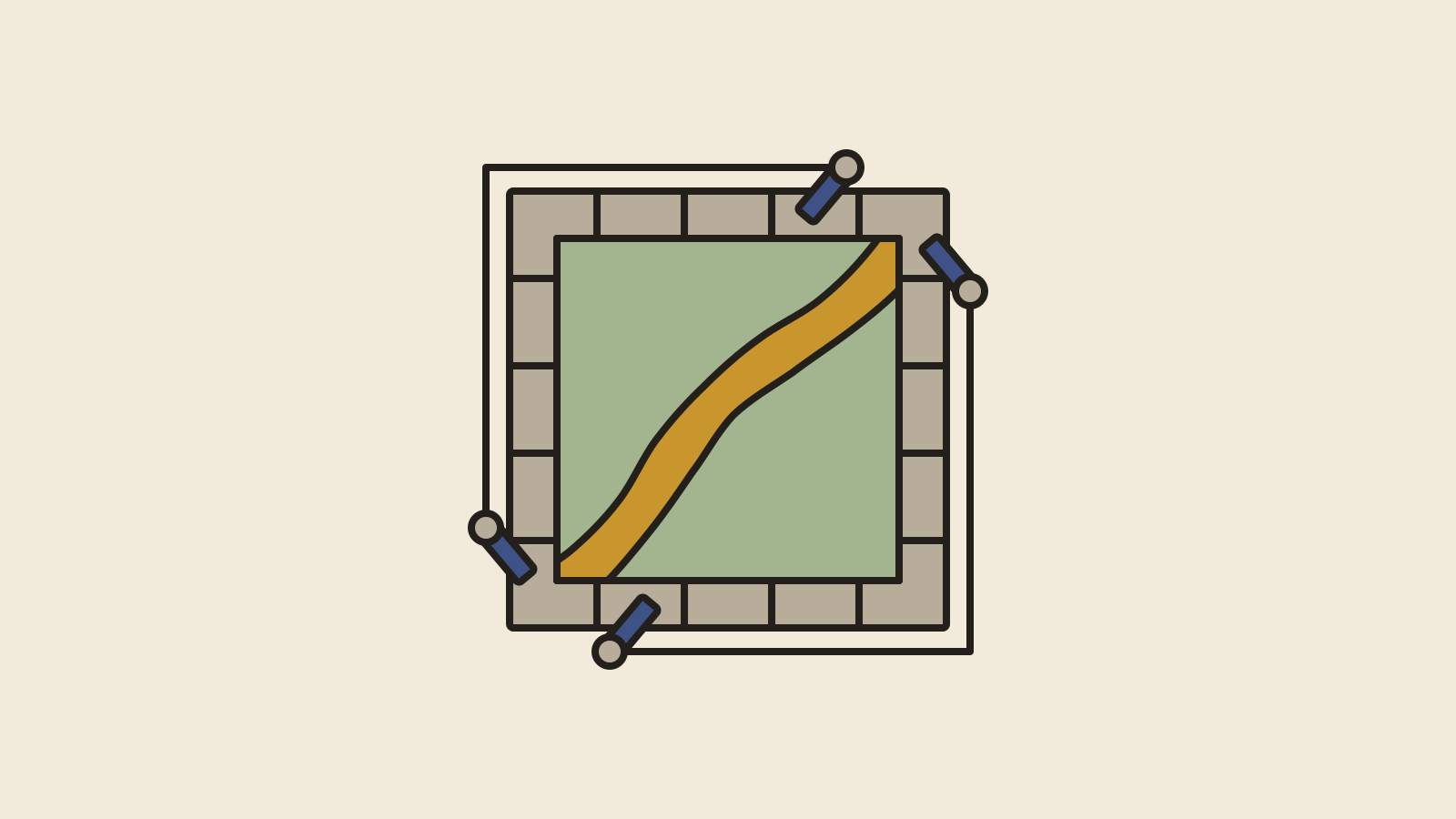
A footpath across a park is the homely case. Nobody lays it out. One walker takes the shortest line between two gates, others follow the flattened grass, and within a season there is a clear track that serves everyone. In the phrase of the Scottish philosopher Adam Ferguson, such things are "the result of human action, but not the execution of any human design".
Friedrich Hayek, who gave the idea its modern form, added a warning. Because these orders use more knowledge than any mind holds, attempts to redesign them wholesale are likely to do damage.
Friedrich Hayek
An Austrian-born economist and philosopher who argued that market prices carry knowledge no planner could gather, and defended liberty under general rules.
Diagram
Hayek divided social orders into those that are made and those that grow
Read as text
Two columns compare kinds of social order by how each arises. A made order, which Hayek called taxis, is designed by someone and serves the designer's purpose. His examples are a firm or an army. A grown order, which he called cosmos, arises from people following rules and serves no single purpose. His examples are a market or a language.
Key features
- The order arises from individuals following general rules, and no one directs the overall pattern.
- It serves no single purpose of its own, which lets people with different aims use it at once.
- It draws on knowledge scattered across its members, far more than a designer could collect.
- The rules themselves evolve: groups that happened on workable rules prospered and were imitated.
- Hayek set it against the made order of an organisation, such as a firm or an army, which is built for stated ends.
Not to be confused with
| Look-alike | The difference | Differs on |
|---|---|---|
| Invisible hand | Adam Smith's metaphor concerns markets: self-interested trade can serve the public. Spontaneous order is the wider thesis, covering law, language, money and morals. It does not depend on self-interest as the motive. | Differs onScope |
| Laissez-faire | Spontaneous order describes how certain institutions arise. Laissez-faire is a policy: the state should leave commerce alone. Hayek rejected the label and gave government real tasks, including a safety net and the legal framework a market needs. | Differs onDescriptive or normative |
| Economic calculation problem | The calculation problem is one specific argument, that a socialist economy lacks the prices planners need. Spontaneous order is the general account of undesigned institutions. | Differs onScope |
| Emergence | Emergence is the broad scientific notion that wholes have properties their parts lack, as in flocks of birds. Spontaneous order is the social case, where the parts are people following rules. | Differs onScope |
- Differs onScope
Adam Smith's metaphor concerns markets: self-interested trade can serve the public. Spontaneous order is the wider thesis, covering law, language, money and morals. It does not depend on self-interest as the motive.
- Differs onDescriptive or normative
Spontaneous order describes how certain institutions arise. Laissez-faire is a policy: the state should leave commerce alone. Hayek rejected the label and gave government real tasks, including a safety net and the legal framework a market needs.
- Differs onScope
The calculation problem is one specific argument, that a socialist economy lacks the prices planners need. Spontaneous order is the general account of undesigned institutions.
- Differs onScope
Emergence
Emergence is the broad scientific notion that wholes have properties their parts lack, as in flocks of birds. Spontaneous order is the social case, where the parts are people following rules.
Origins and development
The thought runs from Bernard Mandeville to the Scottish Enlightenment of David Hume, Adam Smith and Ferguson, who wrote the line above in 1767. Carl Menger applied it to money in 1871 and to social institutions in general in 1883. The phrase itself was used by the chemist and philosopher Michael Polanyi in essays collected in 1951, and Hayek adopted it in The Constitution of Liberty (1960). In Law, Legislation and Liberty (1973) he used the Greek terms cosmos for a grown order and taxis for a made one, and added an account of how rules are selected over generations.
David Hume
A Scottish philosopher who argued that our beliefs about causes, the self and morality rest on habit and feeling more than on reason.
Carl Menger
The Viennese economist who located value in people's judgements of their own wants, and so founded the Austrian school.
Why it matters
The idea stands behind a standing argument in politics: how far can institutions be redesigned from above, and how far must reform work with what has grown? It appears whenever someone defends common law against codes, or market prices against controls. Outside politics it is used to describe open-source software, Wikipedia and the growth of cities, where order appears without a master plan.
Critiques and limits
James Buchanan (1977) objected that grown does not mean good: rules that evolved may serve nobody well, and Hayek offers no test for telling which to keep. Viktor Vanberg (1986) argued that Hayek's account of rules spreading through the success of groups clashes with his own individualism. Karl Polanyi (1944) held that the free markets of the nineteenth century were themselves built by deliberate state action. That undesigned orders exist is not in doubt. How much deference they deserve is a matter of interpretation and historical argument.
Karl Polanyi
Hungarian economic historian who argued that markets were always embedded in society until the nineteenth century tried, at great cost, to set them free.
Connections
Belongs to
The school's view of markets as undirected processes is the economic case of the wider idea.
Originated by
Hayek adopted the phrase in 1960 and built it into a general theory of markets, law and morals.
Influenced by
Menger asked how institutions that serve the common good, such as money, could arise with no common will behind them.
David HumePhilosophy
Hume argued that rules of property and promise-keeping grew up by convention, as paths and languages do.
Hayek named Smith, with Hume and Ferguson, as a source of the idea that order comes from action, not design.
Critiques
Argument from designPhilosophy
Hayek rejects for society the inference the design argument makes for nature: that order implies a designing mind.
Social contractPolitical theory & science
Hayek called contract theories constructivist: they treat institutions as designed by agreement, when most grew from practice nobody planned.
Contrasts with
AutopoiesisCognitive science & linguistics
Differs on mechanism. Spontaneous order comes from many separate agents adjusting to one another, autopoiesis from one bounded unit producing its own parts.
Differs on scope. The calculation problem is one argument about socialism, and spontaneous order is the general account of undesigned institutions.
Differs on scope. The invisible hand concerns market exchange, while spontaneous order covers any unplanned pattern, including language, law and custom.
Differs on descriptive or normative. Spontaneous order explains how unplanned patterns arise, while laissez-faire is a policy conclusion some draw from it.
Wu weiPhilosophy
Differs on unit of analysis. Spontaneous order describes how whole societies become orderly without a designer, where wu wei describes one agent's way of acting.
Parallels
DaoismPhilosophy
Hayek's markets and the well-governed state of the Daodejing both show order arising where no one imposes a design.
Social constructionismSociology
Both hold that money, law and language are human products nobody designed, which later confront people as if they were facts of nature.
Wu weiPhilosophy
Daoist texts advise rulers to refrain from forcing things so that order arises of itself, an older cousin of Hayek's claim.
Political and legal anthropologyAnthropology
Evans-Pritchard found the Nuer keeping order with no ruler through balanced feuding lineages, an undesigned order reached by fieldwork, not theory.
Manifest and latent functionsSociology
Hayek's orders that arise from human action without human design are the economists' route to unintended but useful outcomes.
Critiqued by
Karl PolanyiSociology
Polanyi reversed Hayek's picture: free markets were built by deliberate state action, while the protective reaction against them arose unplanned.
Cross with
Two distant entries to read beside this one, each with the question the pairing opens.
Pidgin and creoleCognitive science & linguistics
Creoles become full languages with no designer, so what do they show about how quickly an undesigned order can form and what it needs? Set them side by side
Vyākaraṇa (the Sanskrit grammatical tradition)Cognitive science & linguistics
Sanskrit grammarians wrote explicit rules for a language nobody designed, so does codifying a spontaneous order change it? Set them side by side
Further reading
- Caldwell, B. (2004). Hayek's challenge: An intellectual biography of F. A. Hayek. University of Chicago Press. https://doi.org/10.7208/chicago/9780226091921.001.0001
- Hayek, F. A. (1973). Law, legislation and liberty: Vol. 1. Rules and order. University of Chicago Press.
- Hayek, F. A. (1960). The constitution of liberty. University of Chicago Press.
- Polanyi, K. (1944). The great transformation. Farrar & Rinehart.
Cite this entry
Scholia. (2026). Spontaneous order. In Scholia: Notes in the margin of the human sciences. Retrieved November 28, 2026, from https://scholia.zennia.sg/ideas/spontaneous-order
This topic is contested. The entry sets out the main positions rather than settling them.