IdeaEconomicsAlso in Philosophy, Political theory & science
Capability approach
A life should be judged by what the person is really able to do and be, with income and goods counted only as means.
The idea
The capability approach says that a person's life should be judged by what they are actually able to do and be. Income and possessions matter only as means. Satisfaction is a poor guide too, since it can be low in a wealthy grumbler and high in someone who has learned to expect little. What counts is the set of real options open to a person, which Amartya Sen called capabilities.
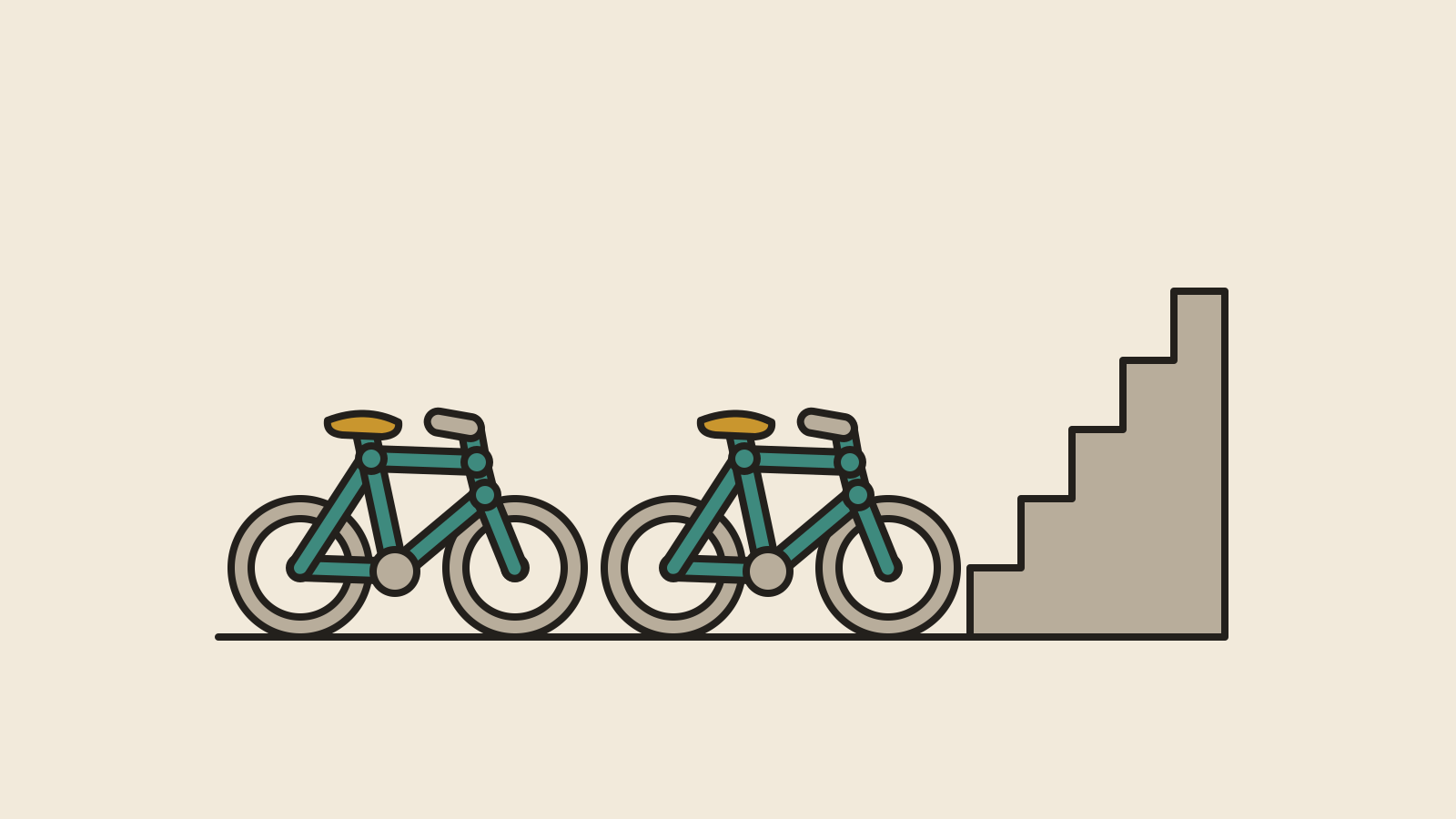
Sen's standard example is a bicycle. To one person it gives the ability to get to work. To someone who cannot use their legs, or to a woman in a place where women are forbidden to cycle, the same object gives nothing. Equal goods, unequal freedom. A fair comparison of the three has to look past the bicycle to what each of them can do with it.
Diagram
The same resources become different freedoms for different people
Read as text
Two factors combine to produce a person's capabilities, the real options open to them. The first is resources: income, goods and public services. The second is conversion factors: the person's health and body, the laws and customs around them, and the place and climate they live in. Two people with the same resources but different conversion factors end up with different capabilities.
Key features
- Functionings are the things a person manages to do or be, such as being well nourished, reading or taking part in community life.
- Capabilities are the functionings a person could achieve if they chose, so someone fasting and someone starving differ in capability though both go hungry.
- Conversion factors such as health, sex, local custom and climate decide how much capability a given income buys.
- The approach is a framework for comparing lives, and Sen declined to fix one list of capabilities, leaving the choice to public debate.
Not to be confused with
| Look-alike | The difference | Differs on |
|---|---|---|
| Utility | Utility measures a life by satisfaction or by met preferences. Sen objected that people adapt their wants to hard circumstances, so a contented but deprived person scores well. Capabilities are judged from outside the person's own feelings. | Differs onStandard of judgement |
| Justice as fairness | Rawls compares people by their share of primary goods such as income, rights and opportunities. Sen replied that people differ in how well they can turn goods into freedoms, so equal goods can leave unequal lives. | Differs onStandard of judgement |
| Gross domestic product | GDP ranks a country by the market value of what it produces. The capability approach ranks it by what its people are free to do, which can be little where GDP is high. | Differs onStandard of judgement |
| Human Development Index | The index is one rough measurement inspired by the approach, built from life expectancy, schooling and income. The approach is the wider framework. | Differs onScope |
- Differs onStandard of judgement
Utility measures a life by satisfaction or by met preferences. Sen objected that people adapt their wants to hard circumstances, so a contented but deprived person scores well. Capabilities are judged from outside the person's own feelings.
- Differs onStandard of judgement
Rawls compares people by their share of primary goods such as income, rights and opportunities. Sen replied that people differ in how well they can turn goods into freedoms, so equal goods can leave unequal lives.
- Differs onStandard of judgement
GDP ranks a country by the market value of what it produces. The capability approach ranks it by what its people are free to do, which can be little where GDP is high.
- Differs onScope
Human Development Index
The index is one rough measurement inspired by the approach, built from life expectancy, schooling and income. The approach is the wider framework.
Origins and development
Sen introduced the idea in "Equality of what?", a lecture given at Stanford in 1979, as an answer to both the utilitarians and Rawls. He developed it in Commodities and Capabilities (1985) and Development as Freedom (1999). Mahbub ul Haq used it to design the United Nations' Human Development Index, first published in 1990. The philosopher Martha Nussbaum built a second version, rooted in Aristotle and Marx, that names ten central capabilities every government should secure for each citizen.
Why it matters
It changed what development agencies measure. Reports on poverty now count schooling, health and living conditions alongside income, as in the United Nations' Multidimensional Poverty Index. The same reasoning appears in disability policy, which asks what a person can do with the right support, and in arguments about whether growth has made lives better.
Critiques and limits
Nussbaum argues that without a definite list the approach cannot say which freedoms a just society owes its members. Thomas Pogge, defending Rawls, holds that ranking people by their personal needs is unworkable and can stigmatise them. Robert Sugden asked how a framework with so many unranked dimensions could be put to use. The approach is a proposal about what to value, so its status is conceptual: it stands or falls by argument, though the measures built on it can be tested for usefulness.
In education and policy
The approach asks what schooling lets a person do and be, beyond the wages it earns. Sen drew the contrast himself. Human capital counts education as a means to production, while capability counts it as part of a good life and a source of further freedoms, such as reading a contract or speaking at a public meeting. Policies built on it look at who is able to use a school, and who merely has one nearby.
Human capital
Skills, knowledge and health are assets people invest in, and the return shows up as higher earnings later.
Connections
Belongs to
It gave the branch a goal beyond income and the framework behind the Human Development Index.
It offers welfare economics a measure of how well people fare that is neither income nor satisfaction.
Originated by
Sen proposed capabilities in his 1979 lecture Equality of What? as the right thing to equalise.
Influenced by
AristotlePhilosophy
Sen and Nussbaum trace the stress on human functioning to Aristotle's account of a good life.
Smith's remark that a labourer needs a linen shirt to appear in public without shame is a founding example.
Critiques
UtilitarianismPhilosophy
Holds that satisfaction is a poor guide to wellbeing because deprived people learn to want little.
Sen held that human capital counts people as means of production, where capability counts their lives as the end.
Contrasts with
Differs on standard of judgement. Utility measures a life by satisfaction or met preferences, capability by the real options the person has.
Justice as fairnessPolitical theory & science
Differs on standard of judgement. Rawls compares people by the primary goods they hold, Sen by what those goods let them do and be.
Differs on standard of judgement. GDP judges a country by its output, the capability approach by what its people are free to do.
Hierarchy of needsPsychology
Differs on descriptive or normative. Maslow describes what people are driven to seek, while Sen sets a standard for judging what societies let people do.
EudaimoniaPhilosophy
Differs on claim. The capability approach asks what lives people are free to choose, where eudaimonia names the well-lived life itself.
Applied in
Political philosophyPolitical theory & science
Nussbaum turned it into a theory of justice that names the capabilities every state owes each citizen.
Globalisation and developmentSociology
Sociologists of development use Sen's capabilities, through the Human Development Index, to judge progress by the lives people lead, not by income.
Influenced
Sen's approach moved the branch's goal from income to what people are able to do and be.
Cross with
Two distant entries to read beside this one, each with the question the pairing opens.
Zone of proximal developmentPsychology
Should a capability count as what a person can do alone, or what they can do with the kind of help Vygotsky described? Set them side by side
Self-efficacyPsychology
If a person has a real opportunity but does not believe they can use it, do they have the capability? Set them side by side
Further reading
- Nussbaum, M. C. (2011). Creating capabilities: The human development approach. Harvard University Press. https://doi.org/10.4159/harvard.9780674061200
- Robeyns, I., & Byskov, M. F. (2025). The capability approach. Stanford Encyclopedia of Philosophy. https://plato.stanford.edu/entries/capability-approach/
- Sen, A. (1980). Equality of what?. In S. M. McMurrin (Ed.), The Tanner lectures on human values (Vol. 1) (pp. 197–220). University of Utah Press.
- Sen, A. (1999). Development as freedom. Oxford University Press.
Cite this entry
Scholia. (2026). Capability approach. In Scholia: Notes in the margin of the human sciences. Retrieved November 28, 2026, from https://scholia.zennia.sg/ideas/capability-approach