IdeaPhilosophyAlso in Psychology
Goodness of human nature (xing shan)
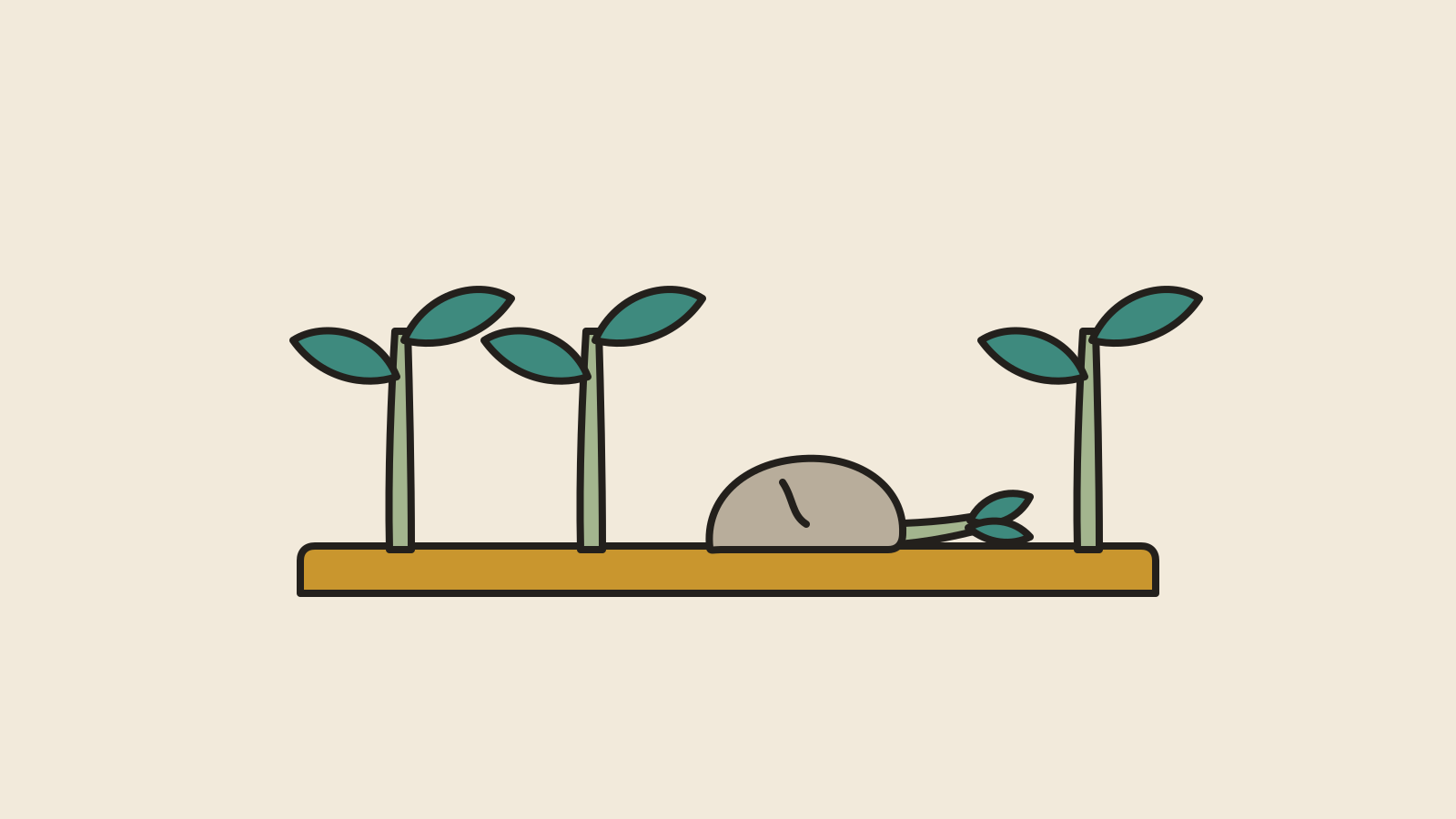
Mencius's claim that everyone is born with the beginnings of moral feeling, which grow into virtue if cultivated and wither if neglected.
The idea
Mencius, a Chinese philosopher of the fourth century BCE, claimed that people are born with the beginnings of goodness. Nobody arrives virtuous. What everyone has, he argued, is a set of moral feelings that will grow into virtue if they are fed and not trampled. In Chinese the claim is xing shan: human nature is good.
His best-known evidence is a thought experiment. Suppose you suddenly see a toddler about to tumble into a well. Mencius says that anyone at all would feel a jolt of alarm and pity, before any thought of reward, reputation or the child's parents. The modern version is the stranger who lunges for a pushchair rolling towards the road. That first jolt is the point. It shows a concern for others that nobody taught and nobody calculated. People do bad things, on this view, because hunger, bad company and neglect have stunted what was there.
Diagram
Mencius and Xunzi disagreed about where goodness comes from
Read as text
Two positions set side by side, distinguished by where goodness comes from. On the left, Mencius: people are born with moral sprouts, these are cultivated like crops and neglect explains wrongdoing. On the right, Xunzi: people are born with desires that cause conflict, goodness is made by deliberate effort and ritual straightens people as steam and pressure straighten warped wood.
Key features
- The claim is about tendencies. Mencius spoke of four "sprouts": feelings of compassion, of shame, of deference and of right and wrong.
- Each sprout matures into a virtue when cultivated, and the first of them becomes benevolence, or ren.
Ren
The central Confucian virtue: a trained, dependable care for other people that begins in the family and is extended outward.
- Growth takes effort and decent conditions, so the view explains wrongdoing by neglect and hardship.
- It is universal. The sage and the ordinary person start with the same nature.
- Rulers share the blame for crime, since people without a steady livelihood can't be expected to keep a steady heart.
Not to be confused with
| Look-alike | The difference | Differs on |
|---|---|---|
| Tabula rasa | The blank slate says the mind starts with no built-in content and experience writes everything. Mencius says moral feelings are there from the start. His opponent Gaozi, who compared human nature to water that runs wherever a channel is cut, held the nearer view. | Differs onClaim |
| Nature and nurture | That debate asks how far heredity and environment explain differences between people. Mencius makes a narrower claim about what all people share, and he gives environment a large part in whether it develops. | Differs onScope |
| Xunzi's "human nature is bad" | Xunzi, a later Confucian, held that people are born with desires that lead to conflict and that goodness is made by ritual and teaching. Both men thought anyone could become good. | Differs onClaim |
| Original sin | The Christian doctrine says human nature is damaged from birth and needs divine grace. Mencius has no fall, and self-cultivation does the repair. | Differs onClaim |
- Differs onClaim
The blank slate says the mind starts with no built-in content and experience writes everything. Mencius says moral feelings are there from the start. His opponent Gaozi, who compared human nature to water that runs wherever a channel is cut, held the nearer view.
- Differs onScope
That debate asks how far heredity and environment explain differences between people. Mencius makes a narrower claim about what all people share, and he gives environment a large part in whether it develops.
- Differs onClaim
Xunzi's "human nature is bad"
Xunzi, a later Confucian, held that people are born with desires that lead to conflict and that goodness is made by ritual and teaching. Both men thought anyone could become good.
- Differs onClaim
Original sin
The Christian doctrine says human nature is damaged from birth and needs divine grace. Mencius has no fall, and self-cultivation does the repair.
Origins and development
The argument is set out in the Mencius, a record of his conversations compiled around 300 BCE. A generation or two later Xunzi replied in an essay bluntly titled "Human nature is bad". He compared people to warped wood that must be steamed and pressed straight. For centuries neither side won. Mencius became orthodox only after the Neo-Confucians of the Song dynasty took his side, and from the early fourteenth century candidates for the civil service were examined on his book.
Neo-Confucianism
The Song and Ming dynasty renewal of Confucianism that grounded its ethics in a metaphysics of principle and made self-cultivation a strict discipline.
Why it matters
Whether people are to be trusted or managed is an everyday question in schools, prisons and offices. A teacher who assumes that children want to learn sets up a classroom differently from one who assumes they must be made to. The same split runs through arguments about punishment and rehabilitation. In East Asia Mencius's view shaped a long tradition that treats education as moral cultivation, the drawing out of something already in the pupil.
Critiques and limits
Xunzi objected that if goodness came naturally, the sage kings would never have needed to invent ritual and law. Han Feizi went further and built government on self-interest alone. A. C. Graham argued that the two Confucians partly talked past each other, since they meant different things by "nature". Modern studies of infants find early helping and also early favouritism towards one's own group, so the evidence supports neither side cleanly. The claim remains contested.
Han Feizi
A Chinese prince who argued that states are kept in order by clear laws, sure rewards and sure punishments, with no need for virtue.
Connections
Belongs to
It became the orthodox Confucian account of why moral education can work on anyone.
Originated by
Mencius argued it against rival views of human nature in conversations recorded in the book that bears his name.
Influenced by
Mencius gave Confucius's teaching on virtue a basis in human nature that the Analects leaves unstated.
Contrasts with
Differs on claim. The blank slate starts the mind empty, where Mencius starts it with moral feelings already in place.
Nature and nurturePsychology
Differs on scope. Nature and nurture asks what explains differences between people, where Mencius claims a moral starting point all people share.
Parallels
Humanistic psychologyPsychology
Mencius's moral sprouts and Rogers's actualising tendency both posit an inborn pull towards the good that a poor environment can stunt.
Applied in
Developmental psychologyPsychology
Studies of helping and fairness in infants test whether moral leanings come before teaching, as Mencius held.
Extended by
Zhu Xi identified the good nature Mencius described with principle and blamed bad conduct on turbid qi.
Critiqued by
Han FeiziPolitical theory & science
He held that people follow reward and fear punishment, so government cannot wait for goodness to grow.
Cross with
Two distant entries to read beside this one, each with the question the pairing opens.
Homo economicusEconomics
Mencius starts from inborn compassion, economic models from self-interest: which starting assumption better predicts what strangers do for a child in danger? Set them side by side
Obedience to authorityPsychology
Milgram's participants harmed a stranger against their own conscience: does the conscience support Mencius, or does the obedience count against him? Set them side by side
Further reading
- Graham, A. C. (1989). Disputers of the Tao: Philosophical argument in ancient China. Open Court.
- Mencius. (1970). Mencius. Penguin Books. (Original work published -300)
- Van Norden, B. W. (2011). Introduction to classical Chinese philosophy. Hackett.
- Xunzi. (2014). Xunzi: The complete text. Princeton University Press. https://doi.org/10.1515/9781400852550 (Original work published -250)
Cite this entry
Scholia. (2026). Goodness of human nature (xing shan). In Scholia: Notes in the margin of the human sciences. Retrieved November 28, 2026, from https://scholia.zennia.sg/ideas/goodness-of-human-nature