IdeaPhilosophyAlso in Psychology
Moral luck
The puzzle that we judge people morally by things they did not control, such as how their actions happened to turn out.
The idea
Moral luck is the claim that how we judge people morally can depend on things they did not control. Two friends have the same drinks after work and drive home just as carelessly. A child runs into the road in front of one of them and is killed. The other gets home without incident. Most people blame the first driver far more, and courts punish him far more, though the two made the same choices.
Yet a widely held principle says that people should be judged only for what was in their control. If that principle is right, the drivers deserve the same blame. If our reaction is right, luck shapes a person's moral standing. Thomas Nagel and Bernard Williams argued that the pull of both sides shows something unsettling about morality itself.
Diagram
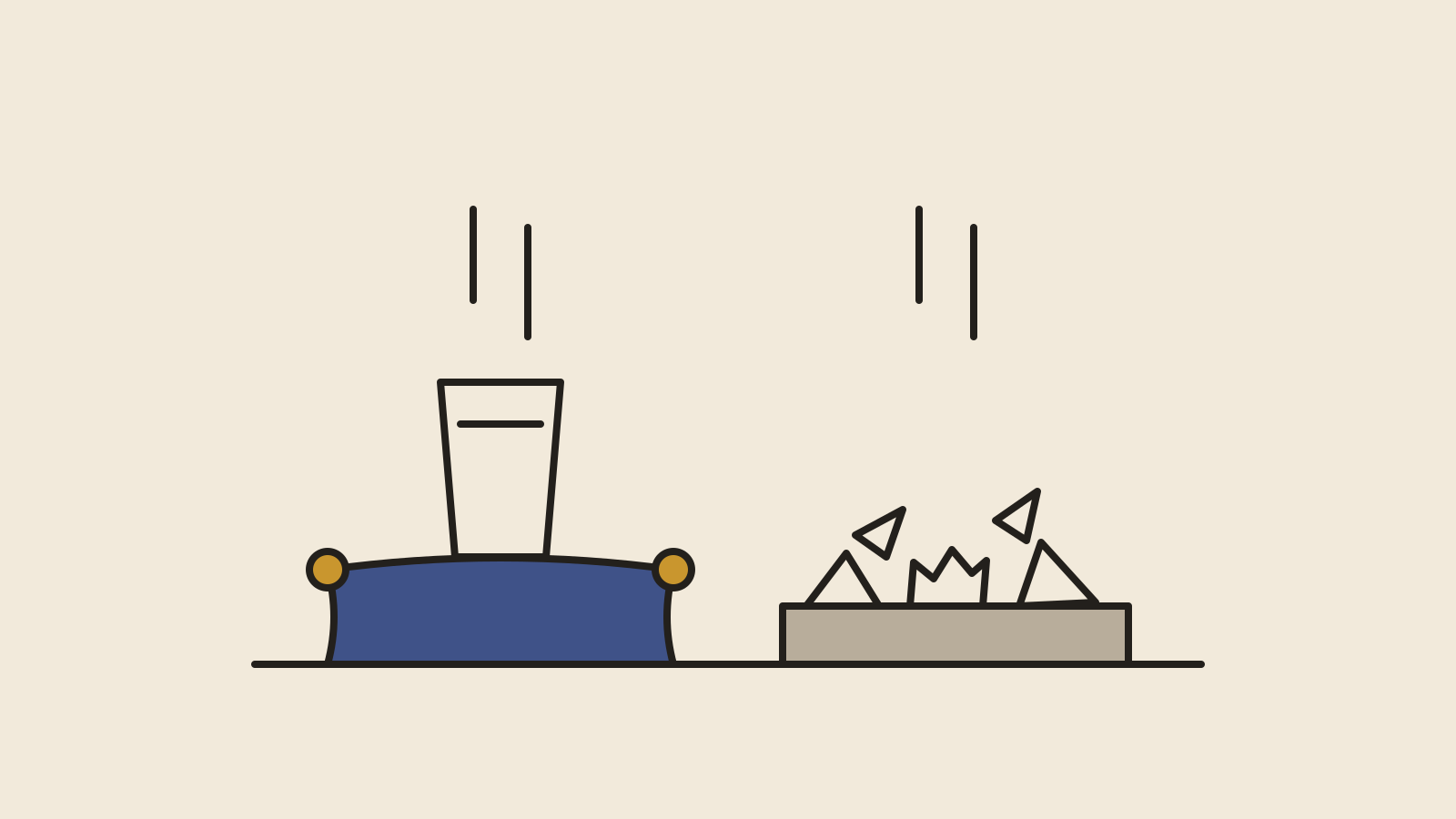
Two equally careless drivers draw very different blame
Read as text
Two drivers who drank the same and drove just as carelessly, set side by side and divided by what happened next. On the left, a child runs into the road and is killed, and the driver is blamed severely. On the right, the road stays clear, the driver gets home without harm and is scarcely blamed.
Key features
- It sets the principle that people may be judged only for what they control against judgements most people make every day.
- Nagel sorted the luck into four kinds: in how things turn out, in the circumstances one faces, in one's temperament and in how one is caused to act.
- Williams's painter abandons his family to paint, and only later success can justify the choice, so its rightness hangs on luck.
- Williams named agent-regret, the special regret of someone whose act caused harm, such as a lorry driver who runs over a child through no fault of his own.
Not to be confused with
| Look-alike | The difference | Differs on |
|---|---|---|
| Free will | Free will concerns whether anyone controls their choices at all. Moral luck asks whether factors outside a person's control, such as outcomes and circumstances, may change how they are judged. Nagel's luck in how one is caused to act is where the two meet. | Differs onScope |
| Consequentialism | Consequentialism judges acts by their results. Moral luck concerns the judgement of agents: whether a person becomes more blameworthy because a careless act happened to end in harm. | Differs onUnit of analysis |
| Outcome bias | Psychologists use this name for the finding that people rate a decision as worse when it turns out badly. Moral luck asks whether such judgements can be justified. | Differs onDescriptive or normative |
- Differs onScope
Free will concerns whether anyone controls their choices at all. Moral luck asks whether factors outside a person's control, such as outcomes and circumstances, may change how they are judged. Nagel's luck in how one is caused to act is where the two meet.
- Differs onUnit of analysis
Consequentialism judges acts by their results. Moral luck concerns the judgement of agents: whether a person becomes more blameworthy because a careless act happened to end in harm.
- Differs onDescriptive or normative
Outcome bias
Psychologists use this name for the finding that people rate a decision as worse when it turns out badly. Moral luck asks whether such judgements can be justified.
Origins and development
The phrase is Bernard Williams's. He and Thomas Nagel gave papers with that title at a symposium of the Aristotelian Society in 1976, later revised in their own collections. Both took aim at the view of Immanuel Kant that a good will keeps its worth whatever it achieves. Nagel treated moral luck as a paradox inside a morality that keeps its authority, and he thought it had no solution. Williams used it to argue that morality's promise of a judgement immune to luck can't be kept. Daniel Statman's 1993 collection gathered the replies.
Bernard Williams
The English philosopher who argued that moral theories ignore the projects, loyalties and luck that make up a human life.
Thomas Nagel
An American philosopher who argued that objective science leaves out what experience is like for the one who has it.
Why it matters
The law often punishes attempted murder less than murder, and a reckless driver who kills faces a heavier charge than one who only speeds. Moral luck asks whether that gap is just. It also bears on how we judge people whose upbringing left them few good options. The psychologist Fiery Cushman found in 2008 that outcomes count for more in judgements of blame and punishment than in judgements of whether an act was wrong, which track mainly the person's intentions.
Critiques and limits
Several philosophers deny that moral luck exists. Norvin Richards argued in 1986 that we treat the unlucky driver more harshly because the outcome is our evidence about him, not because he deserves more. Michael Zimmerman held that luck changes what a person is responsible for, while their degree of blame stays the same. Others accept luck in outcomes but resist luck in character. The question is conceptual and remains open, though the finding that outcomes sway blame is well documented.
Connections
Belongs to
It is a problem in normative ethics about the conditions under which people deserve praise and blame.
Originated by
Williams coined the phrase in his 1976 paper, using it against morality's promise of a worth immune to luck.
Nagel's reply in the same 1976 symposium sorted moral luck into kinds and treated it as a paradox inside morality.
Critiques
Both papers target Kant's claim that a good will keeps its worth whatever it achieves or fails to achieve.
Contrasts with
Differs on scope. Free will asks whether anyone controls their choices, where moral luck asks whether uncontrolled factors may change how people are judged.
Differs on unit of analysis. Consequentialism judges acts by their results, where moral luck concerns whether agents become more blameworthy through results.
Virtù and fortunaPolitical theory & science
Differs on descriptive or normative. Machiavelli describes how fortune shapes a ruler's success, where moral luck asks whether luck can justly change how agents are judged.
Applied in
Social psychologyPsychology
Psychologists test how far outcomes, beyond intentions, drive people's judgements of blame and punishment.
Critiqued by
He held that two people with the same intention earn the same merit whatever happens, denying that outcomes change moral worth.
Further reading
- Cushman, F. (2008). Crime and punishment: Distinguishing the roles of causal and intentional analyses in moral judgment. Cognition, 108(2), 353–380. https://doi.org/10.1016/j.cognition.2008.03.006
- Nagel, T. (1979). Mortal questions. Cambridge University Press.
- Nelkin, D. K. (2025). Moral luck. The Stanford Encyclopedia of Philosophy. https://plato.stanford.edu/entries/moral-luck/
- Williams, B. (1976). Moral luck. Aristotelian Society Supplementary Volume, 50, 115–135. https://doi.org/10.1093/aristoteliansupp/50.1.115
Cite this entry
Scholia. (2026). Moral luck. In Scholia: Notes in the margin of the human sciences. Retrieved November 28, 2026, from https://scholia.zennia.sg/ideas/moral-luck