School or branchCognitive science & linguisticsAlso in Psychology
Language acquisition
The study of how children come to speak and understand their first language, mostly without being taught.
Overview
Language acquisition is the study of how children come to speak and understand their first language. Nobody sits a toddler down and teaches grammar. Yet by the age of four or five, children everywhere produce and understand sentences they have never heard, in whatever language surrounds them, signed languages included.
The clues are often in the mistakes. A three-year-old who says "I goed to the park" has never heard an adult say "goed". She has worked out a rule for the past tense and applied it where English happens to make an exception. The field asks how she found the rule, what she started with and what she needed to hear.
It is a branch defined by that question and shared between linguistics and psychology. Its researchers disagree, sometimes sharply, about how much of the answer is inborn.
Diagram
A child's grammar comes from what she brings and what she hears
Read as text
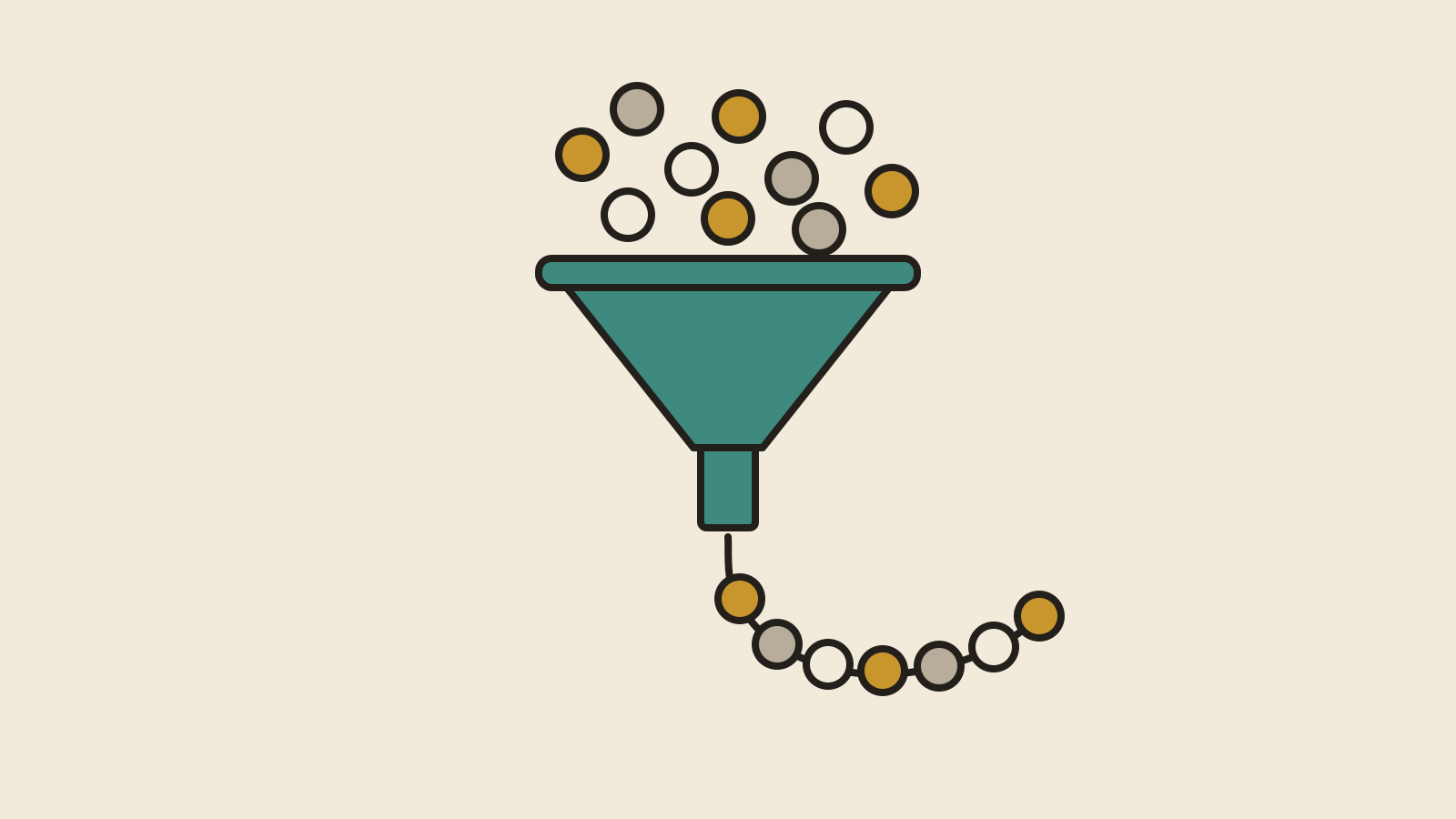
Two factors combine to produce adult grammar. The first is what the child brings: an ability to find patterns, attention to other people and, on some theories only, inborn knowledge of grammar. The second is what the child hears: speech from carers, with conversation and feedback. Theories of acquisition disagree about the weight of each.
Core commitments
- Children build a productive system of rules or patterns, which is why they can say things nobody has said to them.
- Acquisition follows a broadly similar sequence across children and languages: babbling, single words, two-word combinations, then rapid growth in grammar.
- Errors are evidence, because a systematic mistake shows which rule the child is using.
- Parents seldom correct grammar and children often ignore them when they do, so a theory must explain learning without correction.
- Claims are tested against recordings of real children and experiments with infants, some only a few months old.
Not to be confused with
| Look-alike | The difference | Differs on |
|---|---|---|
| Second language learning | Learning a later language, in a classroom or as an adult migrant, draws on a language already in place, on literacy and often on explicit teaching. First language acquisition has none of these, and it almost never fails. | Differs onMechanism |
| Developmental psychology | Developmental psychology studies every kind of change across the lifespan, from walking to moral reasoning. Language acquisition studies one achievement of early childhood, with tools borrowed from linguistics. | Differs onScope |
| Psycholinguistics | Psycholinguistics studies how language is understood and produced from moment to moment, mostly in adults, as well as how it is learned. Acquisition takes the learning question alone, and much of its work analyses transcripts and runs no experiments. | Differs onScope |
- Differs onMechanism
Second language learning
Learning a later language, in a classroom or as an adult migrant, draws on a language already in place, on literacy and often on explicit teaching. First language acquisition has none of these, and it almost never fails.
- Differs onScope
Developmental psychology studies every kind of change across the lifespan, from walking to moral reasoning. Language acquisition studies one achievement of early childhood, with tools borrowed from linguistics.
- Differs onScope
Psycholinguistics studies how language is understood and produced from moment to moment, mostly in adults, as well as how it is learned. Acquisition takes the learning question alone, and much of its work analyses transcripts and runs no experiments.
Origins and development
Parents kept diaries of their children's speech in the nineteenth century, Charles Darwin among them. The modern field dates from 1959, when Noam Chomsky argued against B. F. Skinner that reinforcement could not explain a child's grammar. Roger Brown's Harvard study of three children, published in 1973, set the method of long-term recording. Later decades split the field. Nativists followed Chomsky's universal grammar. Usage-based researchers such as Michael Tomasello credited general learning, as did those who showed that infants track statistical patterns in speech.
Noam Chomsky
American linguist who argued that the capacity for grammar is inborn, and one of the best-known critics of United States foreign policy.
B. F. Skinner
American psychologist who showed how consequences shape behaviour and argued that the same process explains everything people do.
Why it matters
Its findings set the benchmarks that health visitors and paediatricians use to spot delay. They guide the timing of cochlear implants and early access to sign language for deaf children. They also inform advice to bilingual families, who are often wrongly told that two languages will confuse a child. The field supplies the main testing ground for the wider argument over nature and nurture.
Nature and nurture
The long argument over how far people are shaped by what they inherit and how far by what happens to them.
Critiques and limits
Much of the evidence comes from a narrow base. Evan Kidd and Rowena Garcia reported in 2022 that studies in the field's main journals covered under two per cent of the world's languages, with English far ahead of the rest. Elinor Ochs and Bambi Schieffelin showed in 1984 that the simplified "baby talk" often assumed to drive learning is absent in some societies, where children learn to speak on the usual schedule anyway. The dispute between nativists and their opponents is still open.
Key figures
- Noam Chomskyborn 1928
- Roger Brown
- Eric Lenneberg
- Jerome Bruner
- Elissa Newport
- Steven Pinker
- Michael Tomasello
- Patricia Kuhl
Connections
Influenced by
His 1959 review of Skinner turned children's language from a topic in learning theory into a test case for theories of mind.
The nativist wing of the field takes its research questions from the hypothesis of an inborn language faculty.
Lev VygotskyPsychology
Social-interactionist accounts follow Vygotsky in treating language as learned through shared activity with adults.
Tomasello's usage-based account takes its grammar from cognitive linguistics: children build constructions from heard utterances using general skills, not an inborn syntax.
Jakobson's 1941 claim that children gain sound contrasts in a fixed, universal order gave child phonology its first testable theory.
Jean PiagetPsychology
Piaget held that language grows out of general sensorimotor intelligence, the constructivist alternative to inborn grammar that he argued against Chomsky in 1975.
Critiques
Behaviourism (psychology)Psychology
Its founding arguments held that reinforcement and imitation cannot explain sentences children produce without ever having heard them.
B. F. SkinnerPsychology
Skinner's Verbal Behavior explained children's speech by reinforcement. Chomsky's 1959 review of it set the modern field against that account.
Contrasts with
Developmental psychologyPsychology
Differs on scope. Developmental psychology covers every kind of change across the lifespan, while language acquisition studies one achievement of early childhood.
Differs on scope. Psycholinguistics also studies how adults understand and produce language in real time, while acquisition takes the learning question alone.
Contains
One of the field's main hypotheses, offered to explain why first languages are learned so reliably in childhood.
It is the field's central argument for nativism, and rival accounts of learning are judged by how they answer it.
Applications
Nature and nurturePsychology
Whether grammar is inborn or learned from speech heard in childhood is the debate's best-known case outside psychology.
NeuroplasticityPsychology
It explains why young children can still learn to speak after losing much of the left hemisphere.
Spacing effectPsychology
Vocabulary courses and flashcard software schedule each word to return at widening gaps.
During the first year infants narrow from hearing most speech contrasts to hearing those their own language uses.
Creoles are used to test whether children can build a full grammar from thin and mixed input.
ScaffoldingPsychology
Bruner described parents' routines of naming and turn-taking as a support system that scaffolds a child's first language.
SocialisationSociology
Language socialisation research treats learning to speak and learning to be a member of a society as one process.
Cross with
Two distant entries to read beside this one, each with the question the pairing opens.
The WEIRD problemPsychology
Most acquisition studies sample Western middle-class homes: which claimed universals survive in societies where adults rarely speak directly to infants? Set them side by side
Cultural reproductionSociology
Do differences in the speech children hear at home feed the school advantage that cultural reproduction describes, or is that link overstated? Set them side by side
Further reading
- Brown, R. (1973). A first language: The early stages. Harvard University Press. https://doi.org/10.4159/9780674028920
- Chomsky, N. (1959). A review of B. F. Skinner's Verbal behavior. Language, 35(1), 26–58. https://doi.org/10.2307/411334
- Saffran, J. R., Aslin, R. N., & Newport, E. L. (1996). Statistical learning by 8-month-old infants. Science, 274(5294), 1926–1928. https://doi.org/10.1126/science.274.5294.1926
- Tomasello, M. (2003). Constructing a language: A usage-based theory of language acquisition. Harvard University Press.
Cite this entry
Scholia. (2026). Language acquisition. In Scholia: Notes in the margin of the human sciences. Retrieved November 28, 2026, from https://scholia.zennia.sg/schools/language-acquisition