IdeaPhilosophyAlso in Psychology, Cognitive science & linguistics
No-self (anatta)
The Buddhist claim that a person is a changing stream of bodily and mental events, with no permanent self that owns or directs them.
The idea
Most of us assume there is a "me" inside: one thing that has my experiences, makes my choices and stays the same from childhood to old age. The Buddha argued that no such thing can be found. Look closely and you find a body, feelings, perceptions, intentions and moments of awareness, each arising from causes and passing away. Nothing among them is permanent, and nothing stands behind them as their owner.
A football club shows the pattern. Over thirty years every player, manager and owner is replaced, the stadium is rebuilt and the kit changes. We still say "the same club", and that is a useful way to talk. But there is no extra thing, the club itself, over and above the people and what they do. Buddhists say "I" works the same way. It is a convenient name for a stream of connected events, and clinging to it as something more is, on their account, a root of suffering.
Diagram
A person is five kinds of passing event, with no owner behind them
Read as text
A tree with one root and five branches. The root is the person, marked as a convenient name. The five branches are the aggregates into which Buddhist teaching analyses a person: bodily form, feeling, perception, volitional formations and consciousness. Nothing else is shown, since the claim is that no self exists over and above these five.
Key features
- A person is analysed into five groups of events, the aggregates: bodily form, feeling, perception, volitional formations and consciousness.
- Each aggregate is impermanent and outside our full control, so none can be a self, and no self is found apart from them.
- "I" and "person" remain correct for everyday purposes, as conventional labels for a causally connected series.
- Earlier events condition later ones, which is how memory, responsibility and karma are explained without an owner.
Karma
The principle in Hindu, Buddhist and Jain thought that intentional actions bring fitting consequences for the actor, in this life or a later one.
- The teaching is practical, since seeing through the sense of self is meant to weaken craving and fear.
Not to be confused with
| Look-alike | The difference | Differs on |
|---|---|---|
| Emptiness | No-self is about persons. Emptiness applies the same analysis to everything, including the mental and physical events that a person is analysed into. | Differs onScope |
| The cogito | Descartes held that thinking proves a thinker, an "I" that is a thinking thing. The Buddhist grants the thinking and denies that it reveals any lasting thing that does it. | Differs onClaim |
| Mind–body dualism | Dualism makes the mind a separate substance that could outlast the body. No-self denies any such substance. It is no form of materialism either, since it counts mental events as real. | Differs onClaim |
| Bundle theory of the self | David Hume looked inward and found only a bundle of perceptions, much as the Buddhists had. He reported it as a puzzle. Buddhism builds a discipline of meditation and ethics on it. | Differs onTradition |
- Differs onScope
No-self is about persons. Emptiness applies the same analysis to everything, including the mental and physical events that a person is analysed into.
- Differs onClaim
Descartes held that thinking proves a thinker, an "I" that is a thinking thing. The Buddhist grants the thinking and denies that it reveals any lasting thing that does it.
- Differs onClaim
Dualism makes the mind a separate substance that could outlast the body. No-self denies any such substance. It is no form of materialism either, since it counts mental events as real.
- Differs onTradition
Bundle theory of the self
David Hume looked inward and found only a bundle of perceptions, much as the Buddhists had. He reported it as a puzzle. Buddhism builds a discipline of meditation and ethics on it.
Origins and development
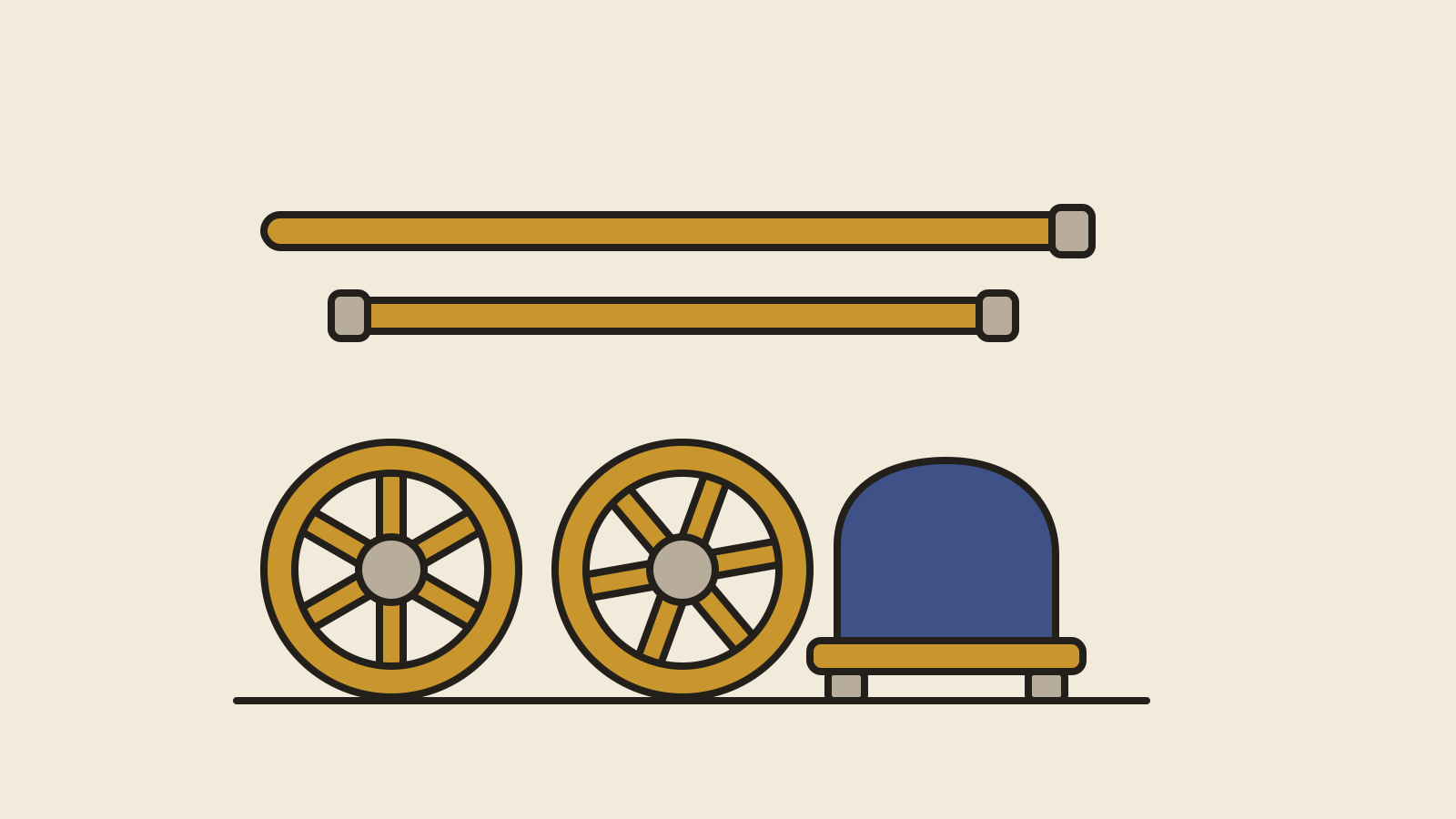
The teaching goes back to the Buddha, around the fifth century BCE. An early discourse has him tell his first five followers that each aggregate, being impermanent and bound up with suffering, is unfit to be regarded as self. He was opposing the Upanishads' search for an eternal self, the atman. The stock image comes from verses of the nun Vajira, expanded in the later Questions of King Milinda: "chariot" is a name for wheels, axle and frame. The Abhidharma schools systematised the analysis. The Pudgalavadins dissented and posited a "person" neither identical with the aggregates nor separate from them.
Why it matters
The idea is central to Buddhist practice, so anyone who takes up mindfulness meditation meets a diluted form of it. It also anticipates current debates. Derek Parfit argued in 1984 that personal identity is less important than we suppose, and remarked that the Buddha would have agreed. The philosopher Thomas Metzinger describes the self as a model the brain builds. Cultural psychologists ask how far the bounded, independent self is a local assumption, a question taken up under self-construal.
Independent and interdependent self-construal
The theory that people define the self either by inner traits or by relationships, and that cultures favour one or the other.
Critiques and limits
Nyaya philosophers argued that remembering requires that the one who remembers is the one who experienced, and that recognising a single object by sight and touch needs a single subject. Adi Shankara added that awareness of change presupposes a witness that does not change. Among recent philosophers, Dan Zahavi accepts that there is no soul-like self but holds that experience always has a minimal first-person character. The claim is a philosophical one. Evidence from meditation or neuroscience bears on it without settling it.
Nyaya
The classical Indian school of logic and epistemology, which holds that the world is real and knowable through perception, inference, comparison and testimony.
Adi Shankara
The Indian philosopher who argued that the self and ultimate reality are one, and gave Advaita Vedanta its classic form.
Connections
Belongs to
A standing answer to the field's question of what, if anything, the word "I" refers to.
Originated by
The Buddha (Siddhartha Gautama)
The Buddha taught that none of the five aggregates that make up a person can be regarded as a self.
Contrasts with
Differs on scope. No-self denies a fixed core in persons, and emptiness extends the denial to everything.
Differs on claim. Dualism makes the mind a lasting substance, where the Buddhist teaching denies any lasting self, mental or physical.
Differs on claim. Descartes infers a thinking thing from the fact of thinking, where the Buddhist grants the thinking and denies the thing.
Applied in
EnactivismCognitive science & linguistics
Varela and his co-authors used the Buddhist analysis of a selfless mind to describe cognition with no central controller.
Extended by
Widens the denial of a fixed self in persons into a denial of intrinsic nature in everything.
Carries the denial of a fixed core from persons to all phenomena.
Influenced
Indian psychologyPsychology
The Buddhist analysis of experience into passing events with no owner is a main source and a standing internal challenge.
Critiqued by
He argued that awareness of a changing stream presupposes an unchanging witness, which the Buddhist analysis leaves out.
Holds that every experience, doubt about the self included, presupposes a witnessing consciousness that does not change.
Argues that memory and recognising one object by sight and touch both require a lasting self.
Cross with
Two distant entries to read beside this one, each with the question the pairing opens.
Reconstructive memoryPsychology
If memories are rebuilt each time they are recalled, what remains of the continuous self that memory was supposed to guarantee? Set them side by side
DramaturgySociology
Goffman describes people performing versions of themselves for audiences: does his account need an actor behind the roles, or would no-self do? Set them side by side
Further reading
- Bodhi, B. (2005). In the Buddha's words: An anthology of discourses from the Pāli Canon. Wisdom Publications.
- Collins, S. (1982). Selfless persons: Imagery and thought in Theravāda Buddhism. Cambridge University Press. https://doi.org/10.1017/cbo9780511621499
- Parfit, D. (1984). Reasons and persons. Clarendon Press.
- Siderits, M. (2007). Buddhism as philosophy: An introduction. Hackett.
Cite this entry
Scholia. (2026). No-self (anatta). In Scholia: Notes in the margin of the human sciences. Retrieved November 28, 2026, from https://scholia.zennia.sg/ideas/no-self