IdeaPsychology
Psychosexual stages
Freud's claim that children pass through bodily stages of pleasure, and that trouble at any stage leaves a mark on adult character.
The idea
Sigmund Freud held that sexual life doesn't begin at puberty. He used "sexual" broadly, for any bodily pleasure sought for its own sake, and claimed that this pleasure has a history. In infancy it centres on the mouth. In the toddler years it moves to the bowels and the business of holding on and letting go. From about three to six it centres on the genitals, and the child is caught up in rivalrous love for its parents. A quiet spell follows until puberty, when adult sexuality takes shape.
Each stage sets a task. A child given too little or too much satisfaction can get stuck. Freud called this fixation, and said the adult then carries that stage's style. Everyday speech still uses the idea. When a flatmate insists that the mugs go back on the shelf with their handles all pointing the same way, somebody will call him "anal".
Diagram
Freud's five stages follow the body's shifting sources of pleasure
Read as text
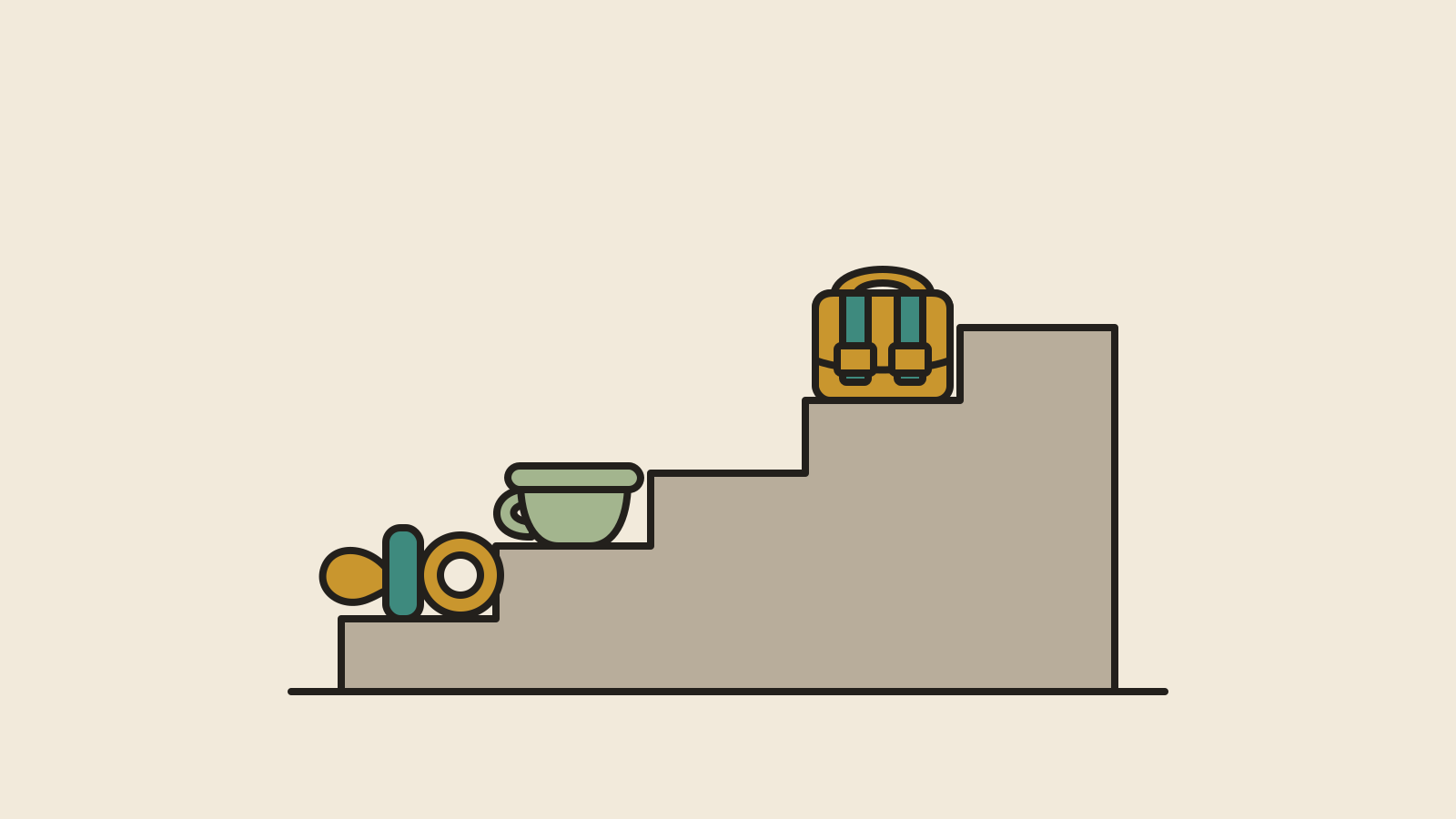
Five steps in a row, each leading to the next. First the oral stage, from birth to about one, centred on the mouth. Second the anal stage, from about one to three, centred on holding and releasing. Third the phallic stage, from about three to six, centred on the genitals and the Oedipus complex. Fourth latency, from about six to puberty, when sexual interest goes quiet. Fifth the genital stage, from puberty, when adult sexuality forms.
Key features
- Oral stage, from birth to about one: pleasure comes from sucking and biting, and the issue is dependence.
- Anal stage, about one to three: pleasure attaches to holding and releasing, and toilet training makes control the issue.
- Phallic stage, about three to six: the child notices sex differences and passes through the Oedipus complex, desire for one parent and rivalry with the other.
- Latency, about six to puberty: sexual interest goes quiet while the child turns to school, skills and friends.
- Genital stage, from puberty: the earlier strands combine into adult sexuality directed at other people.
Not to be confused with
| Look-alike | The difference | Differs on |
|---|---|---|
| Psychosocial stages | Erikson kept the idea of stages and changed what drives them. Freud's follow the body's shifting sources of pleasure and are largely over by adolescence. Erikson's are set by what other people ask of a person, and run to old age. | Differs onMechanism |
| Stages of cognitive development | Piaget's four stages concern how a child reasons about the world. Freud's concern pleasure and character, and say nothing about logic. | Differs onScope |
| Id, ego and superego | The stages divide childhood by time. The three agencies divide the mind by function. They meet at one point: Freud said the superego forms as the Oedipus complex ends. | Differs onUnit of analysis |
| Oedipus complex | The Oedipus complex is one episode, the crisis of the phallic stage. The stages are the whole sequence. | Differs onScope |
- Differs onMechanism
Erikson kept the idea of stages and changed what drives them. Freud's follow the body's shifting sources of pleasure and are largely over by adolescence. Erikson's are set by what other people ask of a person, and run to old age.
- Differs onScope
Stages of cognitive development
Piaget's four stages concern how a child reasons about the world. Freud's concern pleasure and character, and say nothing about logic.
- Differs onUnit of analysis
The stages divide childhood by time. The three agencies divide the mind by function. They meet at one point: Freud said the superego forms as the Oedipus complex ends.
- Differs onScope
Oedipus complex
The Oedipus complex is one episode, the crisis of the phallic stage. The stages are the whole sequence.
Origins and development
Freud first set out infantile sexuality in Three Essays on the Theory of Sexuality in 1905, and shocked readers by treating thumb-sucking as sexual. The familiar ladder came later, through revisions. He described an anal phase in 1913, added the oral phase in the 1915 edition and named the phallic stage in 1923. His colleague Karl Abraham subdivided the stages in 1924 and linked each to a mental illness. Later analysts moved away. Erik Erikson rewrote the stages in social terms, and John Bowlby replaced the oral account of a baby's love with attachment.
Erik Erikson
The psychoanalyst who mapped the whole of life as eight stages, each with its own crisis, and gave us the phrase "identity crisis".
John Bowlby
The British psychiatrist who argued that a child's tie to a carer is a survival need in its own right, and founded attachment theory.
Why it matters
The theory helped give the twentieth century its conviction that the first years of life shape the adult, which now seems obvious and once did not. It left words behind: anal, oral fixation, Oedipal, penis envy. It also changed child-rearing, since generations of parents were warned that harsh weaning or toilet training could scar a child. Readers will meet the stages in any introductory psychology course, usually taught as history.
Critiques and limits
Karen Horney and later feminists rejected the account of girls, built on penis envy, as male prejudice posing as anatomy. Bronisław Malinowski argued from the Trobriand Islands that the Oedipus complex depends on one kind of family. Seymour Fisher and Roger Greenberg reviewed the tests in 1977 and 1996. They found that "oral" and "anal" traits cluster as Freud said but show no clear link to feeding or toilet training. The theory's status is weakened: its testable claims have mostly failed, while its broad point about early experience survives.
Karen Horney
German-born psychoanalyst who challenged Freud's account of women and traced neurosis to anxious relationships and culture instead of instinct.
Bronisław Malinowski
The Polish-born anthropologist who made long fieldwork among the people studied the discipline's method, and who co-founded functionalism.
Connections
Belongs to
It was the school's classical account of how childhood forms character and where neurosis begins.
Originated by
Freud set out infantile sexuality in 1905 and added the separate stages in revisions up to 1923.
Extends
It gives the unconscious a history, tracing its wishes to phases of childhood pleasure.
Contrasts with
Differs on mechanism. Freud's stages follow the body's shifting sources of pleasure, while Erikson's follow the demands of other people and institutions.
Stages of cognitive development
Differs on scope. Piaget's stages concern how a child reasons, while Freud's concern pleasure, attachment and character.
Differs on unit of analysis. The stages divide childhood by time, while the three agencies divide the mind by function.
Applied in
Psychological and cognitive anthropologyAnthropology
Culture-and-personality studies of the 1930s and 1940s tried to explain a people's character by its weaning and toilet-training customs.
Extended by
Erikson kept Freud's five stages, recast each as a social conflict and added three more for adult life.
Further reading
- Fisher, S., & Greenberg, R. P. (1996). Freud scientifically reappraised: Testing the theories and therapy. Wiley.
- Freud, S. (1962). Three essays on the theory of sexuality (J. Strachey, Trans.). Basic Books. (Original work published 1905)
- Gay, P. (1988). Freud: A life for our time. W. W. Norton.
- Westen, D. (1998). The scientific legacy of Sigmund Freud: Toward a psychodynamically informed psychological science. Psychological Bulletin, 124(3), 333–371. https://doi.org/10.1037/0033-2909.124.3.333
Cite this entry
Scholia. (2026). Psychosexual stages. In Scholia: Notes in the margin of the human sciences. Retrieved November 28, 2026, from https://scholia.zennia.sg/ideas/psychosexual-stages