School or branchPolitical theory & science
Realism (international relations)
The view that states, with no authority above them, must look to their own security, so world politics is a lasting contest for power.
Overview
Realism is the oldest family of theories about how states deal with one another, and for much of the twentieth century it was the leading one. Its starting point is that no world government exists to enforce agreements or protect the weak, a condition scholars call anarchy. Each state must provide for its own survival, and the means of survival is power, above all military power. Intentions can change overnight. Capabilities are what a prudent leader counts.
Anarchy (international relations)
In international relations, anarchy means there is no government above states to make and enforce rules, which is different from chaos.
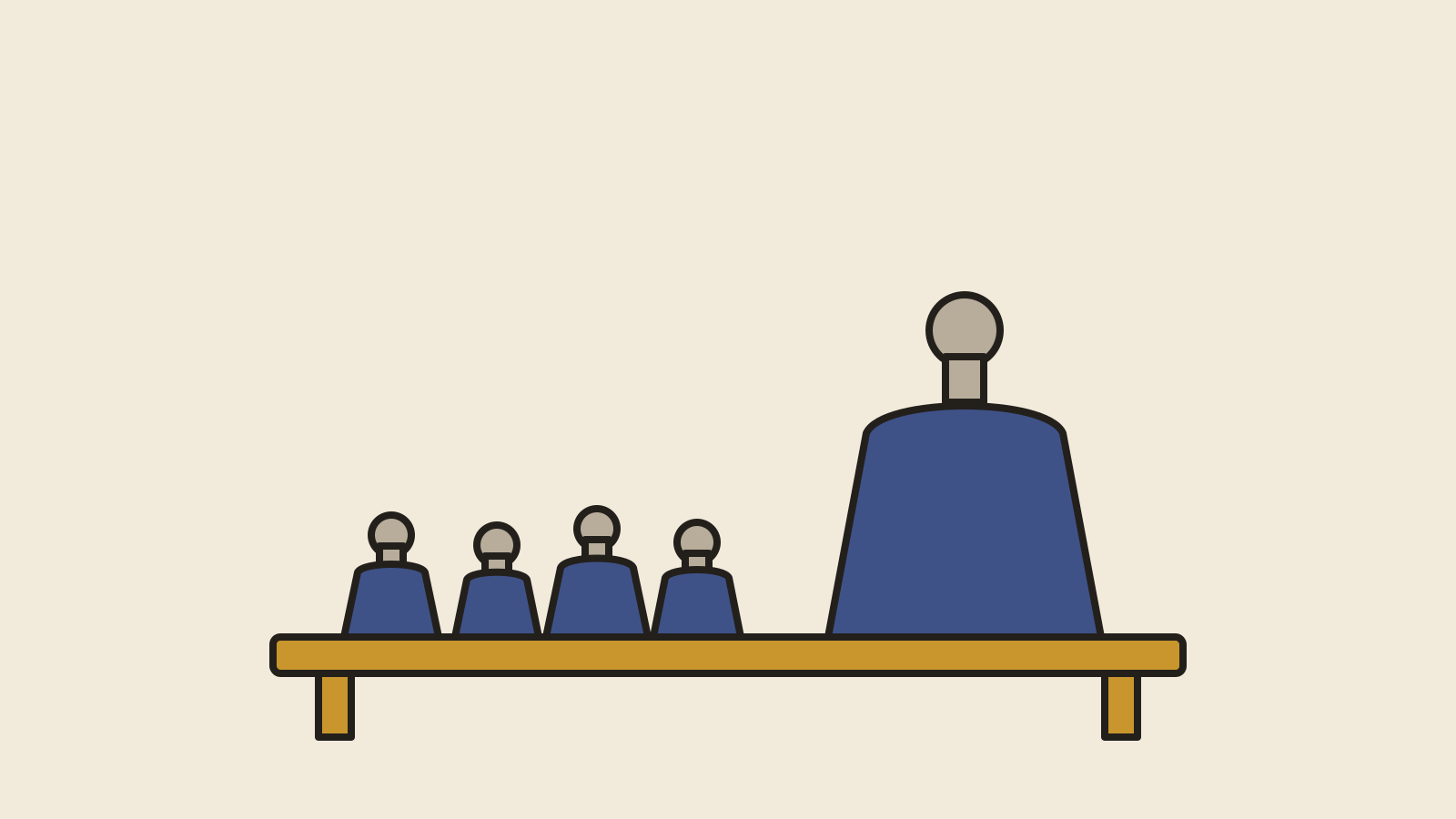
Picture a school playground with no teacher on duty. Children who would never start a fight still notice who is biggest, stay close to friends and avoid looking weak. Realists say states live permanently in that playground.
Realism claims to describe the world as it is, and few realists admire war. Many have opposed particular wars as a waste of power. Hans Morgenthau spoke against the American war in Vietnam, and leading realists argued against invading Iraq in 2003.
Diagram
Realists agree that power rules and disagree about why states seek it
Read as text
A tree with realism at the top and three branches. Classical realism, associated with Hans Morgenthau, traces the struggle for power to human nature. Structural realism, founded by Kenneth Waltz, traces it to an international system with no authority above states, and it splits in two: defensive realists say states seek enough power to be safe, and offensive realists say they seek as much as they can get. Neoclassical realism keeps the structural account and adds domestic politics and leaders' perceptions.
Core commitments
- States are the main actors, and for the purposes of theory each is treated as a single unit pursuing its interests.
- The international system is anarchic, so every state must rely on self-help.
- Survival is the first goal, and power is the means to it.
- States care about relative gains: who gains more matters as well as whether both gain.
- Moral rules that bind individuals cannot be applied directly to states, whose leaders answer for the safety of others.
Not to be confused with
| Look-alike | The difference | Differs on |
|---|---|---|
| Liberalism (international relations) | Liberals accept anarchy but hold that trade, institutions and democratic government can make cooperation last. Realists reply that such arrangements reflect the interests of the strong and give way when security is at stake. | Differs onClaim |
| Constructivism (international relations) | Realists explain behaviour by the distribution of material power. Constructivists explain it by shared ideas, which decide whether another state's power looks like a threat at all. | Differs onMechanism |
| Legalism (Chinese) | The Legalists of ancient China, sometimes called the Realists in English, taught rulers how to order one state by law and incentive. Realism here is a theory of relations between states. | Differs onScope |
| Realpolitik | Realpolitik is a style of policy: pursue interests and set ideology aside. Realism is a body of theory about why states behave as they do, and its conclusions often counsel restraint. | Differs onDescriptive or normative |
- Differs onClaim
Liberalism (international relations)
Liberals accept anarchy but hold that trade, institutions and democratic government can make cooperation last. Realists reply that such arrangements reflect the interests of the strong and give way when security is at stake.
- Differs onMechanism
Constructivism (international relations)
Realists explain behaviour by the distribution of material power. Constructivists explain it by shared ideas, which decide whether another state's power looks like a threat at all.
- Differs onScope
The Legalists of ancient China, sometimes called the Realists in English, taught rulers how to order one state by law and incentive. Realism here is a theory of relations between states.
- Differs onDescriptive or normative
Realpolitik
Realpolitik is a style of policy: pursue interests and set ideology aside. Realism is a body of theory about why states behave as they do, and its conclusions often counsel restraint.
Origins and development
Realists claim Thucydides, Machiavelli and Thomas Hobbes as ancestors. The modern school formed in reaction to the hopes placed in the League of Nations. E. H. Carr attacked those hopes in 1939, and Hans Morgenthau's Politics Among Nations (1948) rooted the struggle for power in human nature. Kenneth Waltz's Theory of International Politics (1979) moved the cause to the structure of the system, which founded structural realism. His heirs divide. Defensive realists think states seek enough power to be safe, while John Mearsheimer's offensive realism (2001) says they seek all they can get.
Niccolò Machiavelli
A Florentine official who described how power is actually won and kept, and split the study of politics from Christian moral teaching.
Thomas Hobbes
An English philosopher who argued that people without government would live in fear, and would rationally agree to obey a sovereign.
Why it matters
Realist reasoning runs through news coverage of great-power rivalry, alliances, arms build-ups and spheres of influence. Phrases such as national interest and balance of power come from its vocabulary. It also supplies the standard sceptical questions about any treaty or international body: who enforces it, and what happens when a strong state decides to leave? Diplomats who have never read Waltz reason this way daily.
Balance of power
When one state grows strong enough to dominate, others arm or ally against it, so power stays divided and no state rules all.
Critiques and limits
Robert Keohane argued that realism cannot explain how much cooperation survives with no dominant power to enforce it. Alexander Wendt held that anarchy has no single logic, since states can treat one another as enemies, rivals or friends. Richard Ned Lebow counted the peaceful end of the Cold War, which few realists foresaw, against the theory. The historian Paul Schroeder found that states often joined a rising power instead of balancing. Jeffrey Legro and Andrew Moravcsik complained that newer versions borrow so much from rival theories that little realism remains.
Key figures
- Thucydides
- Niccolò Machiavelli1469–1527
- Thomas Hobbes1588–1679
- E. H. Carr
- Hans Morgenthau
- Kenneth Waltz
- Robert Gilpin
- John Mearsheimer


Connections
Influenced by
Realists took Hobbes's picture of life without a common power as their model of relations between states.
Machiavelli's advice that a ruler must put the state's safety before ordinary morality became a realist starting point.
Max WeberSociology
Morgenthau drew on Weber's view of politics as a struggle for power, judged by an ethic of responsibility for consequences.
Contrasts with
Constructivism (international relations)
Differs on mechanism. Realists explain state behaviour by the distribution of material power, constructivists by the shared ideas that give power its meaning.
Differs on scope. Both start from self-interest and power, but Legalism orders one state from inside while realism explains relations between states.
Liberalism (international relations)
Differs on claim. Realists say fear keeps cooperation shallow under anarchy, liberals that trade, institutions and democracy can make it last.
Moral realismPhilosophy
Differs on claim. Realism in international relations explains world politics by power and shares only its name with the metaethical view.
Scientific realismPhilosophy
Differs on claim. Realism in world politics is a theory of how states pursue power, and shares only a name with realism about science.
Parallels
Conflict theorySociology
Realists picture relations between states as a contest for power in which order is a by-product of strength.
Contains
Realists from Morgenthau to Waltz made balancing the central regularity of international politics.
Realists treat it as the reason even peaceful states are drawn into competition for power.
Critiqued by
If the kind of government decides who fights whom, realism is wrong to treat all states as alike.
Applications
Zero-sum gameEconomics
Realists hold that states care about who gains more, which turns a shared gain into a contest for position.
Cross with
Two distant entries to read beside this one, each with the question the pairing opens.
Goodness of human nature (xing shan)Philosophy
Mencius held that moral feeling is inborn. If so, is the contest among states the work of human nature or of anarchy? Set them side by side
Conspicuous consumptionEconomics
Veblen's buyers pay for waste because it displays standing. How much military spending buys security and how much buys display? Set them side by side
Further reading
- Korab-Karpowicz, W. J. (2010). Political realism in international relations. Stanford Encyclopedia of Philosophy. https://plato.stanford.edu/entries/realism-intl-relations/
- Morgenthau, H. J. (1948). Politics among nations: The struggle for power and peace. Alfred A. Knopf.
- Waltz, K. N. (1979). Theory of international politics. Addison-Wesley.
Cite this entry
Scholia. (2026). Realism (international relations). In Scholia: Notes in the margin of the human sciences. Retrieved November 28, 2026, from https://scholia.zennia.sg/schools/realism-international-relations